
Beyond Comfort: How HVLS Fans Transform Safety in Forklift and High-Traffic Zones
In high-volume distribution centers (DCs), safety is the foundation of productivity. With forklifts navigating narrow aisles and personnel operating in [...]
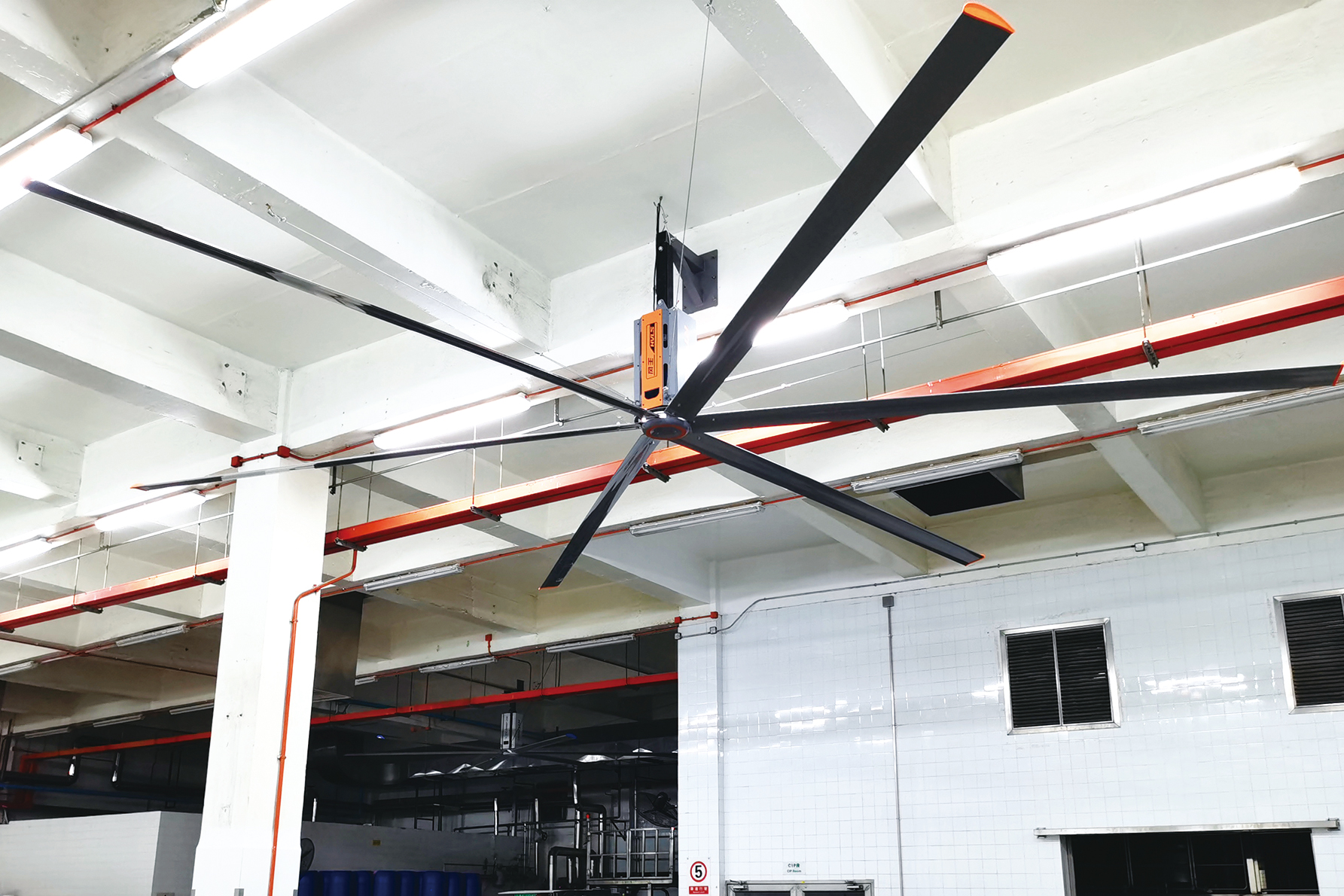
In high-volume distribution centers (DCs), safety is the foundation of productivity. With forklifts navigating narrow aisles and personnel operating in high-traffic zones, the environment must be meticulously managed. Poor airflow, high humidity, and extreme heat aren’t just uncomfortable—they are operational hazards that lead to collisions, slips, and fatigue-related errors.
High-Volume Low-Speed (HVLS) fans are the strategic solution for modern logistics. By covering up to 20,000 square feet per fan and reducing humidity by 10-15%, these fans ensure your facility meets OSHA expectations while protecting your most valuable assets.
The Safety Challenge in High-Traffic Zones
Modern warehouses (50,000–500,000 sq. ft.) face unique environmental risks:
- Collision Risks: OSHA reports approximately 85,000 forklift-related injuries annually in the U.S. One-fifth of these are attributed to low visibility (dust/fogging) or heat-induced operator fatigue.
- The “Sweating Slab” Hazard: When humidity exceeds 60%, moisture condenses on concrete floors. This “invisible ice” makes the risk of slips 20-30 times higher, leading to forklift skidding and pedestrian falls.
- Thermal Cognitive Decline: According to the WHO, when temperatures exceed 80°F (27°C), human reaction times slow by 15%. In a fast-paced DC, a split-second delay in braking can be catastrophic.
How HVLS Fans Enhance Facility Safety
Engineered to move up to 400,000 CFM at low speeds (50-100 RPM), RTFANS HVLS solutions address these risks at the source.
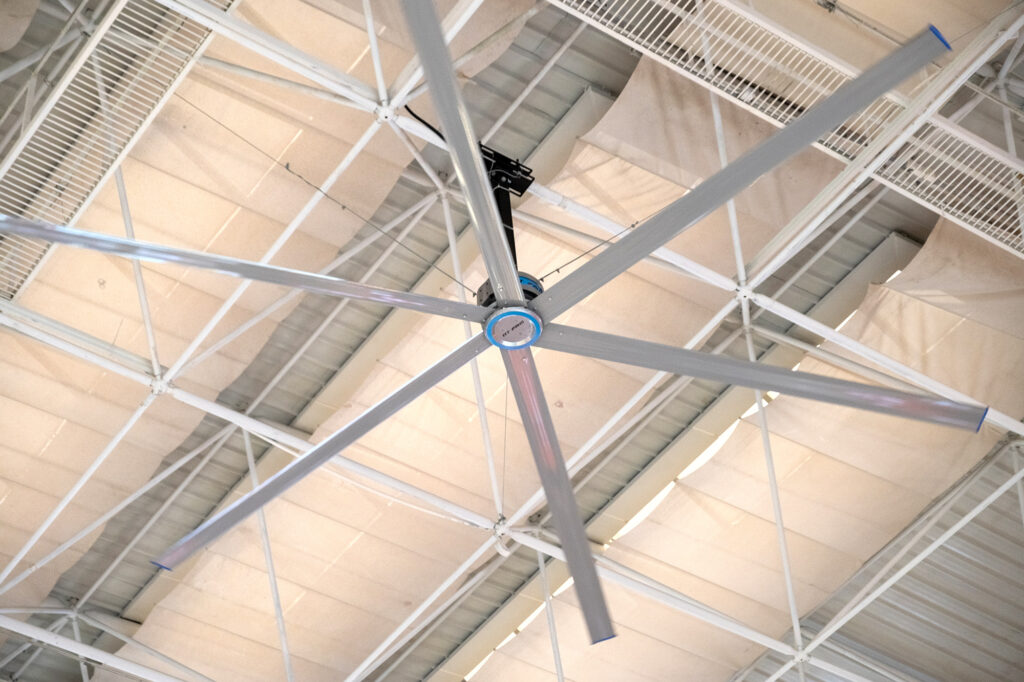
1. Eliminating Floor Condensation
By constantly circulating air, HVLS fans equalize floor and ceiling temperatures (destratification). This process dries the “sweating slab,” reducing slip-and-fall incidents by an average of 20%.
2. Clearing Visibility Barriers
HVLS fans reduce dust accumulation and prevent safety glasses or equipment windshields from fogging. This improves visual clarity by 10-15%, helping facilities stay compliant with OSHA 29 CFR 1910.178 visibility requirements.
3. Mitigating Heat Stress
The “wind chill” effect from a 20-foot fan reduces the perceived temperature by 5-10°F. This keeps operators alert and has been shown to reduce fatigue-related near-misses by 15%.
Operational Benefits & ROI
| Metric | Impact with HVLS Fans | Financial Benefit |
| Accident Reduction | 10–15% Decrease | Saves $5,000–$20,000 per liability occurrence |
| Worker Fatigue | 10–20% Reduction | Higher accuracy in picking/packing |
| HVAC Efficiency | 20–30% Energy Savings | $10,000–$30,000 annual savings |
Case Study: Texas E-commerce Hub
A 200,000 sq. ft. facility faced persistent “sweating slabs” and a 10% summer productivity drop. After installing six RTFANS 20-foot HVLS fans, they saw a 25% reduction in slip incidents and an 18% increase in annual productivity, resulting in $75,000 in total annual savings.
FAQ: High-Traffic Zone Ventilation
Q: Do HVLS fans interfere with forklift operations?
A: No. Unlike small high-speed fans that create turbulent “buffeting,” HVLS fans create a gentle, non-disruptive air column that does not affect vehicle stability.
Q: Are these fans OSHA compliant?
A: Yes. RTFANS products are UL/ETL certified and help facilities meet OSHA 29 CFR 1910.1000 air quality and heat stress standards.
Conclusion: Safety is an Investment, Not a Cost
In the world of logistics, an HVLS fan is more than a cooling device—it is critical safety infrastructure. By controlling humidity, improving visibility, and keeping operators sharp, RTFANS helps you build a more resilient workforce.
Ready to secure your high-traffic zones?
With 20+ years of experience, RTFANS provides customized ventilation audits for global logistics leaders.
[Contact our Engineering Team Today for a Free Safety Consultation]
SEO & Metadata
- SEO Title: Forklift Safety Ventilation: How HVLS Fans Secure High-Traffic DCs
- Meta Description: Improve forklift safety and reduce warehouse slip hazards with HVLS fans. Learn how industrial ceiling fans control humidity and visibility in busy logistics zones.
- Keywords: Forklift safety, HVLS fans, warehouse ventilation, sweating slab syndrome, logistics safety, RTFANS.
Related insights
Recommended Engineering & Ventilation Guides
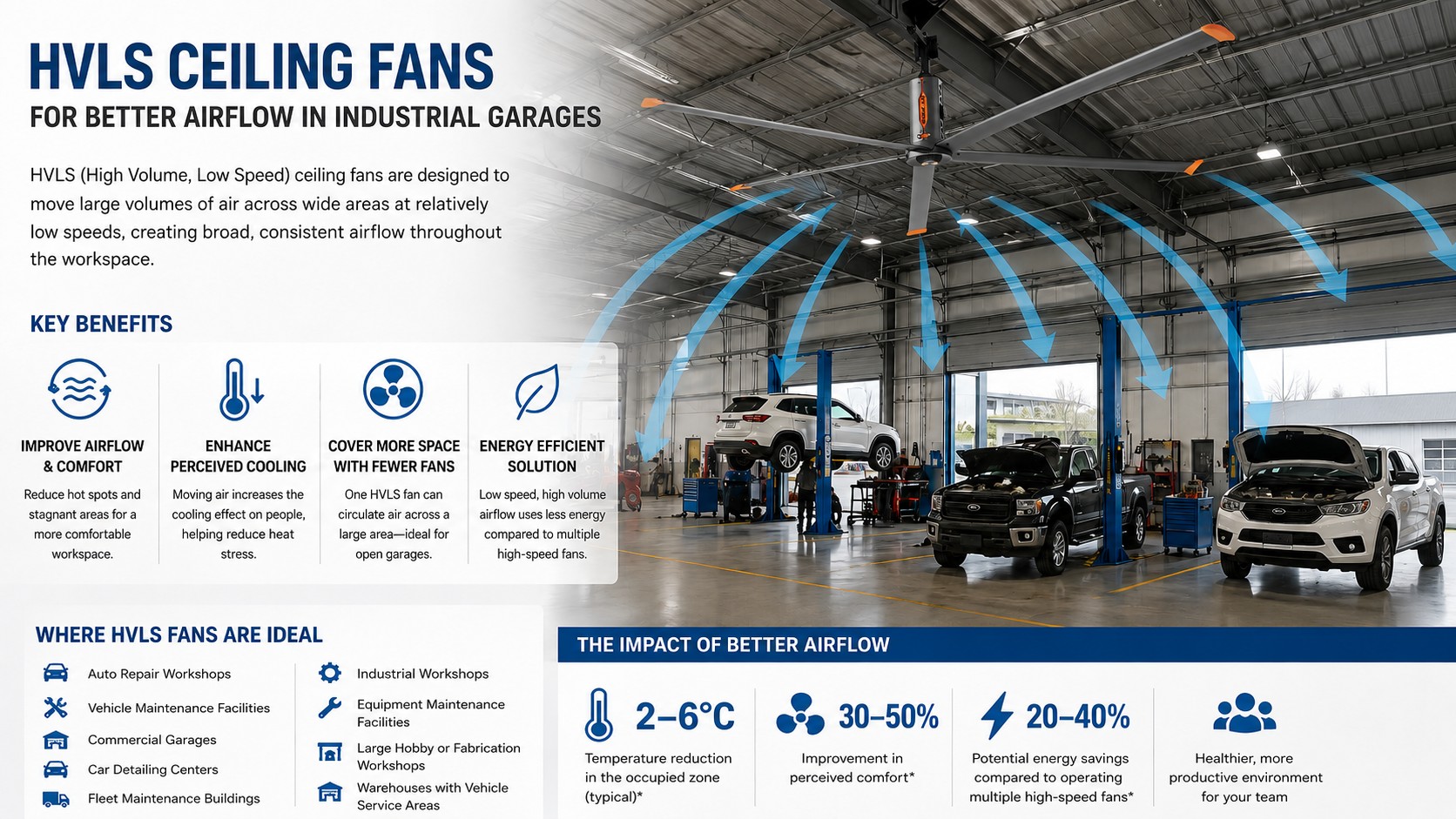
Why Industrial Garages Need HVLS Ceiling Fans for Better Airflow
Walk into a busy garage or workshop on a hot afternoon and the problem is obvious: heat builds up quickly, [...]
View article
Sustainable Manufacturing and Ceiling Fans: Factory Sustainability Tips
Sustainable Manufacturing and Ceiling Fans: Factory Sustainability Tips Embracing sustainable manufacturing practices is no longer just an option but a [...]
View article
Industrial Ceiling Fan Buying Guide: Ceiling Fan Buying Guide for Fans
Industrial Ceiling Fan Buying Guide: Ceiling Fan Buying Guide for Fans Welcome to our comprehensive industrial ceiling fan buying guide, [...]
View article