Practical case studies, FAQs and project knowledge for industrial ventilation and large-space cooling.
By RTFANSLast updated
RTFANS Insights
Blog
A reorganized knowledge base for industrial HVLS fans, factory ventilation systems, evaporative cooling and large-space applications.
These materials are organised to help facility owners, engineers, and purchasing teams compare the right airflow approach before requesting equipment or a project review. Check the application, operating conditions, installation constraints, and maintenance requirements described in each item, then use the linked detail page for the supporting facts and next steps.
Good airflow planning starts with the space and the work taking place inside it. Note the clear height, roof structure, doors, racking, machinery, occupied zones, heat sources, humidity target, existing HVAC, exhaust, electrical supply, and access for cleaning or service. General circulation can improve mixing and perceived comfort, but it does not replace outdoor-air ventilation, filtration, local exhaust, or source capture where those functions are required. The pages below provide practical questions and equipment context so a project team can define a safe, maintainable scope and identify the information needed for final sizing.
When buyers compare large ceiling fans, the motor is usually the first technical question after size and coverage. Two motor types dominate the conversation: PMSM and BLDC. Both use permanent magnets and run without brushes. The difference matters most exactly where an HVLS fan works hardest: turning a very large, heavy set of blades at very low speed, all day. This article explains what each motor is, how they differ, and which one fits an HVLS fan — including the related question buyers keep asking: hub motor vs PMSM motor which is better? Short answer: PMSM direct drive fits a full-size HVLS fan best; BLDC fits smaller fans.
The best high-volume, low-speed fan manufacturers share five traits. They size fans to your actual floor plan, offer direct-drive motors, publish clear installation requirements, hold model-specific safety certifications, and back the sale with real support.
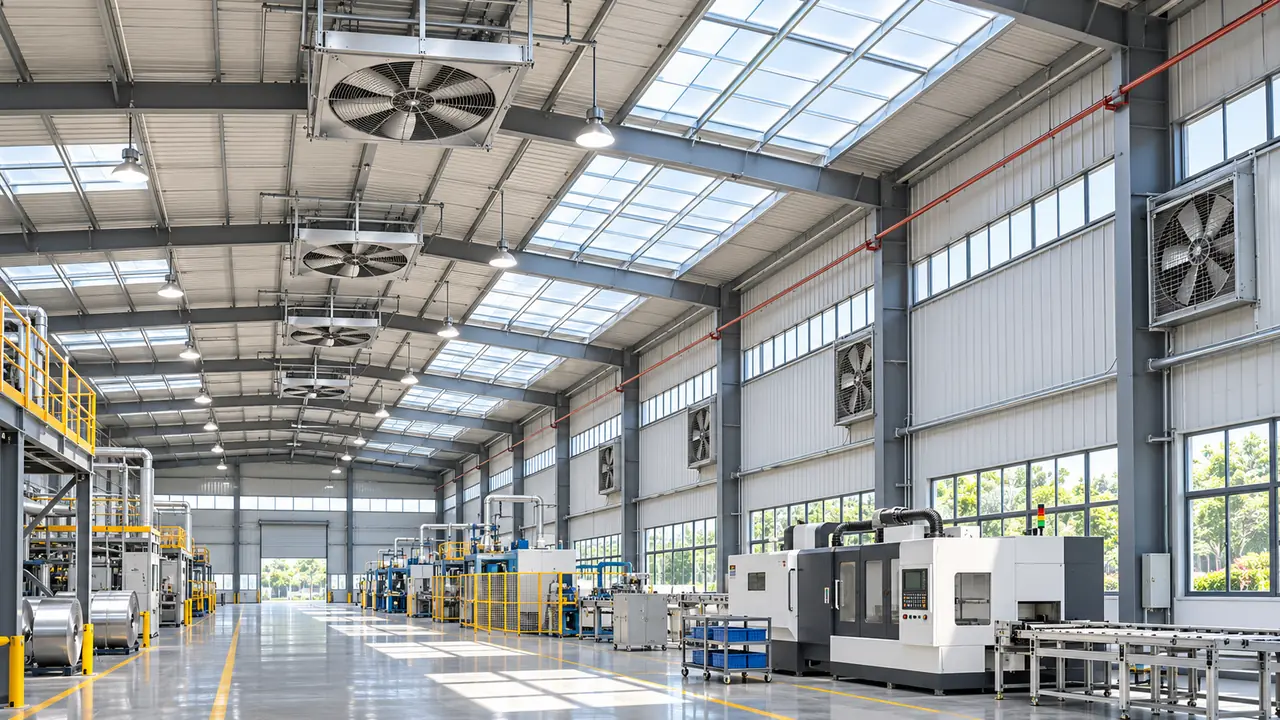
For the best effect, an exhaust fan should be positioned as close as practical to the strongest heat or contaminant source, discharge directly outdoors, and draw makeup air from the opposite side of the space. Those three principles are a sound starting point for a bathroom or a 50,000-square-foot plant, though industrial processes also need engineered capture and application-specific safety measures. In industrial buildings you have three common options for exhaust fan positioning: high-wall, roof, and source-capture. The right pick depends on your application, your building layout, and the codes your jurisdiction has adopted. A fan that seems weak is often well placed but starved of replacement air, or short-circuited by an inlet sitting too close to it.
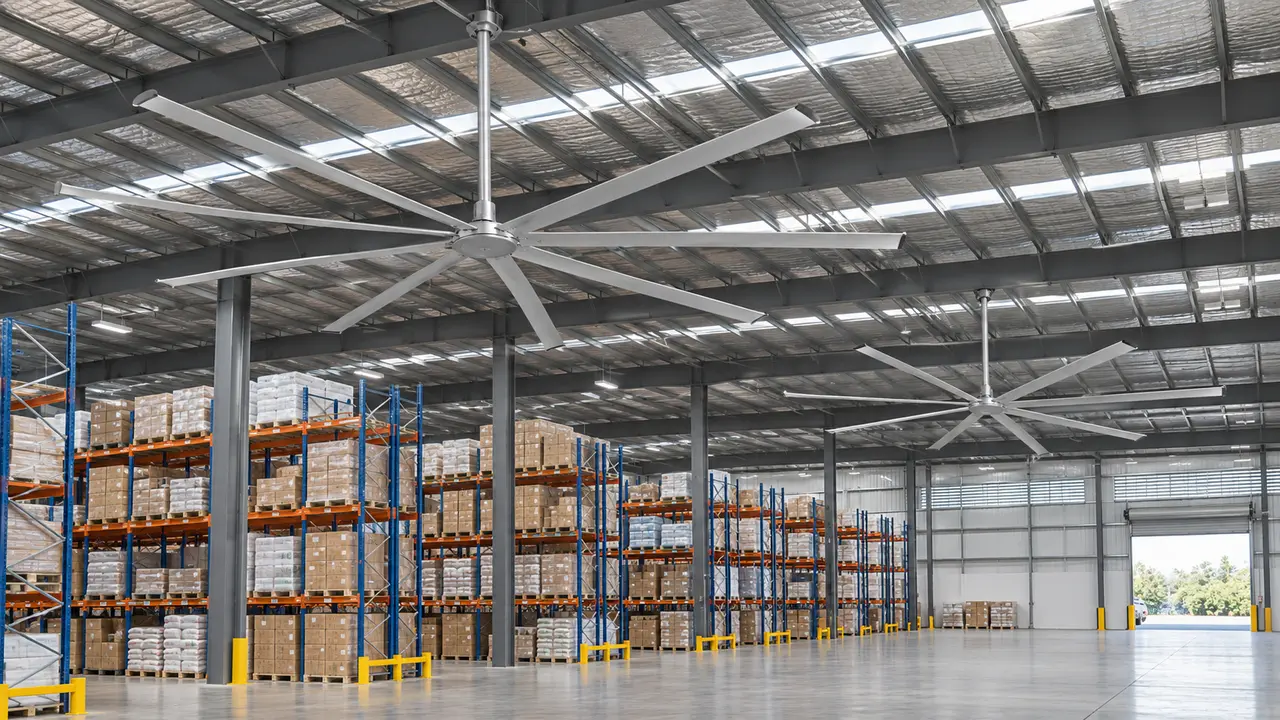
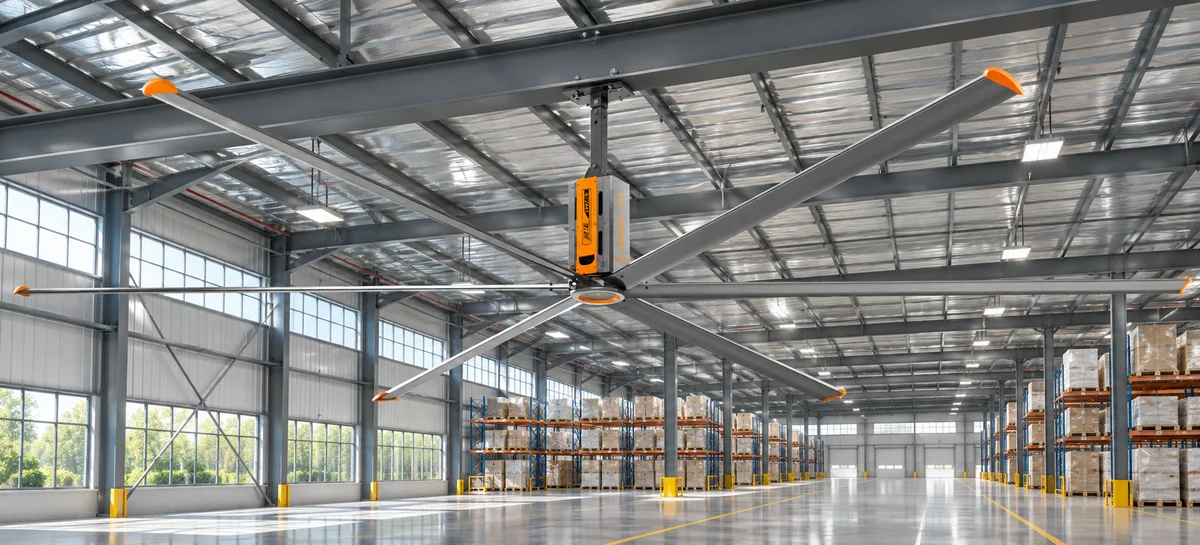
Standard ceiling fans work well in rooms up to about 400 sq ft with 8 to 10 ft ceilings, such as offices, break rooms, and retail counters. Past that point, or in spaces with ceilings above roughly 14 ft and wide open floors, HVLS fans can be a better fit, because one large, slow fan can cover what a dozen small ones can't. Floor area alone doesn't settle it. Ceiling height and structure, obstructions, occupancy, and how much heat the space carries all matter. When moving air isn't enough, evaporative cooling is the add-on. We're KOOLAIR, a manufacturer of HVLS fans and evaporative air coolers. We've been building since 2003 and export to more than 90 countries and regions. We make recommendations based on your facility's dimensions, ceiling structure, climate, and occupancy.
Do HVLS fans raise or lower your energy bill? Both — and the balance depends on how you buy and run them. A high-volume, low-speed (HVLS) fan uses relatively little electricity itself — a big fan turning slowly, not a compressor. Its main effect is what it does to the rest of the building: in summer it makes people feel cooler without lowering the air temperature, so the air conditioning works less; in winter it pushes warm air down from the ceiling, so the heating system works less. Sized and controlled right, it usually pays for its own electricity over and over. This guide explains where the energy goes, how a fan changes heating and cooling load, and how to estimate the running cost — without promising a percentage saving, because the result depends on your building, your climate and how the fan is used.
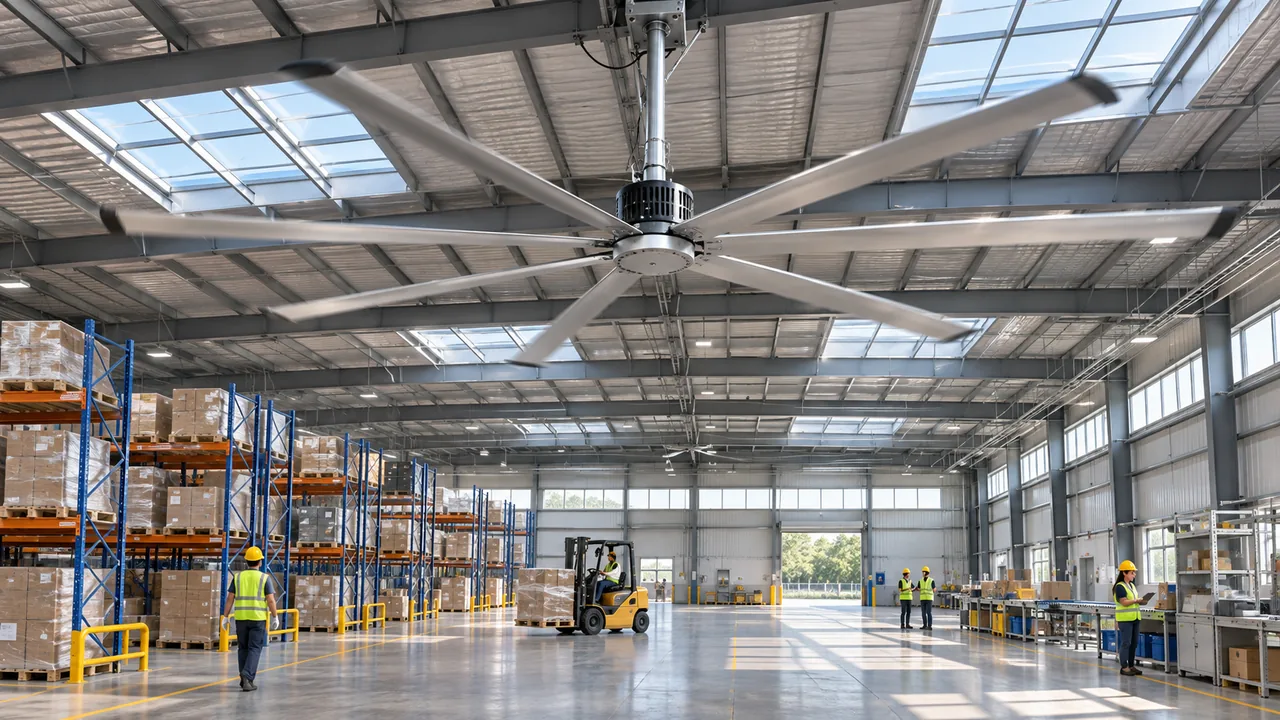
A distribution center is a hard place to keep comfortable. High ceilings, long aisles, tall racks, dock doors opening and closing all day, and people working across a floor the size of several football fields. A high-volume, low-speed (HVLS) fan is one of the few pieces of equipment that can move air across that whole space from a single mounting point. Two of the best-known American brands in this category are Big Ass Fans and Rite-Hite. Both sell large-diameter fans in the 8- to 24-foot range, both offer direct-drive and gearbox models, and both will quote a distribution-center project. The right choice depends on the models, the building, the installed price, and the support available in your market. This guide compares the two brands' current HVLS lines for distribution centers and gives a buy-one-or-the-other conclusion, not a claim that either brand is universally better.
Cooling a warehouse, a factory floor, a shopping mall or a logistics hub is a different problem from cooling a house. This guide explains HVLS fans, evaporative coolers, wet-curtain walls and natural ventilation — how to combine them, and where their limits are.
A custom climate control project runs in six stages — survey, requirements, design, quotation, installation and acceptance. This guide walks through each stage, what it produces, and the checks that keep the project on time and on target.
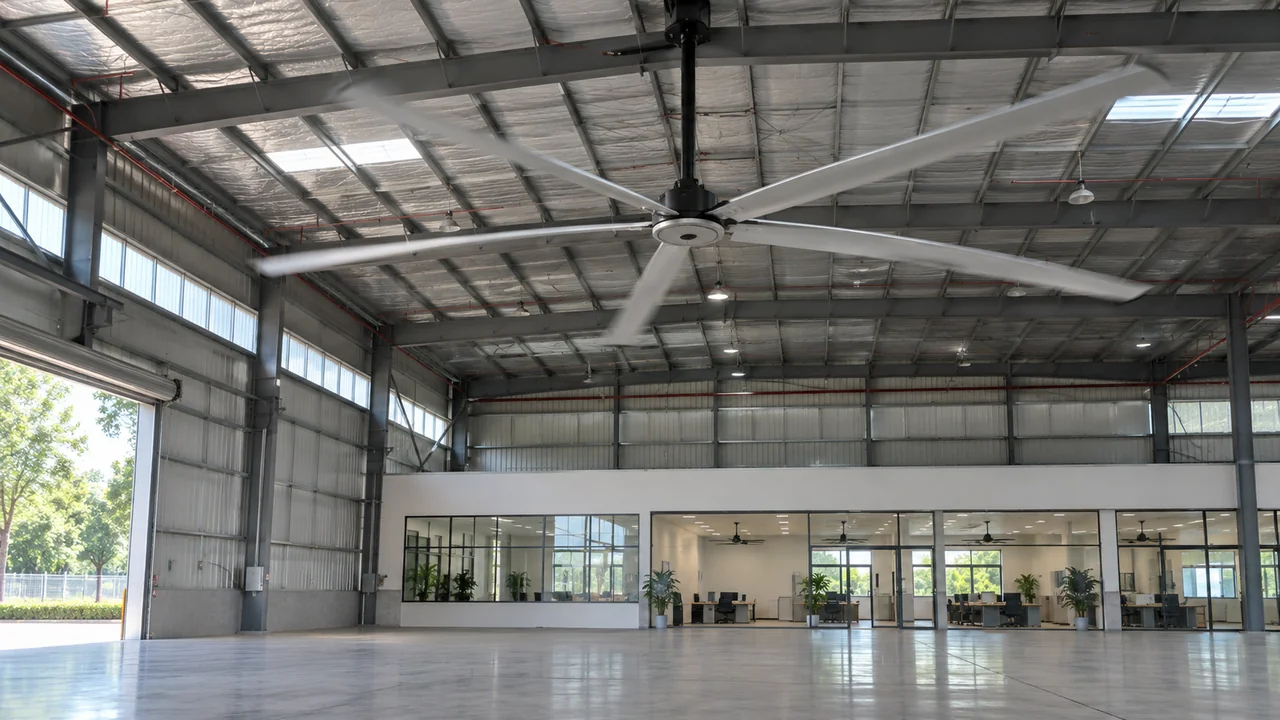
A standard ventilation package rarely fits an irregular building. This guide explains how a ventilation company surveys the site, zones the space around racking and mezzanines, sizes fans, exhaust and evaporative cooling to the real airflow path, and verifies the result — and what to prepare before asking for a quote.
PMSM direct-drive fans remove the belt, pulleys and gearbox from the power path — compare energy loss, maintenance, downtime and 10-year cost against belt-driven fans for manufacturing plants.
US buyers can buy an HVLS fan with professional installation through three routes — an industrial fan supplier, an authorized distributor, or a commercial HVAC contractor. How the routes differ, what a complete quote should include, and how to vet an installer before you sign.
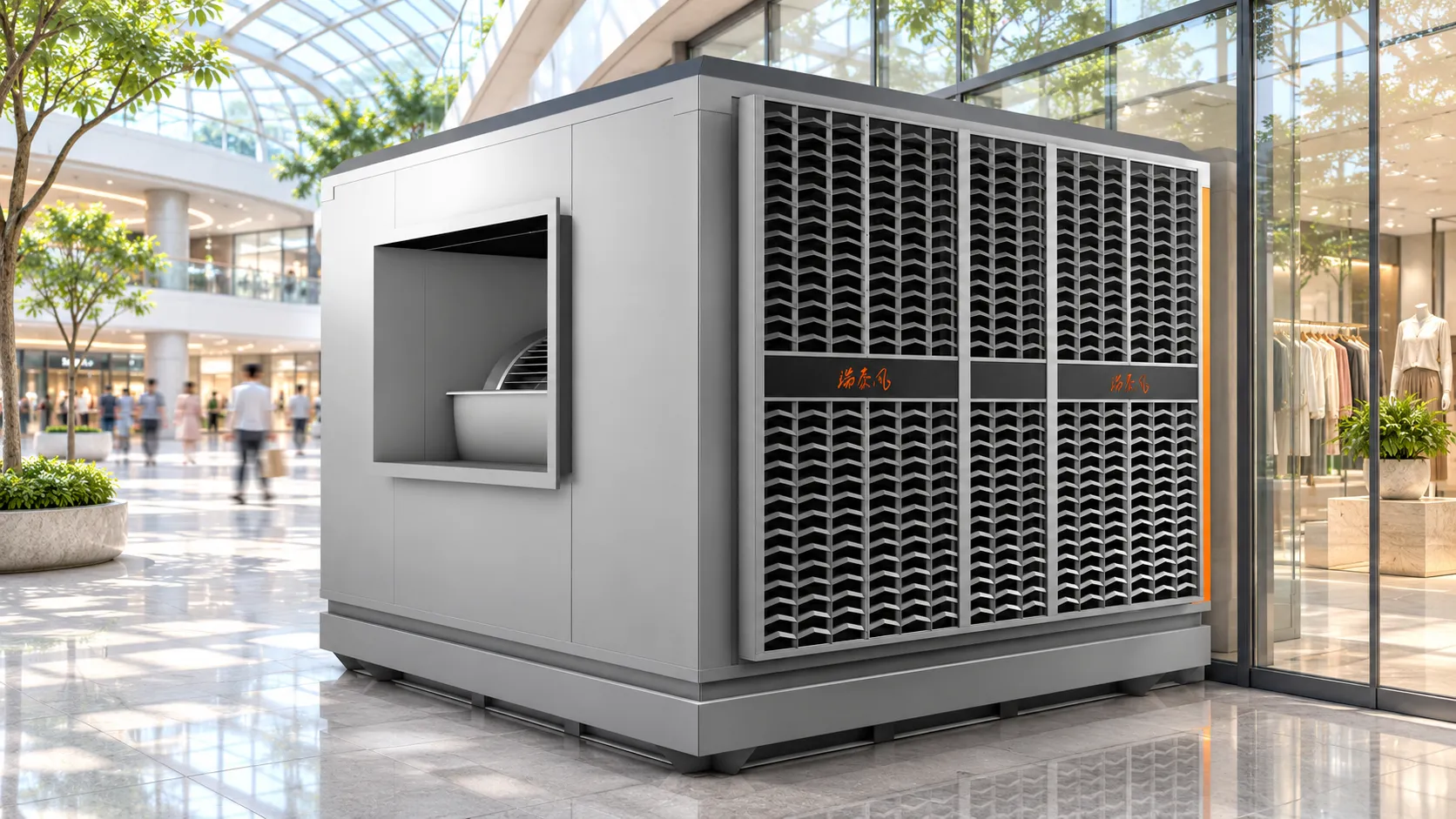
Evaporative coolers can cool malls, markets and halls for about a quarter of the energy of air conditioning — but only where the air is dry enough and the building can exhaust the air they bring in. This guide covers the climate test, fresh-air maths, humidity limits, running costs and safety checks.