
The present-day restaurants thrive on the fame of delivering a desirable atmosphere where individuals are able to dine healthily and have a good meal at the restaurant. It is not, however, a simple task to maintain the air and temperatures in crowded dining rooms as best as it is possible, especially in large or high-ceilinged rooms. The unventilated environment could lead to a stifling environment, bad smell, and cold weather that will send customers away. Industrial ceiling fans, especially High-Volume Low-Speed (HVLS) ones, are the best remedy to the problem of ventilation and air movement in the dining rooms. These fans are a game-changer for restaurant owners because they assure them customer satisfaction and minimize the cost of operating the restaurant.
Having 20 years of experience in ventilation solutions, RTFANS understands the role of ceiling fans in changing the restaurant atmosphere. This paper defines the importance of industrial ceiling fans in restaurants, the main issues, and provides effective solutions that would benefit clients as well as the business process.
Industrial Ceiling Fans: The Go-To Solution for Restaurant Ventilation
The most efficient type of ceiling fan in restaurants is the industrial types, which enhance the airflow, manages temperatures, and comforts the customers in a restaurant. HVLS fans move huge amounts of air, up to 400,000 cubic feet per minute, at low velocity to create a light breeze that cools spaces, eliminates humidity, and disperses odors. They conserve 30 percent of their energy costs due to reduced reliance on HVAC, which has a payback period of 1824 months. Their quiet operation and simple design blend well with the interior of the restaurants, hence a good investment in the restaurant ventilation equipment. Next, we shall consider what they are solving and how they are creating value.
Key Ventilation Challenges in Restaurants
Restaurants are known to have special ventilation challenges because they are full of people, with varied activities, and aesthetics. The major problems affecting the air quality and comfort are described below.
Stuffy Air and Lingering Odors
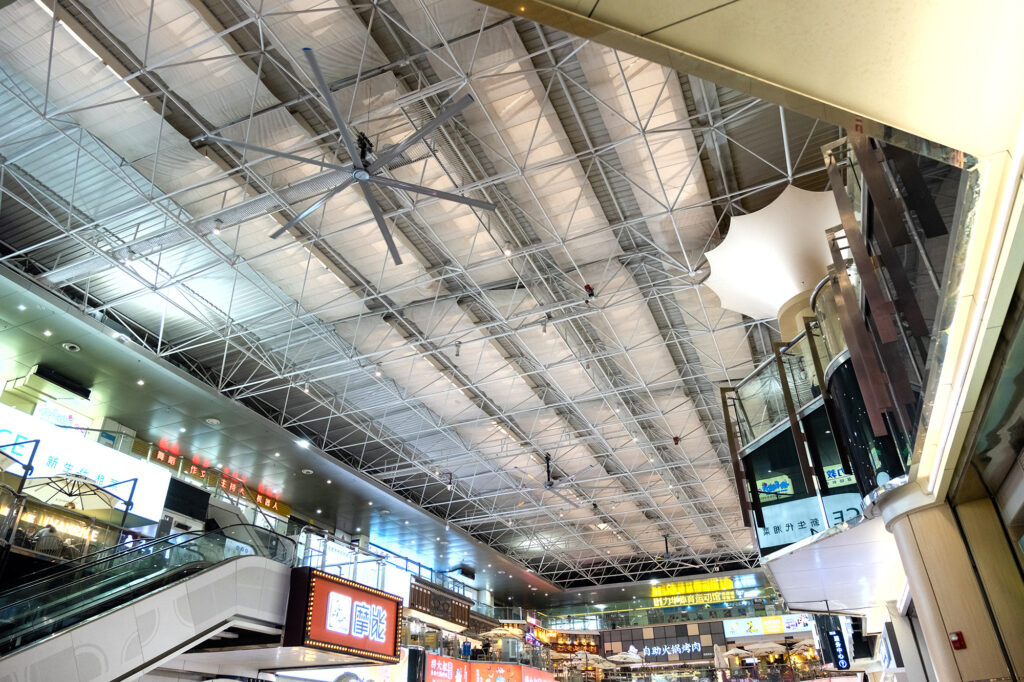
Full restaurants, especially when busy periods are experienced, may become stuffy due to the rising CO2 concentration and cooking fumes. Kitchens have fumes of food, grease, and steam that spread to the eating rooms and make the process distasteful. These smells are not eliminated, and this sends away customers, and this is a bad image for the restaurant since there is no proper airflow. Small table fans or exhaust systems make the problem even greater as they are not used to circulate air over vast dining spaces.
High Humidity from Cooking and Crowds
Cooking, such as boiling, frying, or steaming, releases moisture, and the presence of people in a dining area also provides moisture by respiration. In restaurants that have high ceilings or poor ventilation, the humidity can be more than 60% which encourages stuffiness and condensation. This may cause the growth of mold, slippery floors, and furniture or decor. Low humidity in the room is important to the comfort and safety of the room, yet HVAC systems are not always efficient at controlling the humidity of a large room.
Inconsistent Temperatures
10-20 feet restaurants, which have an open layout or are with high ceilings, are known to have imbalances in temperature. Hot air is pushed away, and cold air is left near the floor, and the heat in the kitchen or the weather outside influences the place of dining. People by windows will complain that it is too hot, and those at corners will complain that it is too cold. Using air conditioning alone to control temperatures increases the cost of energy, which tight restaurant budgets cannot afford.
Energy Costs and Sustainability Pressures
Restaurant HVAC systems are known to use a quarter to half of all operating energy, particularly in large or open restaurants. Freezing or warming down continuously to fight temperature fluctuations is expensive, and the increasing energy costs are shifting the focus towards efficiency. Moreover, consumers are gravitating towards greener companies, compelling restaurants to go green by adopting sustainable practices that comply with certification standards such as LEED or local green standards. These objectives are compromised by inefficient ventilation, which leads to higher carbon footprints.
How Industrial Ceiling Fans Solve These Challenges
Restaurant industrial ceiling fans, especially HVLS ceiling fans, can solve these problems with modern technology and pragmatic advantages. These are the ways they provide restaurant ventilation solutions.
Improving Air Circulation and Odor Control
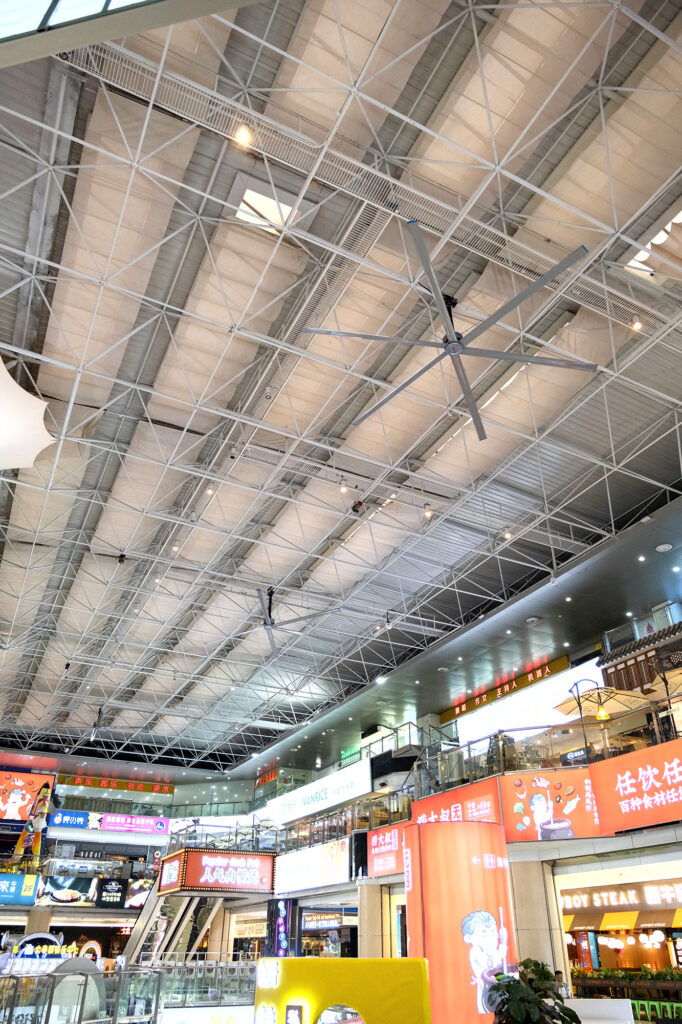
HVLS fans have a blade diameter of 8-24 feet with a speed of up to 400,000 CFM at low speed (50-100 RPM) and have a range of 22,000 square feet per fan. This great air flow destroys stuffy places and disperses cooking odors and cools down the meal tables. The fans are installed to provide a good atmosphere in the dining rooms by enhancing the air circulation, thereby enhancing customer satisfaction.
One example is the installation of 2 12-foot HVLS fans in a main dining area of a 5,000-square-foot high-end restaurant. The open kitchen in the past was a source of distraction to the customers through the smells of food. The airflow improved with installation, causing a reduction of odor complaints by 20 percent, which also enabled the environment to become less intimidating.
Reducing Humidity
HVLS fans reduce humidity by 10-15 percent by facilitating air circulation, which removes moisture on the surfaces and disperses humid air. This helps to avoid moulds, keeps decor safe, and lessens the likelihood of falling on the floor. A high-humidity casual dining chain installed HVLS fans and reported fewer problems with their maintenance because condensation on tables and floors disappeared, saving the chain $5,000 a year on repairs.
Stabilizing Temperatures
HVLS fans destratify the air by mixing warm air close to the ceiling with cooler air near the floor and produce equal temperatures. Their wind-chill effect helps make eating areas feel 5-7oF cooler during warm months, minimizing the use of air conditioning. During colder temperatures, fans use recycled warm air, which enhances the heating efficiency. A 15-foot ceiling rooftop restaurant experienced a 25 percent reduction in customer complaints regarding temperature after HVLS fans were installed because the constant flow of air created a sense of comfort at all tables.
Cutting Energy Costs
HVLS fans can decrease energy usage because they complement HVAC systems by 20-30%. They permit thermostats to be set higher in summer by 3-5 degrees to save 4% of energy per degree. Destratification reduces heating expenses in winter. HVLS models are very efficient with a power consumption of less than 1.5 kW per fan. Three HVLS fans helped a large bistro to save 10,000 dollars per year on energy and had an ROI after 18 months, which matches up to sustainability programs such as LEED.
Aesthetic and Quiet Operation
HVLS fans are relatively silent (below 35 dB), so there is no disturbance in a conversation and atmosphere, unlike noisier floor fans (45-60 dB). They have smooth designs that match the new restaurant designs, making them more attractive to the eye. One trendy urban restaurant that incorporated HVLS fans in their industrial-chic interior not only enhanced their comfort and style but also did not reduce the noise.
Safety and Compliance
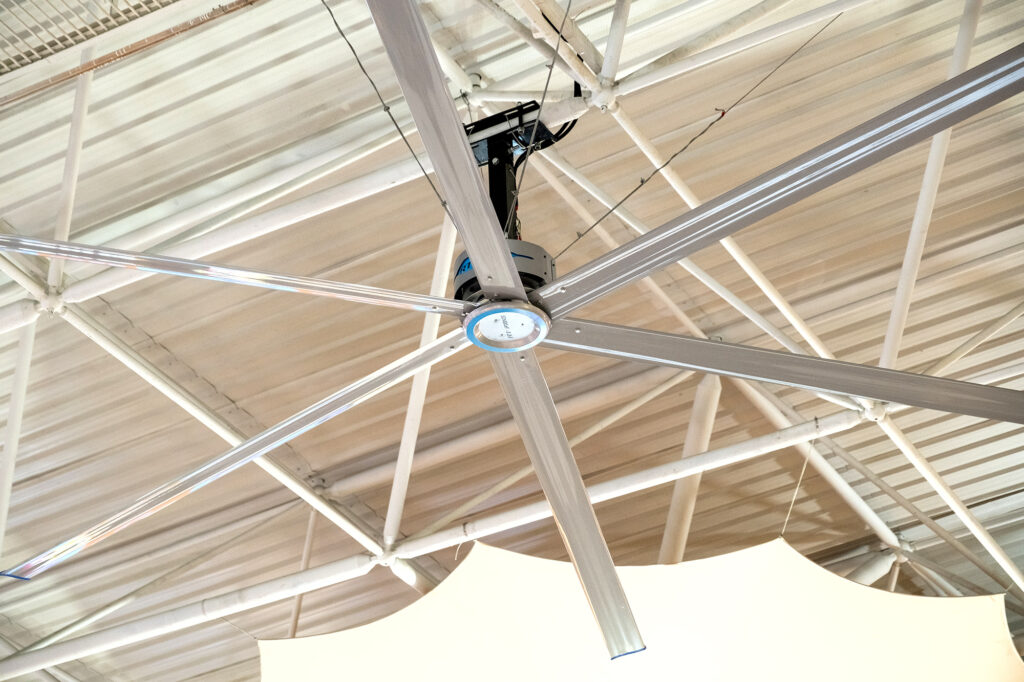
HVLS ceiling fans occupy less space on the floor, and cords and floor fans are not tripping hazards. The certifications and safety cables used during the UL/ETL mandates comply with the standard expectations of restaurants and are also compliant with local regulations. Floor fans were substituted with HVLS types, and a family restaurant eliminated safety concerns and easily sailed through inspections.
Real-World Benefits of HVLS Fans in Restaurants
The effects of industrial ceiling fans on restaurants are evident in the real world:
- Urban Bistro: A 4,000-square-foot establishment had problems with air congestion during high traffic times. Two HVLS fans enhanced air circulation, which decreased odor complaints by 15 percent and reduced energy expenditure by 22 percent (8,000 per annum).
- Coastal Seafood Restaurant: Humidity destroyed decor and created slipperiness. Three HVLS fans reduced the humidity by 12 percent, saving the company $6,000 annually in maintenance and increasing customer satisfaction.
- The large chain restaurant received complaints about temperature fluctuations in its 6,000-square-foot dining hall. HVLS fans stabilized the environment, yielding 10% more repeat visits and saving the company $12,000 per year in HVAC.
These demonstrations indicate that restaurant ventilation systems help improve customer experiences and efficiency.
Conclusion
Stuffiness, humidity, temperature fluctuations, and energy costs are ventilation problems in restaurants, which pose a major challenge to the restaurants in terms of customer satisfaction and profitability. One of the solutions to restaurant ventilation involves industrial ceiling fans (particularly HVLS), which can improve airflow in restaurants and lower moisture content in them, as well as stabilize temperature levels. They are a smart investment; the owners of restaurants can save on energy, and they are not very noisy and are attractive, too.
Are you willing to take your restaurant to a level of comfort and efficiency? As a 20-plus-year veteran in HVLS technology, RTFANS will provide solutions to your ventilatory requirements. Call us today to find out how our ceiling fans can help you turn your eating space – your customers and bottom line are due the best.
SEO Title: Industrial Ceiling Fans for Restaurants: Ventilation Solutions
Meta Description: Discover how industrial ceiling fans for restaurants provide restaurant ventilation solutions, improving airflow in dining areas and enhancing customer comfort with RTFANS.
Excerpt: Industrial ceiling fans for restaurants offer restaurant ventilation solutions, improving airflow in dining areas, reducing humidity, and boosting comfort for diners.