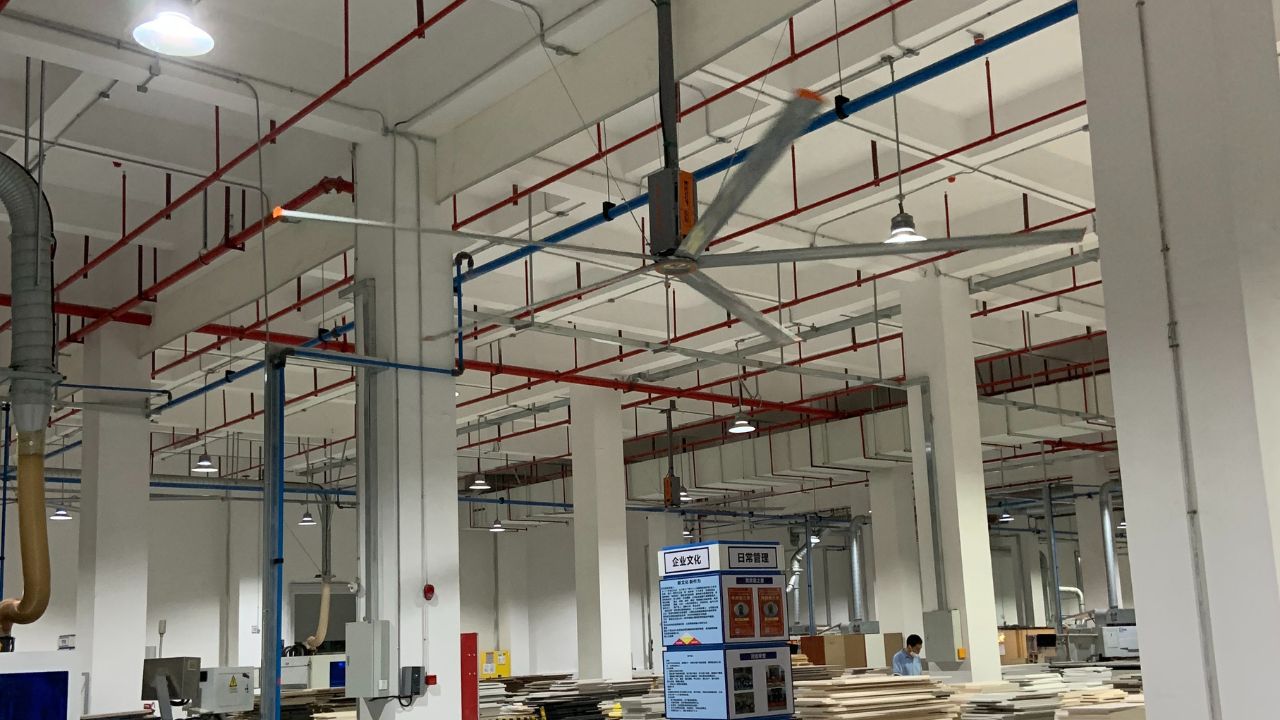
Move air downward
The suspended rotor moves a broad column of room air toward the occupied zone.

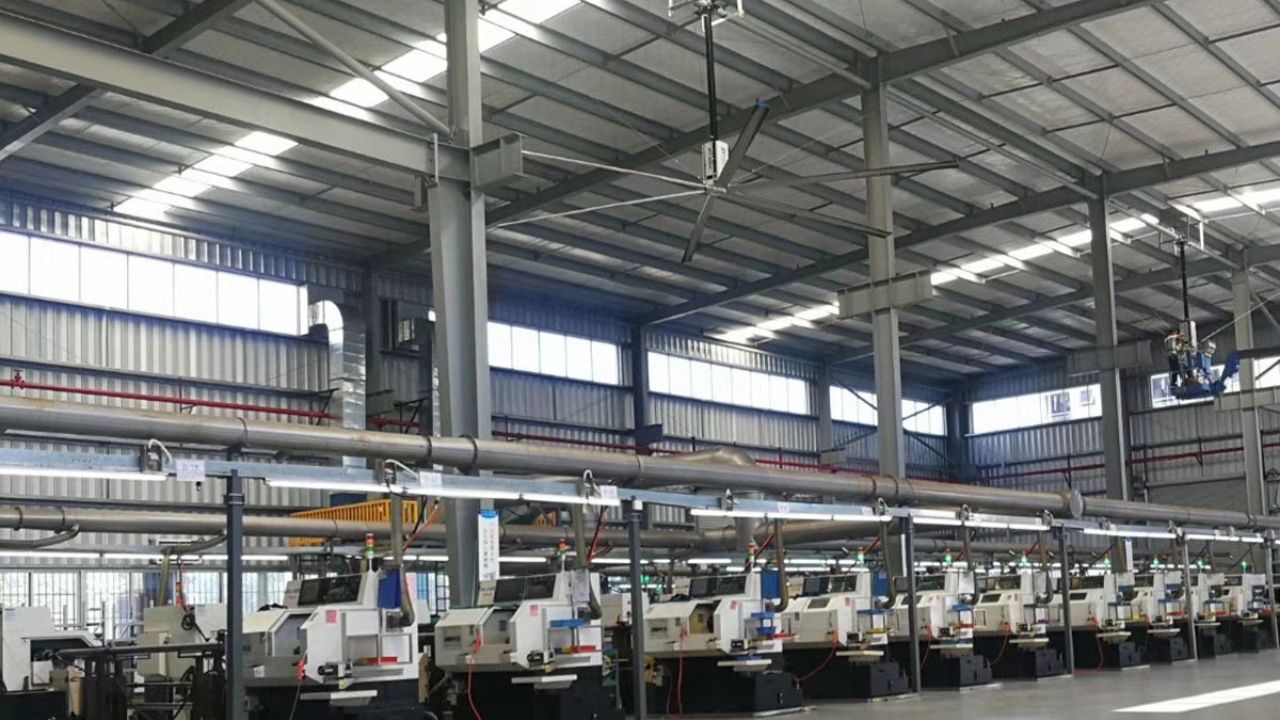 RTFANS product reference
HVLS Fans / Product record
publishedHorse barn ceiling fans and barn fans for livestock that move high volumes of air across dairy barns, horse barns and other large agricultural buildings.
Supplier rating on Alibaba: 4.9/5 based on 22 buyer reviews · Read buyer reviews
Product overview
Product record
| Application | Cattle, dairy and horse barns |
|---|---|
| Fan type | HVLS ceiling fan |
| Installation | Structural ceiling or roof support |
| Selection basis | Building dimensions, clear height, animal area and ventilation layout |
Product context
Horse Barn Ceiling Fans & Livestock HVLS Fans is designed for large factories, warehouses and high-heat industrial spaces. Its controlled air movement helps equalize temperatures and reduce stagnant air in large occupied spaces.
Operating principle
The suspended rotor moves a broad column of room air toward the occupied zone.
Air moves outward from the fan and mixes warmer and cooler layers in the space.
Air movement can improve perceived comfort, but the fan does not provide outdoor air or refrigeration.
Built for industrial use
Large-diameter blades move room air across occupied zones and help mix temperature layers.
Ceiling height, structure, racks, lights and sprinklers affect the final fan position.
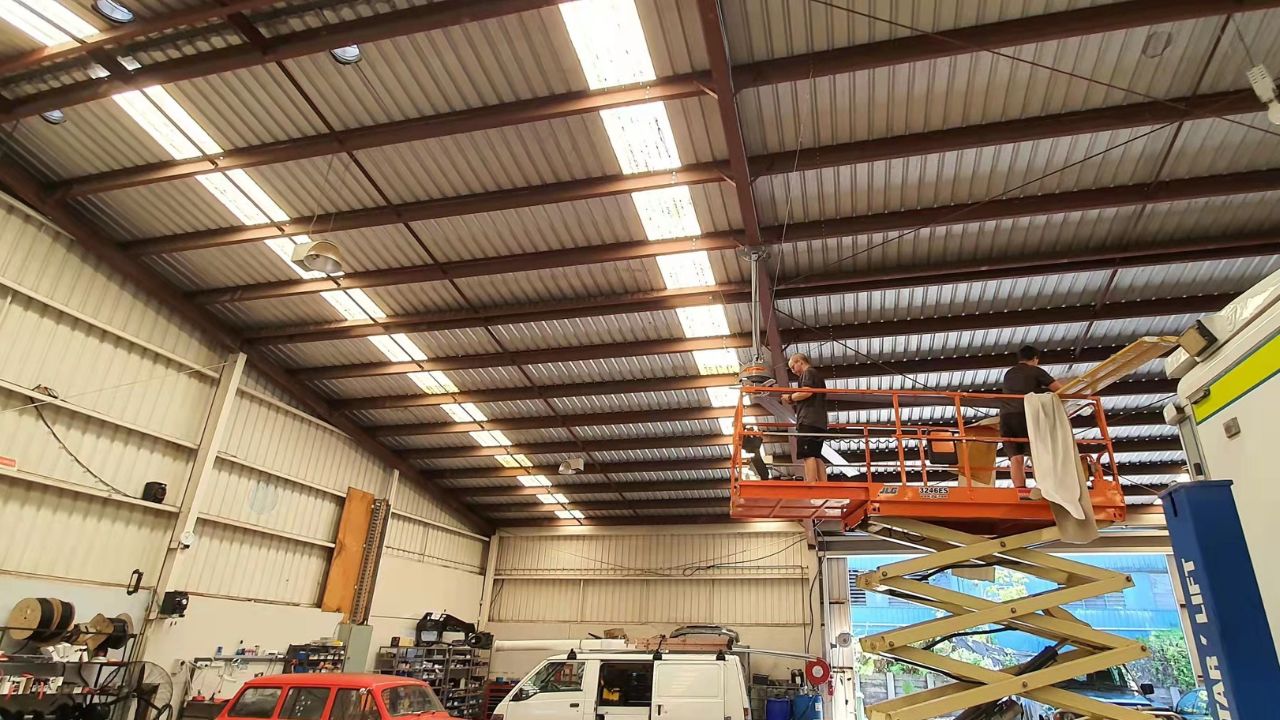
Mounting, fasteners and secondary retention must follow the model installation instructions.
Inspect blades, fasteners, controls and drive components according to the model manual.
Selection data
Before specifying
Cooling performance depends on entering air temperature, relative humidity and ventilation. The system performs best where cooled fresh air can move continuously through the space.
Service routine
Before serviceIsolate electrical power and follow the model manual before inspection.
During routine checksInspect blades or impellers, guards, fasteners, safety retainers and controls according to the model manual.
Facility planning
Review the airflow pattern, control system, installation conditions and operating range for this fan.
Horse barn ceiling fans are large HVLS fans designed to move a broad, gentle column of air through barns and livestock buildings. For dairy, cattle and horse facilities, the right fan layout can improve air mixing and help reduce stagnant, humid zones. RTFANS reviews the building dimensions, clear height, animal area, obstructions and climate before recommending a fan size or quantity.
Barn fans for livestock support continuous air movement where animals need a more even environment. A large, low-speed ceiling fan can circulate air from the roof area down toward the occupied zone, then spread it horizontally across the barn. This helps limit hot spots and supports ventilation planning alongside fresh-air inlets, exhaust fans or evaporative cooling equipment.
Fan selection depends on the barn rather than a keyword or a single coverage number. Share the following information before ordering:
RTFANS supplies HVLS fans in multiple diameters and configurations. The final diameter, installation height, number of fans and operating speed should be confirmed from the building plan and the required airflow. See the broader HVLS fan range and the agricultural buildings ventilation guide for related planning information.
Keep blades clear of roof members, lights, sprinklers, feed lines and animal handling equipment. The fan should be installed with the supplied safety retention system and checked for level, vibration and secure fasteners during commissioning. A ceiling fan does not replace the need for adequate air inlets or mechanical exhaust; it mixes and distributes air within the ventilation strategy.
For humid climates or buildings with a high heat load, an HVLS fan may be combined with industrial exhaust fans or a cooling pad system. Cooling performance depends on outdoor conditions, airflow, building openings and the complete system design.
Send the barn plan, photos, dimensions, animal type, location, power supply and target operating season through the RTFANS quote request. Our team can use those details to review a suitable horse barn ceiling fan layout and identify the information still needed for a project quotation.
They can be suitable for horse barns when the fan diameter, mounting height, blade clearance and airflow direction are checked against the building and animal areas. Confirm the layout with an engineer before installation.
There is no single best fan for every livestock building. The appropriate HVLS configuration depends on barn size, ceiling height, openings, animal density, climate, electrical supply and the existing ventilation system.
The number of fans depends on the required air movement and the selected diameter. Provide a floor plan and clear height so the fan spacing and quantity can be reviewed rather than estimated from floor area alone.
Related industrial equipment
Facility planning
Yes. HVLS fans reduce humidity and distribute odor and smoke, providing healthy, fresh air.
Traditional HVLS fans can't be mounted outdoors, but the portable series can. Moveable fans are indoor or outdoor flexible; suitable for gardens, gyms, playgrounds and so on.
Yes. A DANFOSS frequency converter with a step-less regulator varies the speed.
HVLS fans assist the HVAC system and spread cool air to every corner, so the AC does not need to run fully for as long.
If you have a large space and want better air-conditioning performance, air quality and ventilation, you need an HVLS fan. One fan can cover an area of up to 1,800 sq. meters depending on the size of the fan.
RTFANS HVLS fans have a warranty period of three years.
10 years or more, depending on installation and use.
Diameter from 2.8 m to 7.3 m. Industrial HVLS fans: 3.7–7.3 m; commercial HVLS fans: 2.8–4.0 m; PMSM fans: 2.8–7.3 m. Applicable area 400–1,800 sq. meters.
Engineering selection support
Share floor area, clear height, roof structure, and operating conditions for a project-specific recommendation.