
In the competitive world of high-end retail and large-scale events, showrooms and exhibition centers are designed to be immersive environments where comfort meets functionality. However, the architectural grandeur of these spaces—characterized by high ceilings and vast open floor plans—presents a significant operational challenge: the high cost of climate control.
Maintaining consistent, comfortable temperatures in these “volume-heavy” structures requires HVAC systems to work overtime, leading to massive energy consumption and high utility bills. As sustainability becomes a core business requirement, facility managers are turning to High-Volume Low-Speed (HVLS) industrial ceiling fans as a proven solution to maximize energy efficiency without compromising the visitor experience.
The Strategic Synergy: HVLS Fans and HVAC Systems
The primary reason HVLS fans are a game-changer for large venues is their ability to work in harmony with existing HVAC infrastructure. Rather than replacing air conditioning, these fans act as an efficiency multiplier through two key scientific processes:
1. Thermal Destratification in Winter
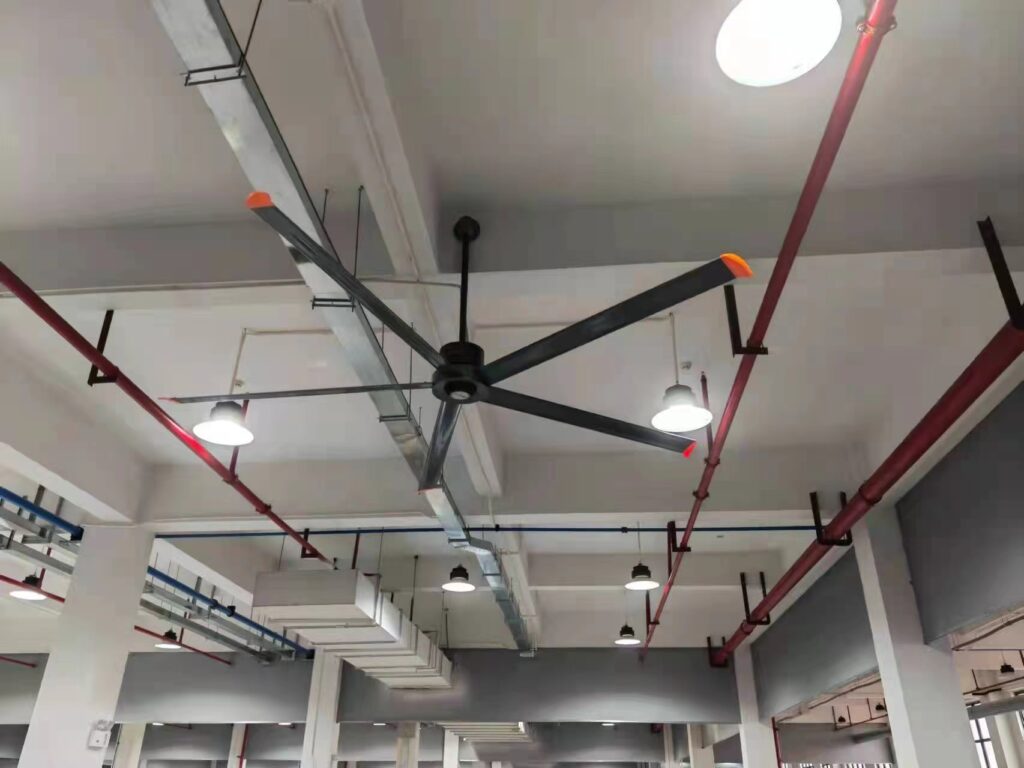
In high-ceiling structures, heat naturally rises, leaving the occupied floor area cold while warm air wastes away near the roof. HVLS fans, with their massive 8-to-24-foot blades, rotate at low speeds to gently mix these air layers. This process of destratification recycles trapped heat, reducing the frequency of heating cycles. According to U.S. Department of Energy guidelines, this can slash heating costs by 20% to 30%.
2. The Summer Wind-Chill Effect
During hotter months, HVLS fans create a “wind-chill” effect that makes the air feel 5°F to 7°F cooler to the human skin. This perceived cooling allows facility managers to raise HVAC thermostat setpoints. Following ASHRAE standards, every degree the thermostat is raised can save approximately 4% of energy consumption, leading to significant cumulative savings during peak summer months.
Real-World Financial Impact: Case Examples
The financial benefits of HVLS fans are not theoretical; they are documented in real-world applications across various venues:
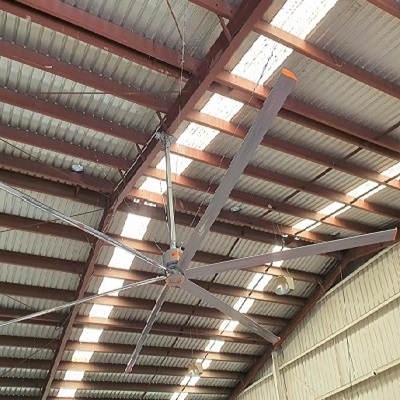
- Luxury Furniture Showroom (15,000 sq. ft.): Faced with monthly energy bills exceeding $5,000 in a warm climate, the venue installed three 20-foot HVLS fans. By raising their thermostats by just 4°F, they reduced monthly cooling costs by 16% ($800/month). Beyond the savings, the showroom reported increased “visitor linger time” due to the improved airflow.
- Art Exhibit Center: By using fans to recycle warm air during winter, this facility cut heating charges by 25%. The $10,000 annual savings were reinvested into upgrading the facility’s lighting systems.
- High-Capacity Trade Show Hall: An audit revealed that using HVLS fans to complement HVAC during full-capacity events resulted in a 22% overall reduction in energy usage.
For most venues, the investment in high-quality systems, such as those from RTFANS, typically sees a full ROI within 2 to 3 years.
Sustainability and Resource Conservation
The benefits of HVLS fans extend beyond the balance sheet to support global sustainability goals:
- Carbon Emission Reduction: By lowering the total energy load of a facility, HVLS fans directly reduce carbon footprints, assisting venues in achieving LEED or ENERGY STAR certifications.
- Long-Term Durability: Quality fans are built with sustainable materials like anodized aluminum and have a lifespan of 15 to 20 years. Their low maintenance requirements and long service life prevent the waste associated with replacing smaller, less durable fans.
- Improved Air Quality: Enhanced circulation prevents stagnant “dead zones,” eliminating moisture buildup and mold—essential for preserving both the health of visitors and the integrity of sensitive exhibits.
Best Practices for Implementation
To achieve maximum efficiency, consider the following implementation tips:
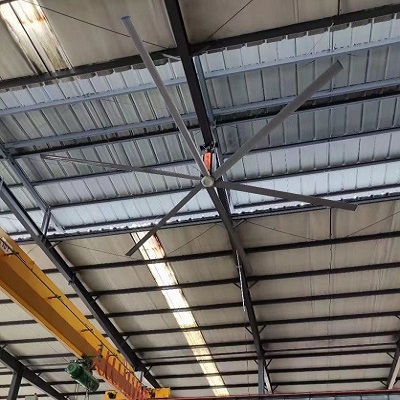
- Placement: Locate fans in high-traffic centers, maintaining a spacing of 2 to 3 times the fan’s diameter to ensure total space coverage.
- Smart Controls: Utilize variable speed controllers and sensors that adjust fan activity based on occupancy or real-time temperature demand.
- Maintenance: Establish a quarterly schedule for cleaning blades and matching fan performance to smart HVAC controls for peak efficiency.
Frequently Asked Questions
How much can a showroom realistically save? Most large venues realize a 20% to 30% reduction in total HVAC energy bills by managing air distribution more effectively.
Do these fans help with green building certifications? Yes. By optimizing HVAC performance, HVLS fans contribute points toward LEED certification under the “Energy and Atmosphere” category.
Conclusion: Future-Proof Your Venue
HVLS fans are a prudent choice for ecologically aware and cost-conscious facility managers. By creating a synergy between existing HVAC systems and advanced airflow technology, you can reduce expenditures, promote sustainability, and create a more welcoming environment for your guests.
Ready to optimize your facility? Contact RTFANS today for a tailored ventilation plan that will lower your cooling costs and grow your business sustainably.