
Airport Waiting Rooms Ceiling Fans Case Study
What role do ceiling fans play in airport waiting room comfort? Ceiling fans improve airflow, reduce perceived heat, and create [...]
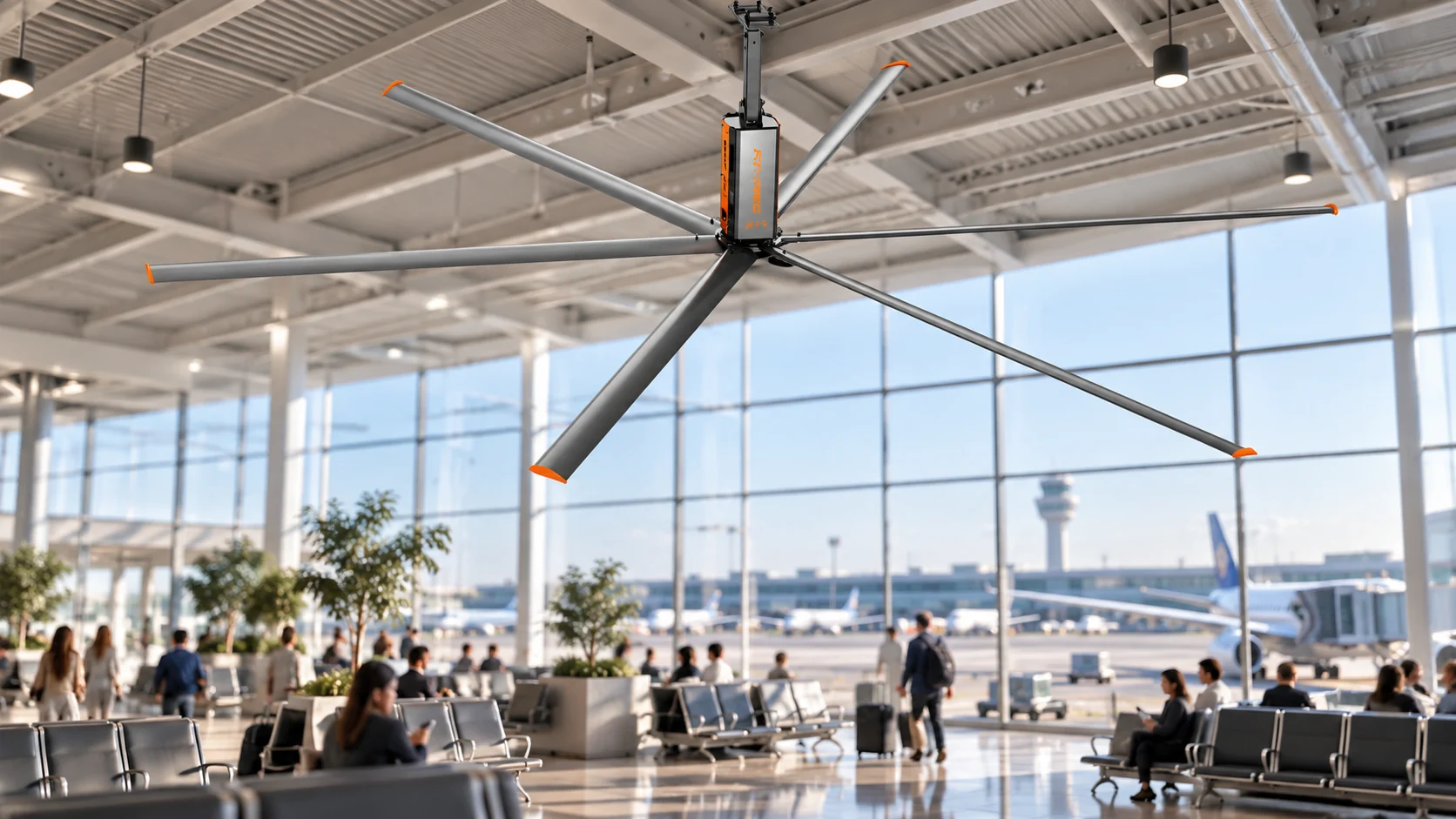
What role do ceiling fans play in airport waiting room comfort?
Ceiling fans improve airflow, reduce perceived heat, and create a calmer, more comfortable environment in busy airport waiting areas.
Airport waiting rooms experience constant passenger turnover, long dwell times, and fluctuating occupancy. Proper air movement is essential to maintain comfort without overloading HVAC systems.
Ceiling fans support thermal comfort by gently circulating air across seating zones, improving passenger experience during delays and peak travel periods.
Why do airport waiting areas struggle with temperature comfort?
Airport waiting rooms often suffer from heat buildup, uneven airflow, and stagnant air due to large spaces and constant occupancy changes.
Common comfort challenges include:
- Heat accumulation in high ceilings
- Inconsistent airflow across seating rows
- Overworked HVAC during peak traffic
- Passenger discomfort during long waits
These issues are amplified in open terminal layouts with glass façades and high foot traffic.
How do large ceiling fans regulate temperature in airport waiting rooms?
Large ceiling fans circulate air across wide areas, reducing hot spots and improving thermal consistency without creating drafts or noise.
By moving high volumes of air at low speed, large fans break up heat stratification and distribute conditioned air more evenly throughout waiting zones.
This allows HVAC systems to operate more efficiently while maintaining consistent comfort at seating level.
What airflow performance is needed in airport waiting areas?
Effective airport waiting room fans typically deliver 10,000–15,000 CFM per unit to ensure even airflow across large seating areas.
Typical airflow benchmarks:
- Small waiting lounges: 6,000–9,000 CFM
- Medium terminal zones: 10,000–15,000 CFM
- Large open waiting halls: 15,000+ CFM
Proper airflow design prevents stagnant zones without disturbing passengers.
How do ceiling fans reduce energy use in airports?
Ceiling fans lower energy use by improving air circulation, allowing HVAC systems to run less frequently and at higher temperature setpoints.
Operational data from transportation facilities shows that improved air movement can support:
- HVAC setpoint increases of 4–6°F
- Reduced compressor runtime
- Lower peak cooling demand during high occupancy
How much energy savings can airports expect from ceiling fans?
Airport waiting rooms typically achieve 20–35% cooling energy savings when ceiling fans supplement HVAC systems effectively.
Typical performance benchmarks:
- Average cooling energy reduction: 28%
- Best-performing zones: up to 35%
- Common payback period: 18–30 months
Savings depend on ceiling height, fan placement, and passenger density.
Are ceiling fans quiet enough for airport waiting rooms?
Modern large ceiling fans operate at low speeds and produce minimal noise, making them suitable for announcements and passenger comfort.
Quiet operation is critical in waiting areas where passengers rely on:
- Public address announcements
- Conversations and phone calls
- A calm, low-stress atmosphere
Properly selected fans remain unobtrusive even during continuous operation.
What features matter when selecting airport waiting room ceiling fans?
Airport ceiling fans should be quiet, high-airflow, energy-efficient, durable, and visually compatible with modern terminal architecture.
Key selection criteria include:
- High CFM at low RPM
- Low operational noise (measured in dBA)
- Long service life under continuous use
- Finishes that integrate with terminal design
Do ceiling fans affect passenger comfort and perception?
Gentle air movement from ceiling fans reduces stuffiness and helps passengers feel cooler, calmer, and more comfortable while waiting.
Studies in transportation environments show that perceived comfort improves even when actual temperatures remain unchanged, thanks to evaporative cooling effects.
Why are ceiling fans well-suited for airport waiting rooms?
Ceiling fans suit airport waiting rooms because they cool large spaces efficiently, operate quietly, and improve comfort without structural changes.
They are especially effective in:
- Open terminal seating areas
- Gate waiting lounges
- Long-duration dwell zones
This case study is provided as a project reference. Conditions, equipment layouts, controls, climate, and measured outcomes can differ between facilities, so the example should be used to identify questions for a site survey rather than as a guaranteed result. Ask the RTFANS team to review the building geometry, operating schedule, existing HVAC or exhaust, electrical supply, and maintenance plan before selecting a comparable configuration.
When comparing the reference with a new facility, record the occupied floor area, clear height, roof and wall construction, machinery or storage layout, door activity, heat sources, humidity conditions, and the locations where people need improved comfort. Confirm whether the project needs general mixing, fresh-air replacement, source capture, spot cooling, or a combination. Electrical capacity, mounting structure, controls, water, drainage, cleaning, and access for maintenance also affect the final design. A site-specific review converts the lessons from this reference into a configuration that can be checked against local code, safety, and operating requirements.