
Warehouses & Distribution Centers
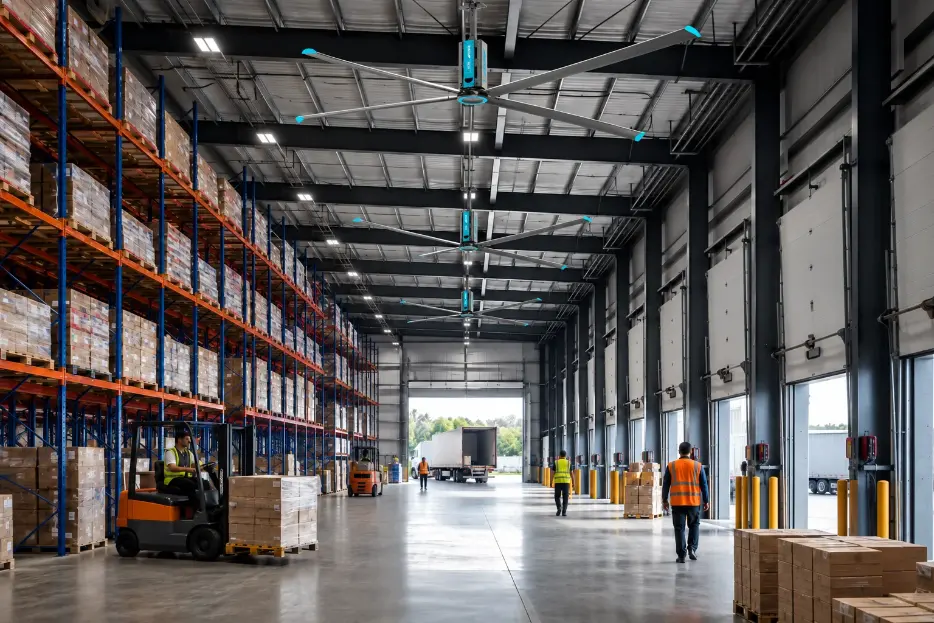
High-bay warehouses need airflow planned around rack geometry, loading activity, and the people working at floor level.
What airflow approach fits this facility?
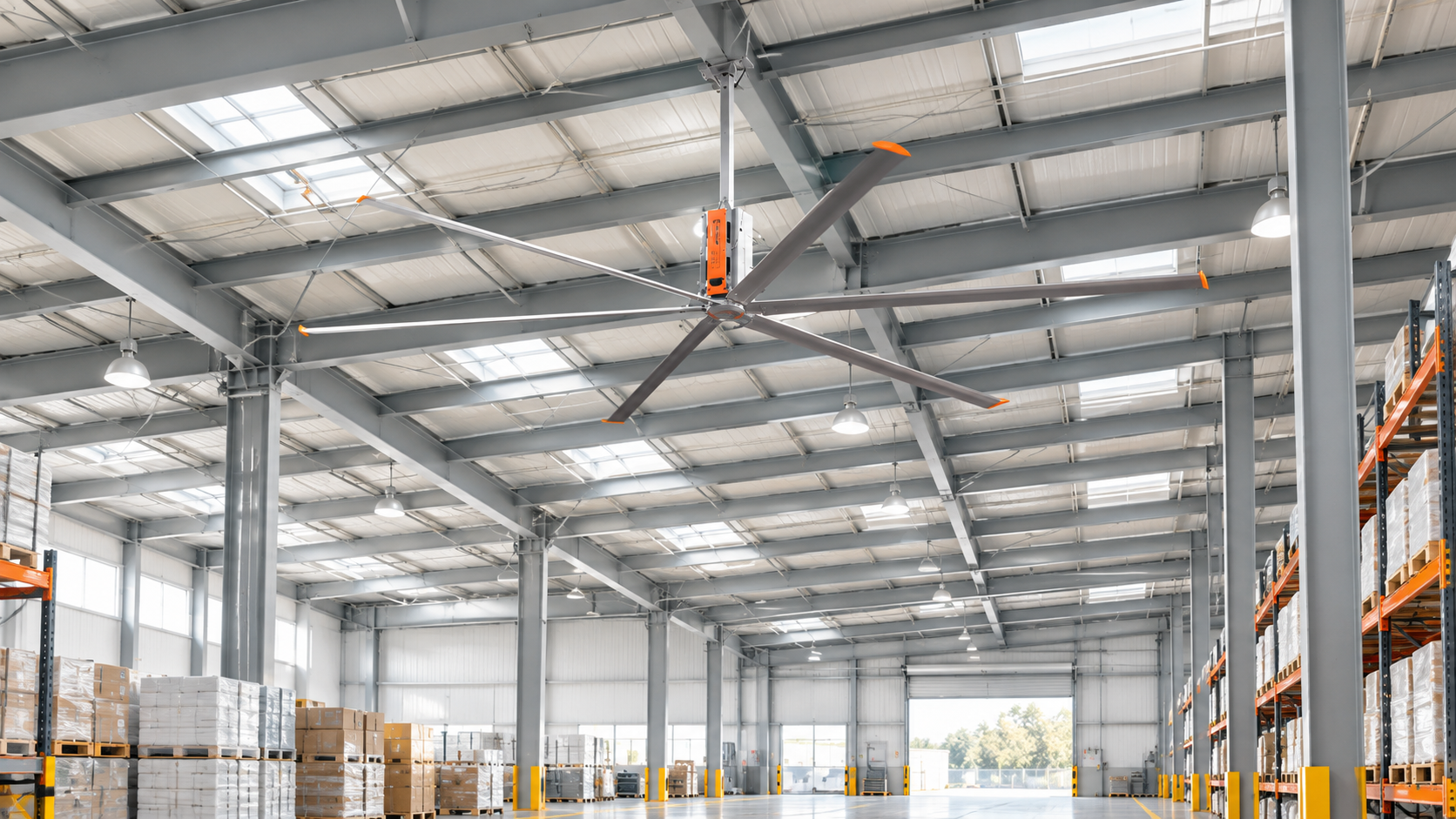
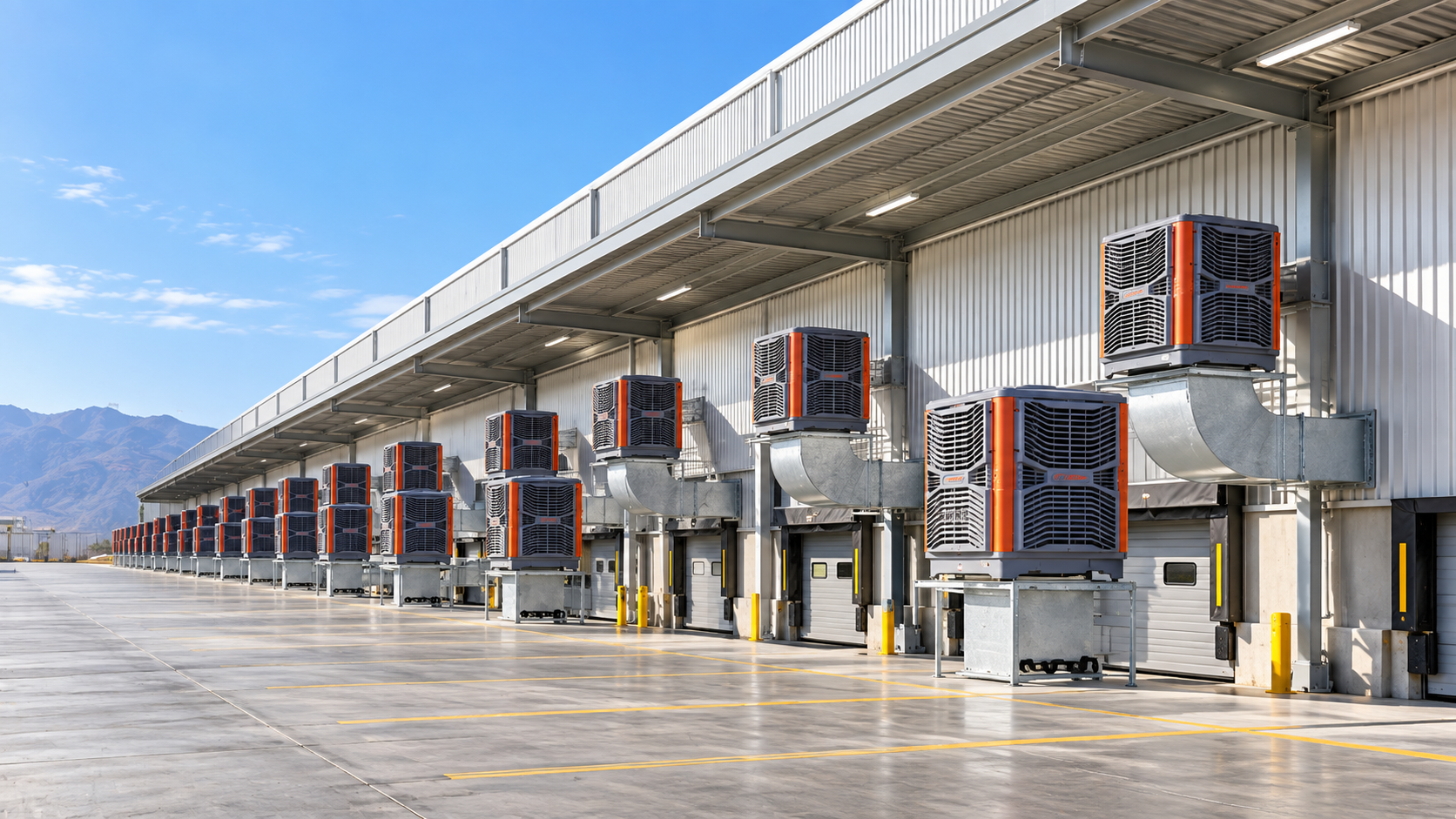
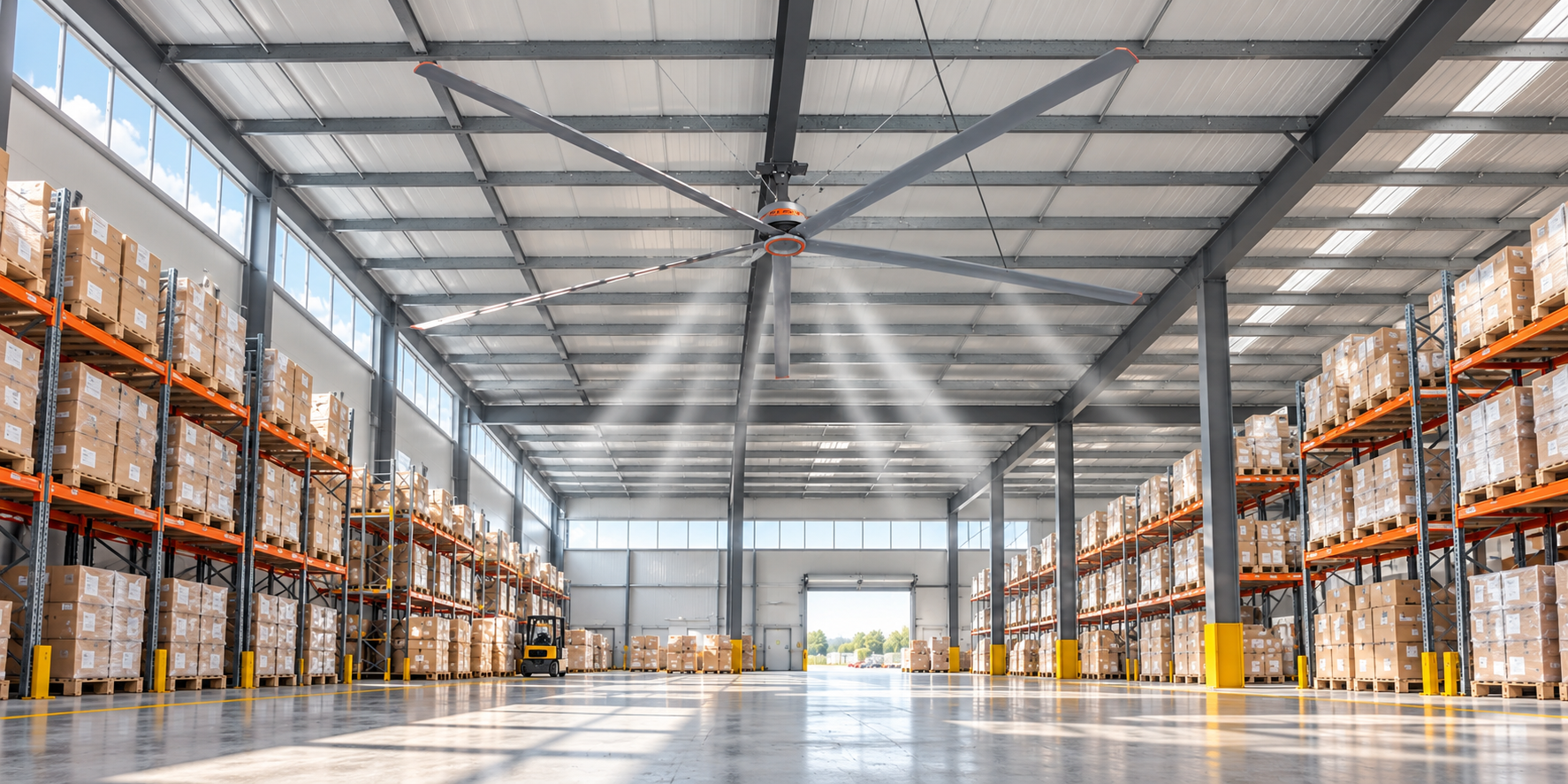
For most warehouses, start with destratification and broad air circulation across storage, picking, packing, and staging zones. HVLS fans can move air through open floor areas and help reduce stagnant pockets; they do not replace source capture, code-required exhaust, or a project-specific HVAC design. Evaporative cooling may be appropriate for selected dry climates and open dock conditions, subject to humidity, water, and maintenance review.
Primary Facility Airflow Challenges
RTFANS Engineering Approach
We map the occupied zones, rack aisles, dock doors, obstructions, and existing HVAC equipment before selecting fan positions. The design objective is even circulation where people and equipment operate, with controls that can respond to shifts, seasonal conditions, and dock activity. Where contaminant removal is required, general circulation is kept separate from dedicated exhaust or local extraction.
Design Inputs to Confirm
- Clear height, roof structure, rack height, mezzanines, and sprinkler or lighting clearances
- Zone temperatures, humidity patterns, door-open periods, and the locations of people-intensive tasks
- Existing HVAC supply and return paths, exhaust systems, controls, and maintenance access
Recommended Equipment Configurations
- HVLS fans for broad circulation and destratification in open warehouse zones
- Direct-drive commercial or industrial fans where controls, clearance, or maintenance access favor that configuration
- Evaporative coolers for suitable dry-climate zones after humidity, water, and drainage review
Frequently Asked Questions
Can warehouse fans replace ventilation or exhaust equipment?
No. HVLS fans primarily circulate and mix air. Required exhaust, make-up air, and local contaminant capture should be designed as separate systems where applicable.
Are evaporative coolers suitable for every warehouse?
No. Suitability depends on climate, indoor humidity targets, water quality, drainage, door operation, and the equipment or materials stored.