
Manufacturing Facilities & Industrial Plants
Manufacturing airflow must address process heat and contaminants without confusing general comfort circulation with source capture.
What airflow approach fits this facility?
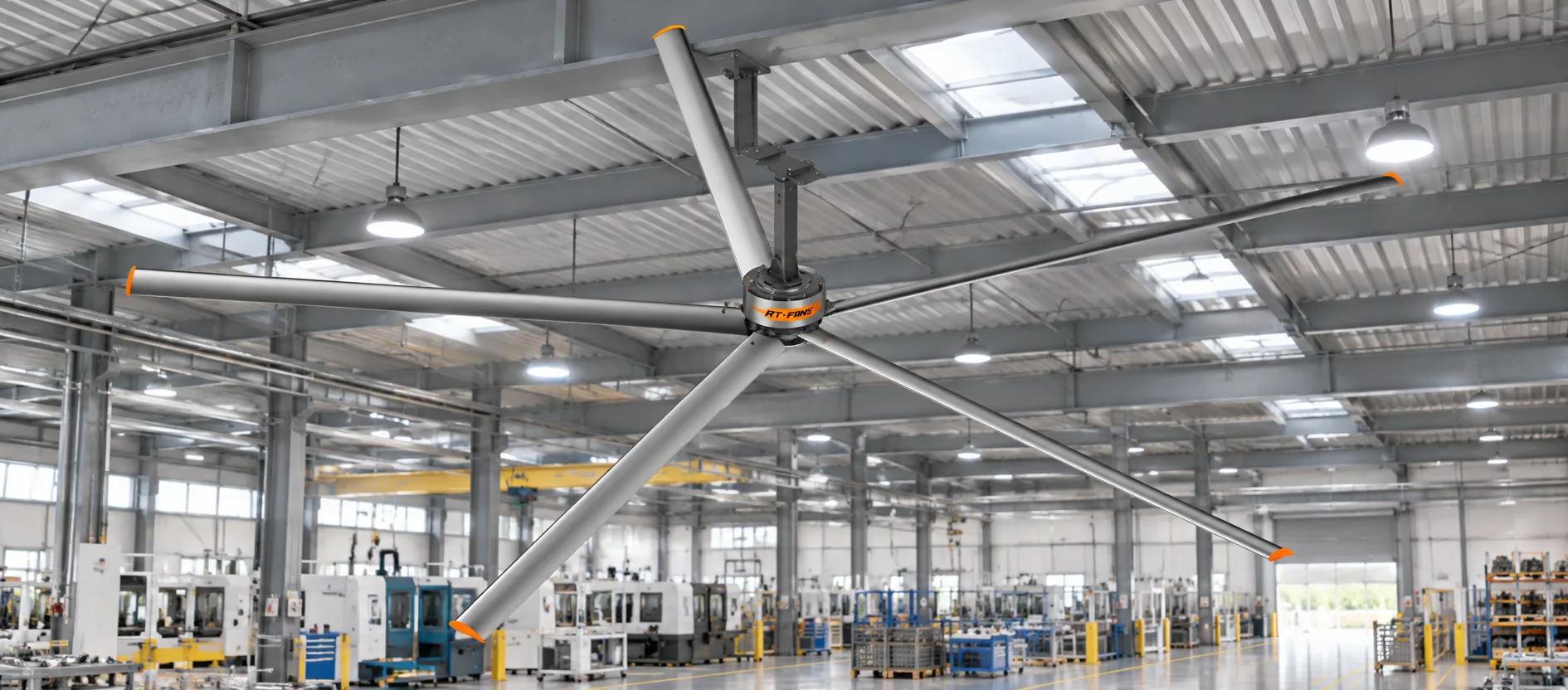
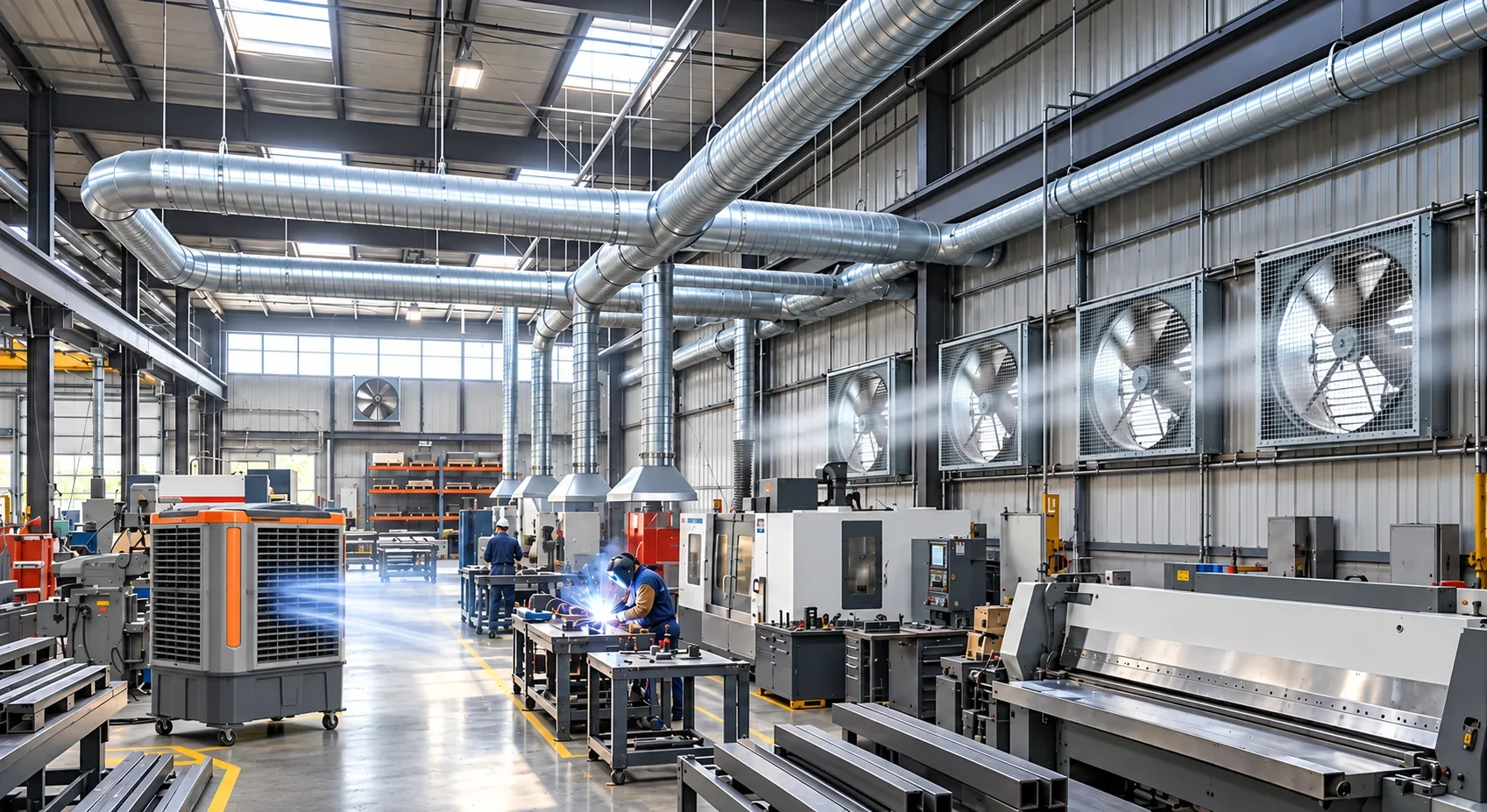
A practical manufacturing plan separates three jobs: circulate air for occupied areas, remove heat where processes create concentrated loads, and capture fumes, dust, mist, or vapors at the source. HVLS fans can support broad circulation, while evaporative cooling may suit open, dry production areas. Welding, solvent, combustion, or machining emissions require dedicated local extraction and exhaust engineering.
Primary Facility Airflow Challenges
RTFANS Engineering Approach
We begin with a process and occupancy map: heat sources, emission points, operator locations, make-up air, existing exhaust, and control zones. HVLS fans are then considered for general circulation, with evaporative cooling evaluated only where climate and process conditions allow. Local extraction remains the primary design path for welding, dust, mist, solvent, or combustion hazards.
Design Inputs to Confirm
- Process temperatures, operating cycles, emission sources, and any existing industrial hygiene measurements
- Ceiling structure, crane paths, production-line clearances, access equipment, and future layout changes
- Required exhaust, make-up air, HVAC interlocks, control zones, and maintenance or washdown conditions
Recommended Equipment Configurations
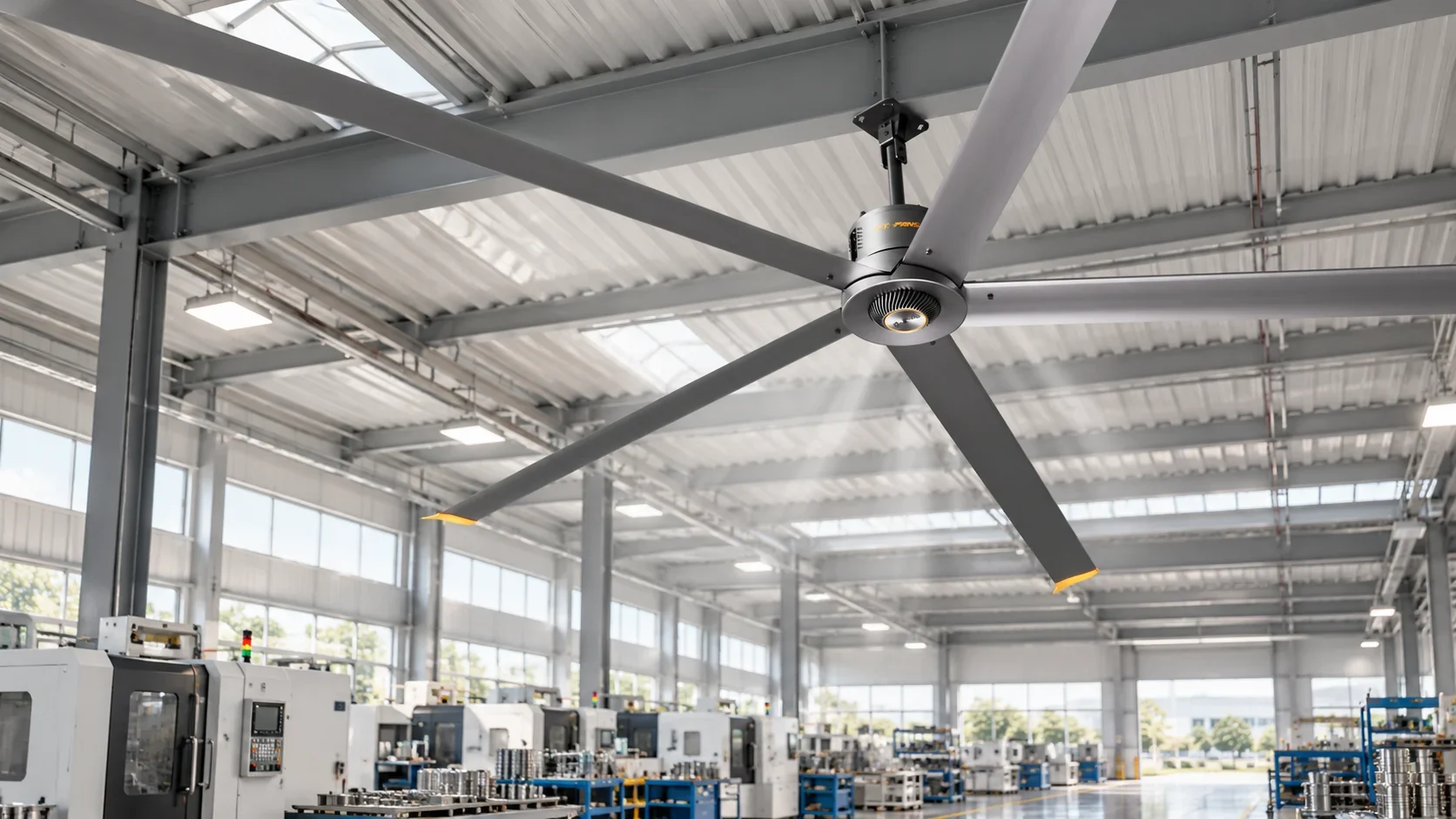
- Industrial HVLS fans for broad occupied-zone circulation
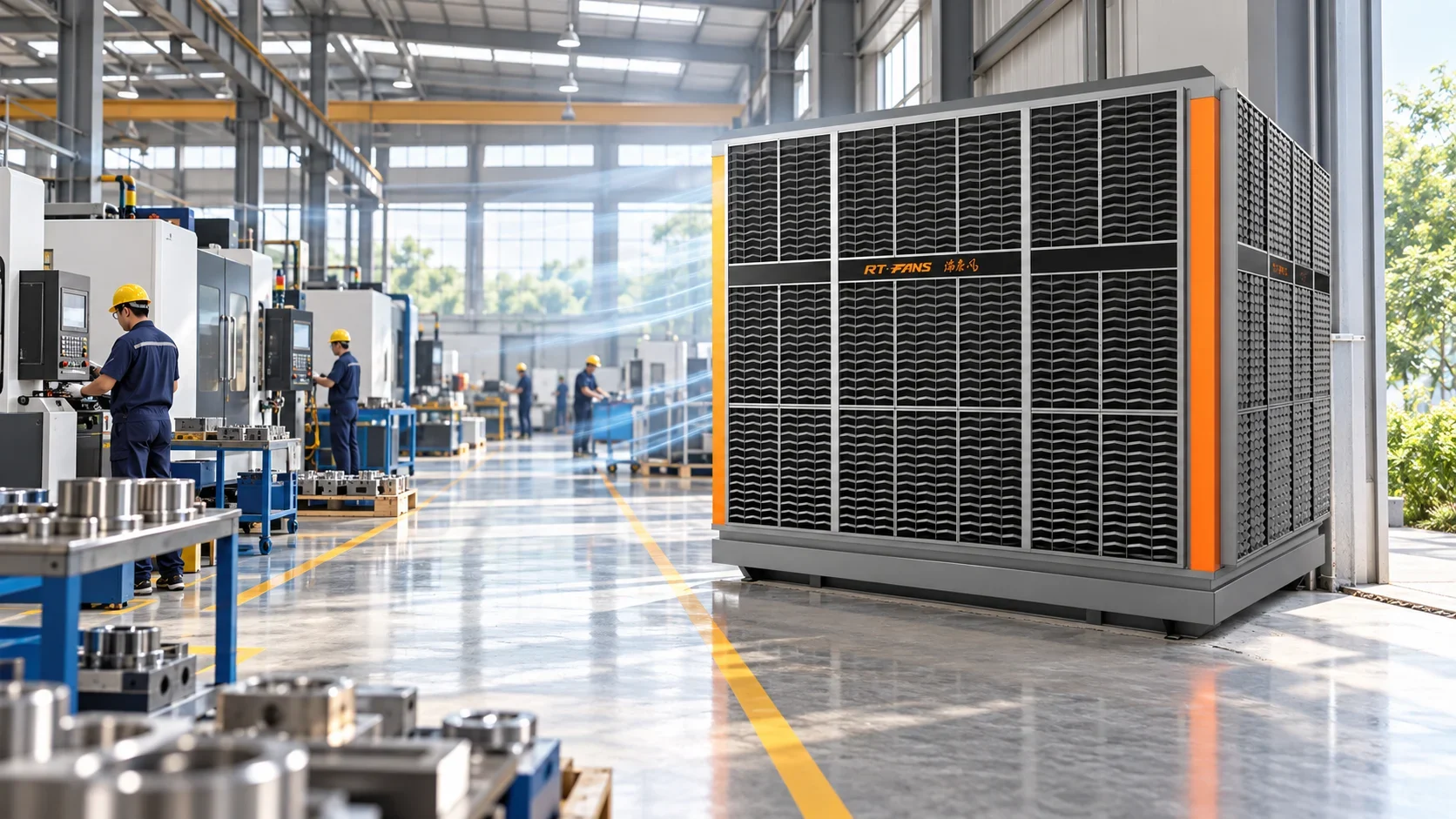
- Evaporative coolers for compatible open production areas after humidity and process review
- Fan and cooler combinations coordinated with dedicated exhaust or local extraction systems
Frequently Asked Questions
Can an HVLS fan remove welding fumes or solvent vapors?
No. Fan circulation can spread contaminants. Welding, solvent, dust, mist, and combustion emissions need source-capture or exhaust systems designed for the process.
When should evaporative cooling be considered in a factory?
Consider it only when the climate, indoor humidity target, process sensitivity, water supply, and maintenance plan are compatible.