
Industrial HVLS Fans & Cooling Solutions | Efficient Airflow for Factories
Industrial Cooling Fans & Ventilation Solutions for Factories Industrial facilities often face challenges with heat accumulation, poor air circulation, and [...]
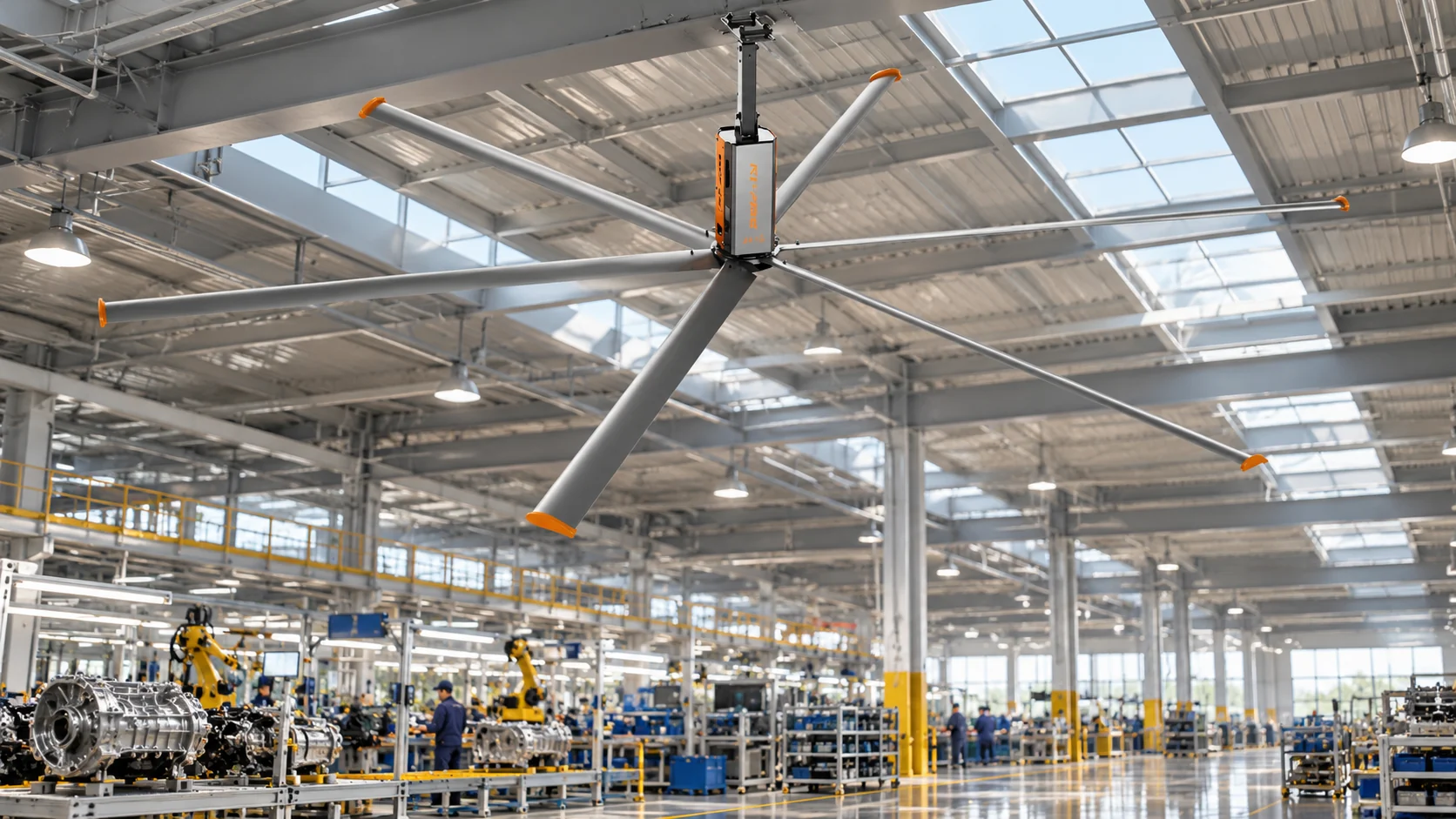
Industrial facilities often face challenges with heat accumulation, poor air circulation, and high energy consumption. Our industrial cooling fans are engineered to provide maximum airflow, reduce heat stress, and improve workplace productivity. With HVLS (High Volume Low Speed) fans, evaporative air coolers, and exhaust ventilation systems, we deliver comprehensive solutions tailored to large industrial spaces.
Whether your facility is a manufacturing plant, assembly workshop, or warehouse, our cooling solutions help maintain optimal conditions for employees, machinery, and products.
Why Industrial Cooling Is Essential
Heat and Airflow Challenges
- High ceilings causing heat stratification
- Dense machinery generating hot spots
- Worker discomfort and fatigue
- Energy-intensive traditional HVAC
Benefits of Industrial Cooling Fans
- Reduce heat accumulation efficiently
- Enhance air circulation for even temperature distribution
- Improve worker comfort and productivity
- Lower energy consumption compared to traditional HVAC
HVLS Fans – The Cornerstone of Industrial Cooling
HVLS fans are large-diameter, low-speed fans designed to move massive volumes of air efficiently.
How HVLS Fans Work
These fans create a gentle airflow that covers the entire space, breaking up heat layers and providing consistent comfort throughout the facility.
Key Advantages
- Full coverage of large areas with minimal units
- Reduce perceived temperature by 5–8°C
- Energy-efficient operation
- Reduce reliance on costly HVAC systems
Applications
- Manufacturing plants
- Automotive workshops
- Heavy machinery facilities
Evaporative Air Coolers – Targeted Temperature Control
Evaporative air coolers complement HVLS fans by delivering localized cooling where heat intensity is high.
Benefits
- Energy-efficient, low operating costs
- Ideal for hot and dry industrial environments
- Easy installation and maintenance
Ideal Locations
- Assembly lines
- Workstations
- Loading bays
Exhaust Fans for Industrial Ventilation
Exhaust fans efficiently remove hot, stale air and improve air quality.
Features
- High airflow capacity
- Supports HVLS and cooling systems
- Reduces heat and improves circulation
Use Cases
- Ventilation of machinery rooms
- Chemical processing plants
- Warehouses with high heat density
Complete Industrial Cooling Solutions
Combining HVLS fans, evaporative air coolers, and exhaust fans creates a robust, integrated system.
System Benefits
- Balanced airflow
- Heat destratification
- Reduced energy bills
- Enhanced working conditions
Product Integration
- HVLS fans for general airflow
- Evaporative coolers for spot cooling
- Exhaust fans for air quality and heat removal
Recommended Products
HVLS Fans
- Diameter: 2m–7.3m
- High airflow coverage
- Energy-efficient design
Evaporative Air Coolers
- Portable or fixed
- Rapid deployment for hot zones
- Maintenance-friendly
Exhaust Fans
- Industrial-grade durability
- Supports high-volume air movement
- Complements HVLS and evaporative systems
Advantages of Choosing Our Industrial Cooling Fans
Energy Efficiency
- Significantly lower electricity consumption compared to traditional systems
Customizable Solutions
- Tailored to facility size, layout, and workflow
Proven Industrial Performance
- Trusted in factories, workshops, and warehouses globally
Scalable Systems
- Suitable for small workshops to large manufacturing plants
Related Solutions
- Warehouse Cooling Fans
- Gym & Sports Fans
- Agricultural Ventilation Systems
FAQ – Industrial Cooling Fans
This case study is provided as a project reference. Conditions, equipment layouts, controls, climate, and measured outcomes can differ between facilities, so the example should be used to identify questions for a site survey rather than as a guaranteed result. Ask the RTFANS team to review the building geometry, operating schedule, existing HVAC or exhaust, electrical supply, and maintenance plan before selecting a comparable configuration.
When comparing the reference with a new facility, record the occupied floor area, clear height, roof and wall construction, machinery or storage layout, door activity, heat sources, humidity conditions, and the locations where people need improved comfort. Confirm whether the project needs general mixing, fresh-air replacement, source capture, spot cooling, or a combination. Electrical capacity, mounting structure, controls, water, drainage, cleaning, and access for maintenance also affect the final design. A site-specific review converts the lessons from this reference into a configuration that can be checked against local code, safety, and operating requirements.