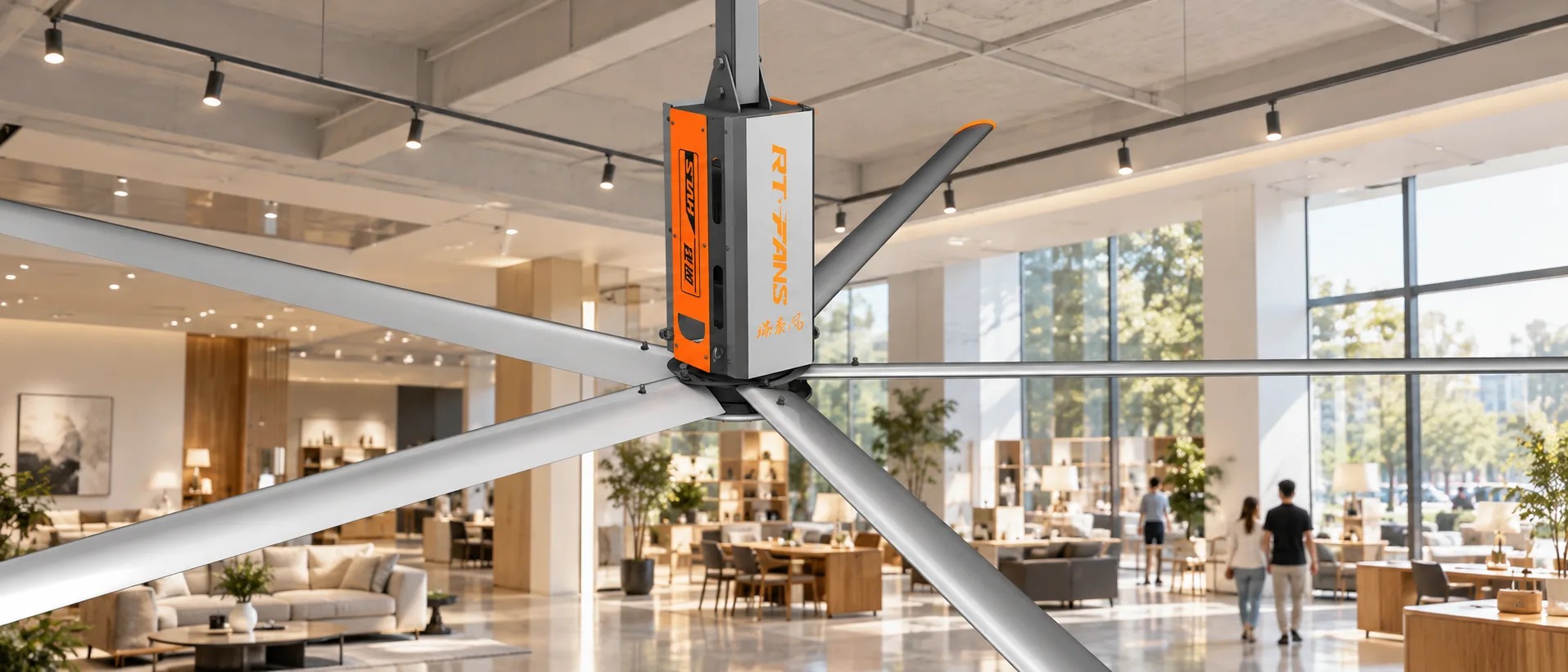
Combine circulation, fresh-air cooling and controls into a system engineered for your building.
Commercial Airflow Planning
Commercial Space Cooling & Ventilation Solutions
Gyms, retail showrooms, exhibition halls, and public venues need air movement that feels consistent without becoming distracting. We help coordinate quiet ceiling fans, HVLS circulation, existing HVAC, and fresh-air or spot cooling around the way each space is occupied.
Design for Comfort, Acoustics, and Appearance
Commercial spaces are judged at floor level. Customers, athletes, staff, and visitors notice hot spots, cold drafts, visible equipment, and distracting noise quickly. A useful plan starts with the occupied zones, then checks the ceiling services, air-conditioning layout, operating schedule, and visual requirements before selecting equipment.
Uneven comfort between entrance areas, deep floor zones, seating, courts, and customer aisles
High occupant density and changing schedules that alter heat and humidity throughout the day
Noise, visual design, and draft control requirements in spaces used by customers, athletes, or visitors
Ceiling lights, sprinklers, signage, acoustic panels, and other services limiting available mounting positions
Match the Airflow Strategy to the Venue
Quiet circulation for occupied areas
Commercial and HVLS fans can keep air moving across open floor plans and reduce stagnant zones without directing a harsh jet at one seat, machine, or customer. Selection should consider acoustic expectations, fan speed, blade profile, mounting height, and the activities below.
Coordination with existing HVAC
Ceiling fans can help mix conditioned air and reduce floor-to-ceiling temperature differences. They do not replace cooling or heating capacity, so the design should account for diffuser locations, thermostat zones, return air paths, and the comfort targets of the space.
Fresh-air or spot cooling where appropriate
Evaporative air coolers may provide fresh-air cooling for selected zones when the climate and humidity requirements are suitable. Portable units can support temporary or localized needs, while larger systems require review of water, drainage, filtration, access, and operating controls.
What is the best cooling solution for a large commercial space?
The right solution depends on the room layout, ceiling height, occupancy, acoustic expectations, climate, and existing HVAC. HVLS or commercial ceiling fans are often used for broad air movement, while evaporative or mechanical cooling adds actual temperature control where required.
Are HVLS fans suitable for gyms and sports facilities?
They can be suitable for large gyms, courts, and training halls when fan diameter, mounting height, noise, lighting, sports equipment, and draft direction are checked together. Lower ceilings or tightly constrained spaces may call for a smaller commercial fan configuration.
Can commercial ceiling fans work with air conditioning?
Yes. Fans can help distribute conditioned air and reduce stagnant or uneven zones, but they do not replace the cooling capacity of an HVAC system. Thermostat settings and fan operation should be coordinated with the building controls and the comfort requirements of each area.
Will large ceiling fans be too noisy for customers or athletes?
Noise depends on the fan, speed, mounting, room acoustics, and operating condition. A suitable specification should review acoustic requirements before selection rather than assume every large fan will perform the same way.
Are evaporative air coolers suitable for retail stores and event halls?
They may be suitable where fresh air, added moisture, and outdoor humidity are compatible with the space. Retail, event, and public areas may have stricter appearance, noise, water, or humidity requirements, so a site review is needed before choosing this approach.