
High Volume Low Speed Fan Manufacturers: What Buyers Should Look For
The best high-volume, low-speed fan manufacturers share five traits. They size fans to your actual floor plan, offer direct-drive motors, publish clear installation requirements, hold model-specific safety certifications, and back the sale with real support.
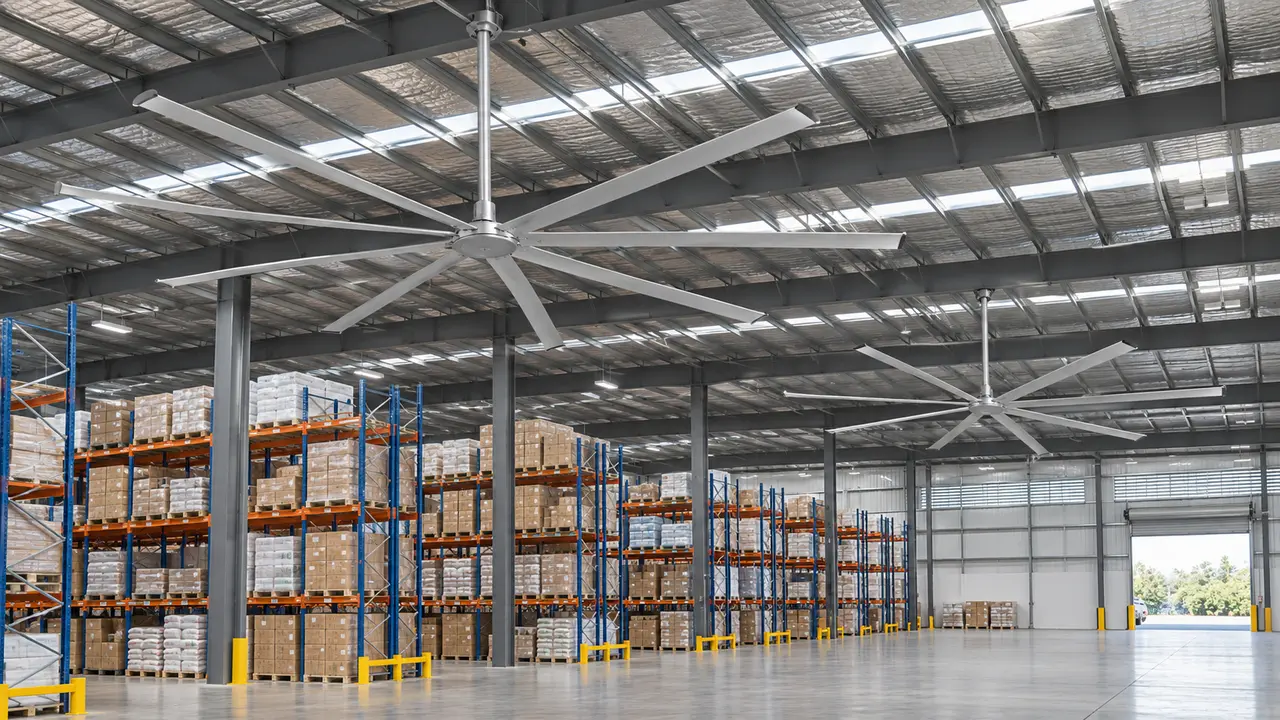
The best high-volume, low-speed fan manufacturers share five traits. They size fans to your actual floor plan, offer direct-drive motors, publish clear installation requirements, hold model-specific safety certifications, and back the sale with real support.
This article is a checklist for building a shortlist, and we cover each criterion in that order. We're KOOLAIR, and we make HVLS fans and evaporative coolers. We give tailored cooling recommendations for each facility and offer OEM and ODM manufacturing.
A fan stays in your building for years, so judge the maker as carefully as you judge the model.
Use the checklist in the order it appears. Start with sizing, because a fan that is the wrong size for your floor plan will disappoint no matter how good the motor is. Then check the motor and the controls, because those decide noise and upkeep. Then confirm the installation requirements and the certificate for your exact model, and finish with support: warranty, parts, and who answers the phone after delivery. Score each manufacturer on the same five checks, and only then compare prices — a cheaper fan that is badly sized or badly supported costs more over the years it hangs in your building.
Key takeaways
- Sizing method: A supplier that quotes from square footage alone isn't doing the job. Expect a recommendation built on your actual facility details.
- Motor type: Direct-drive PMSM motors mean fewer moving parts, lower noise, and less maintenance.
- Documentation: Ask for the installation manual, layout drawing, and a certificate that names your exact model.
- Support: Ask about warranty terms, parts availability, and who answers technical questions after delivery.
How do you size an HVLS fan before you contact any manufacturer?
Gather your site details first, then judge each manufacturer by how it uses them. Sizing quality is the first test of a supplier. One that quotes from square footage alone isn't doing the job.
What site details should you gather first?
Have these ready before the first call:
- Building length and width, clear ceiling height, and planned mounting height
- Rack heights, aisles, mezzanines, sprinklers, lights, ducts, and cranes
- Worker zones, loading docks, and heat sources
- Electrical voltage, phase, and mounting structure
How do diameter, mounting height, and coverage fit together?
Larger fans cover wider areas, but low ceilings and obstructions can favor smaller units. Diameter alone tells you little. Compare each model's tested effective coverage, air velocity, and operating speed.
Your target is air movement at floor level in occupied areas. Maximum CFM at the fan doesn't tell you whether the person at a packing station gets enough air movement. Use it alongside floor-level velocity and coverage data.
How many fans does a warehouse or factory need?
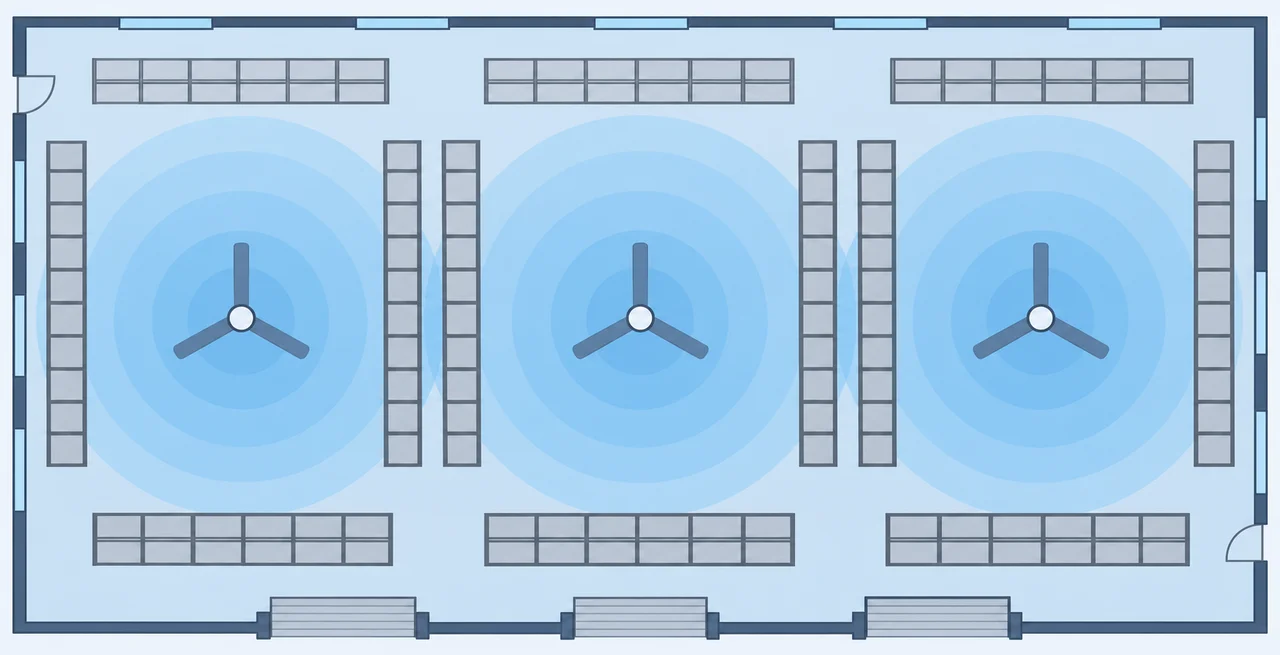
Divide the area that needs airflow by the model-specific coverage, then round up. A 300,000 sq ft warehouse with fans rated at 16,000 sq ft each gives about 19 fans. Racks, spacing, and 10 to 15 percent overlap can change that number, so treat the result as a preliminary estimate (Humongous Fan's warehouse sizing guide uses the same approach).
Treat the building as airflow zones, such as aisles, packing, production, and docks, instead of using one number. A supplier should give you a recommendation specific to your facility, and that's the standard to hold any manufacturer to.
Obstructions change the result more than most buyers expect. Tall racking, mezzanines, and ductwork break up the horizontal spread of air, so a fan that covers a wide open floor may cover much less in a dense-rack warehouse. Walk the floor with the layout drawing and mark every obstruction taller than head height, then check the coverage zone by zone rather than for the building as a whole. Use the ventilation and cooling calculator to check fan count and diameter for your floor area and ceiling height before you ask any manufacturer for a quote.
Why do direct-drive motors matter when comparing HVLS fans?
Motor type decides noise, maintenance, and long-term cost. It's one of the clearest differences between suppliers.
Direct-drive PMSM vs. gearbox-driven fans
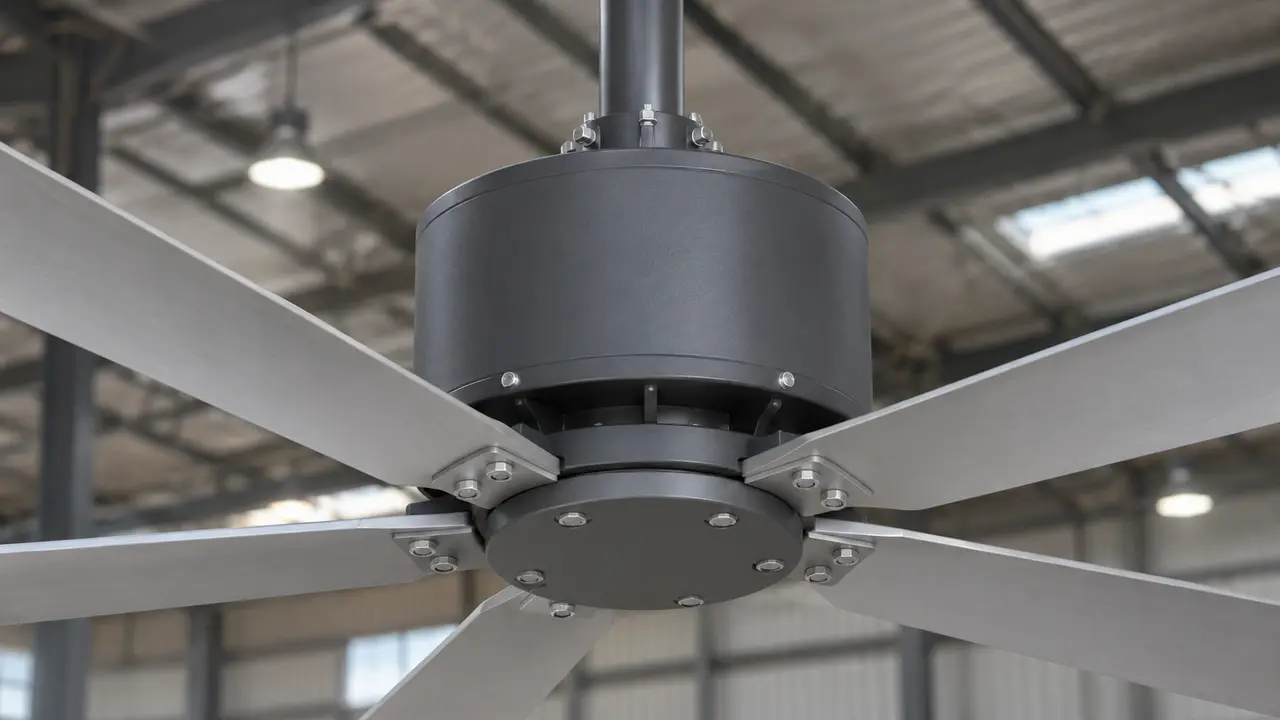
Gearless permanent-magnet direct-drive fans deliver high torque with fewer moving parts, lower noise, and less maintenance. Geared designs rely on a gearbox that needs lubrication and eventual service. Both exist in the market. We offer PMSM direct-drive models.
| Motor type | Noise | Maintenance | Torque | Typical use case |
|---|---|---|---|---|
| PMSM direct drive | Lower; no gear mesh | No gearbox to service; routine inspection still applies | High | Occupied spaces, long duty cycles, minimal downtime |
| Gearbox-driven | Motor and gear noise | Lubrication and seal checks, gearbox service over time | High starting torque | Established designs where purchase price leads |
Ask how the motor is rated for continuous duty, because a fan in a factory may run ten hours or more a day in summer. Ask for the noise figure at the operating speed you will actually use, not at the lowest speed, and ask whether the motor warranty is separate from the warranty on blades and controls. A direct-drive motor has no gearbox to service, but it still needs periodic inspection: check that the mounting hardware and blade brackets are part of the routine the manufacturer recommends, and confirm who can supply a replacement motor if one is ever needed. When you compare motor designs, also check whether the rotor sits inside or outside the stator — see our guide to choosing an inner-rotor or outer-rotor motor.
Controls and electrical details to ask about
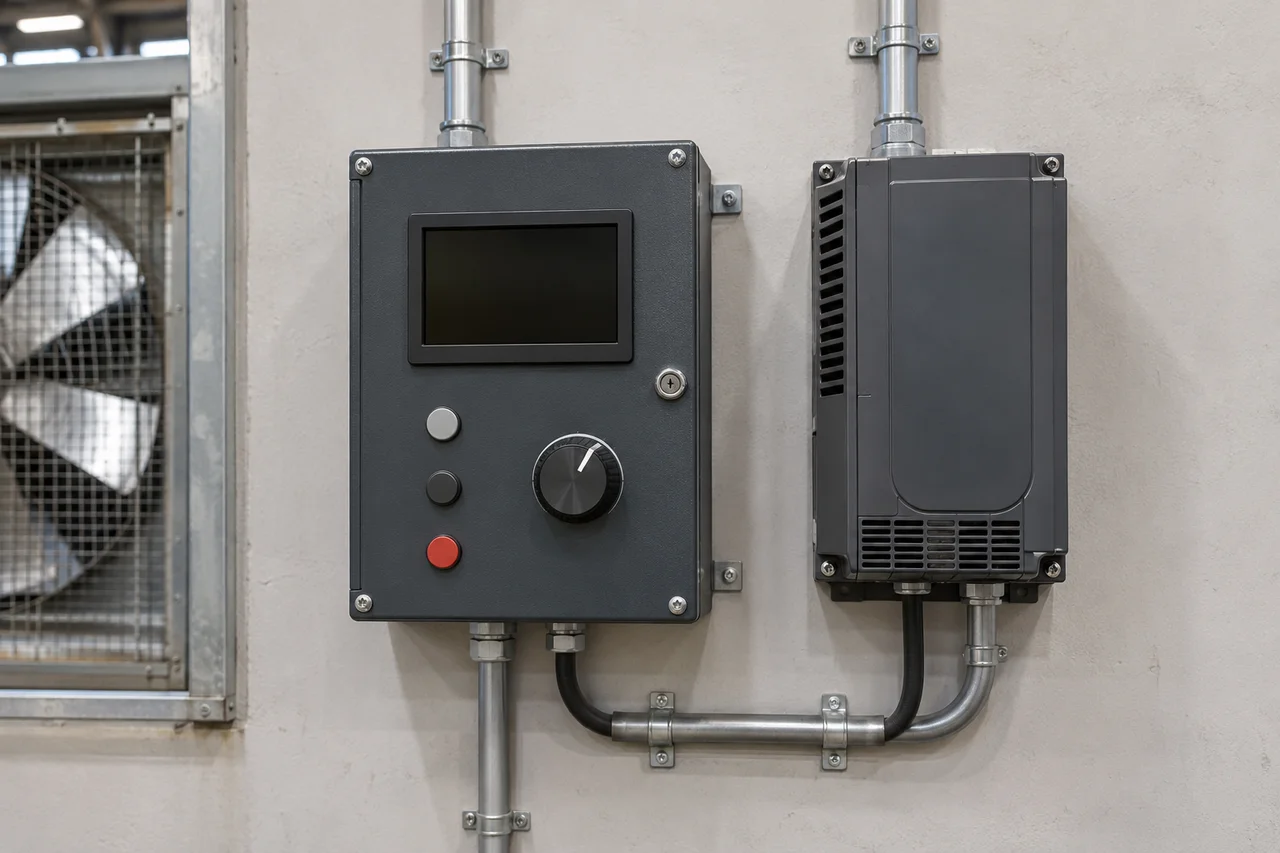
Ask about VFD controllers, wall controls, and group control for multiple fans. Confirm whether single-phase and three-phase versions exist for your service. Then ask what the base price includes and what is optional, so every quote compares on the same footing.
How to read airflow claims
Published figures vary. Some makers list CFM, some list coverage area, and some list neither. Ask for airflow at a defined operating speed, and confirm the unit (CFM or m³/min) before you compare.
How do the main industrial HVLS fan manufacturers compare side by side?
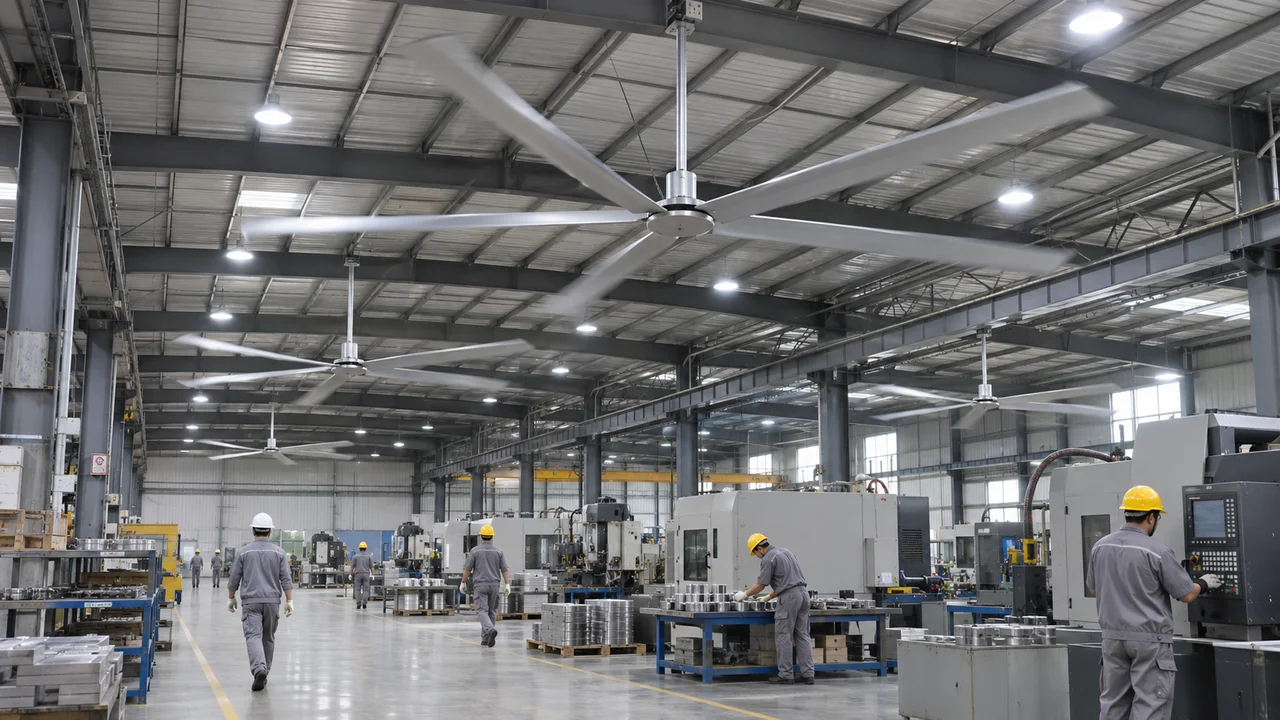
A shortlist works best when every supplier is scored against the same criteria. The table below summarizes information the manufacturers publish for their large-diameter ceiling fans, and Humongous Fan's comparison and the Big Ass Fans listings were among the sources. Specifications change, so verify current specs with each maker before you decide. Our overview of the HVLS ceiling fan manufacturers worldwide gives more background on the makers in this market.
A comparison table for your shortlist
| Manufacturer | Typical size range | Drive type | Controls | Published airflow data | Support model |
|---|---|---|---|---|---|
| KOOLAIR | Verify current specifications | PMSM direct drive | Confirm per model | Verify current specifications; confirm unit and operating speed | Tailored cooling recommendations; OEM and ODM |
| Big Ass Fans | About 12 to 30 ft, by model | Gear-driven (Powerfoil X4) and direct drive (Powerfoil D) | OLED, BAFCon, touchscreen, by model | Size-dependent; verify current specs | U.S.-based customer service, specification help, installation resources |
| MacroAir | 8 to 24 ft (AVD3) | Direct drive | VFD and digital wall control | Coverage about 4,150 sq ft listed for AVD3; CFM not shown | Project and engineering support |
| Hunter Industrial | 14 to 24 ft (Titan) | Gearless direct drive | Verify current specs | Coverage over 22,000 sq ft listed; CFM not shown | Dealer and customer support |
| Rite-Hite | 8 to 24 ft (Revolution) | Geared; some series direct drive | Fan-Commander | Coverage up to 31,000 sq ft listed; CFM not shown | Industrial equipment network |
| Humongous Fan | 8 to 24 ft | Direct drive, no gearbox | Included VFD controller | Size-dependent coverage | Cleveland-based U.S. manufacturer |
Where KOOLAIR fits
We fit buyers who want a tailored cooling recommendation and a cooling option beyond fans. Our fan and evaporative cooler combined systems pair HVLS airflow with evaporative cooling to distribute fresh cooled air across larger working areas.
Our evaporative air coolers bring in continuous fresh cooled air and support positive pressure and effective air exchange. They suit open or semi-open spaces, warehouses without ducted HVAC, and event or sports venues.
Which criteria deserve the most weight?
Put sizing support and motor type first, then certification, then service coverage. Adjust by facility type. A high-heat factory should weigh motor reliability and duty cycle most, while a dense-rack warehouse should weigh layout quality and clearances most.
What installation requirements and safety certifications should you confirm?
Installation is an important factor in how well an HVLS fan performs and how safely it runs, so check these requirements before you buy.
Mounting, clearance, and structure
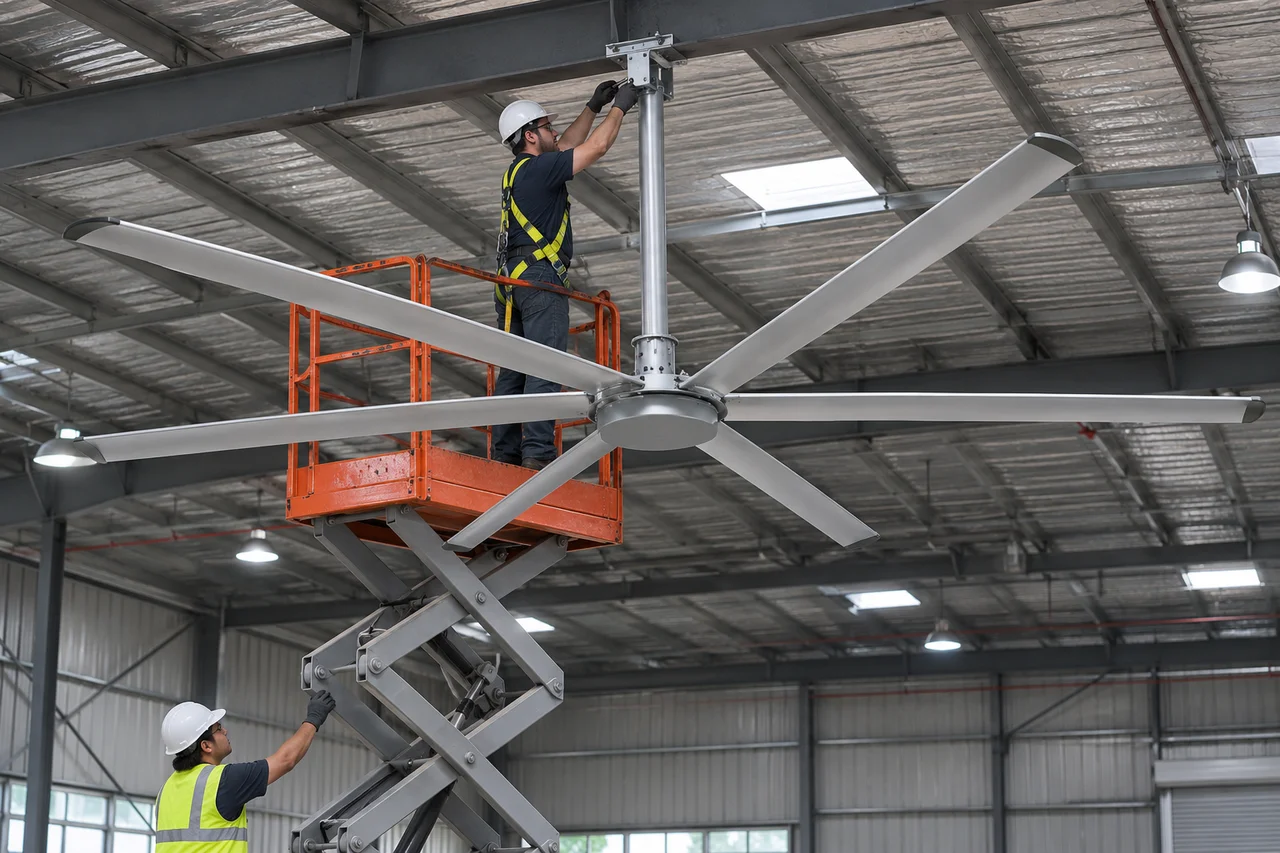
Check blade clearance from racks, sprinklers, lights, cranes, and doors. Confirm structural support, mounting hardware, and the manufacturer's required clearances. Plan for maintenance access and emergency access too.
Manufacturer guidance (for example, Big Ass Fans' distance guidelines and Rite-Hite's HVLS FAQ) commonly cites about 10 ft from the lowest airfoil point to the floor or occupied work surface below, and about 3 ft vertically from sprinkler deflectors. Those are planning values only. Ask for the current installation manual and a layout drawing before you sign.
Electrical and installation cost drivers
Electrical circuits, lift rental, and ceiling height all add to installation effort and cost. Operating cost is modest, and you can calculate it yourself. Fan kW multiplied by your electricity price per kWh gives the hourly cost at that power draw. Multiply by operating hours to estimate the cost for a month or a year.
Which safety certifications matter?
Look for recognized third-party listings suited to your market: UL or ETL (ANSI/UL 507) in the U.S. and CSA C22.2 No. 113 in Canada. For export markets, CE marking also applies. CE is a manufacturer's declaration for the European Economic Area and other markets that accept the marking, not a third-party listing.
The certificate must name the exact model. Ask for the test report and confirm it is current. Check local fire code and sprinkler clearance rules with your building or fire authority, and keep every document on file.
Keep a file for each fan: the certificate, the test report, the installation manual, and the layout drawing, all filed under the model and serial number. If the certificate names a different model, or a family of models without naming yours, treat it as unverified and ask for the correct document before you pay. A supplier that produces model-specific documents quickly is usually a supplier whose certification process is in order; one that stalls or sends a generic certificate is a warning sign.
What support and OEM or ODM capabilities separate a supplier from a partner?
After the purchase, the question becomes who answers when you need parts, tuning, or a custom product.
Support questions to ask every manufacturer
- What are the warranty terms, and how available are replacement parts?
- Who handles installation, and what U.S. or regional service exists?
- Is technical support available during layout, commissioning, and troubleshooting?
What can KOOLAIR's OEM and ODM services offer distributors and brands?
We build custom fan and cooler platforms to your specifications. Our OEM and ODM services include engineering support, production, and export delivery.
This suits industrial equipment distributors, HVAC brands, and consultants specifying retrofit projects.
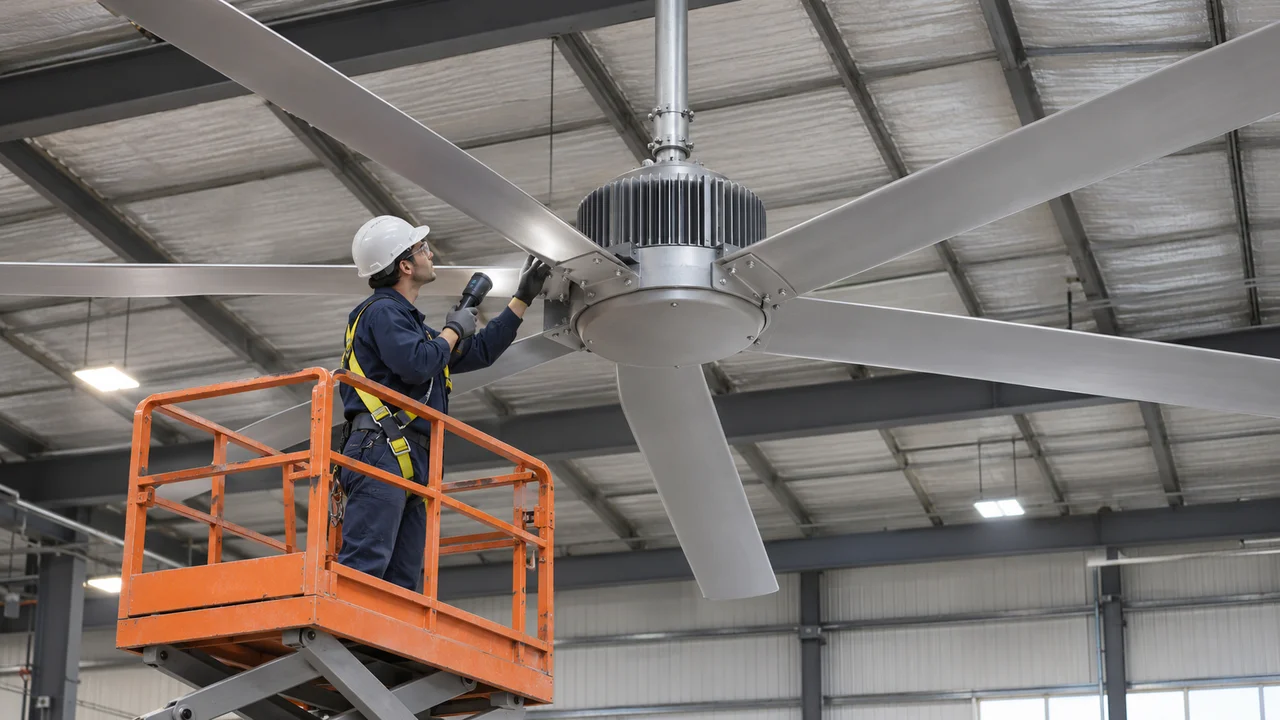
Parts availability is the support question most buyers forget to ask. A fan that needs a replacement blade, controller, or motor should not sit idle for weeks while a part ships from overseas, so ask which parts the supplier stocks, how long a typical replacement takes, and whether a local service partner can fit it. Also ask who answers technical questions after delivery — a named contact, a service team, or a distributor — and how quickly they respond, because a fan problem during a heatwave cannot wait for a slow reply.
How to request a tailored recommendation
Send us your floor plan, ceiling height, climate, occupancy, and electrical details. We'll give you a cooling recommendation tailored to your facility.
Build your shortlist with the checklist, then talk to the engineers
Five checks separate strong HVLS fan makers from the rest: a sizing method built on your floor plan, direct-drive motors, clear installation requirements, model-specific certifications, and support backed by OEM capability. Score every supplier on the same five checks and compare totals before you request quotes.
Send KOOLAIR your floor plan and we'll give you a tailored cooling recommendation for your facility.
Frequently Asked Questions
Can I compare HVLS fans using CFM alone?
No, CFM alone won't tell you how much air movement reaches people at floor level. Compare it alongside floor-level air velocity and model-specific coverage, and confirm the operating speed and units used for each claim. Ask each maker for the operating speed behind its CFM figure, since the same fan at different speeds gives very different numbers.
How can I estimate an HVLS fan's operating cost?
Multiply the fan's power draw in kilowatts by your electricity price per kilowatt-hour to estimate its hourly cost. Multiply that result by your operating hours to estimate a monthly or yearly cost. Use the rated power from the nameplate of the exact model you are buying.
Can HVLS fans be combined with evaporative cooling?
Yes, you can combine HVLS airflow with evaporative cooling to distribute fresh cooled air across larger working areas. Our combined systems suit spaces such as open or semi-open facilities and warehouses without ducted HVAC.
What should I send to get a cooling recommendation for my facility?
Send us your floor plan, ceiling height, climate, occupancy, and electrical details. We'll give you a cooling recommendation tailored to your facility.
What is the difference between OEM and ODM for HVLS fans?
With OEM, you supply the design or specification and the manufacturer builds it for your brand. With ODM, the manufacturer supplies its own design or platform and adapts it to your brand and requirements. Both are offered by KOOLAIR, with engineering support, production, and export delivery, and both suit distributors and brands that want their own HVLS fan or cooler line without building a factory.
Request a quote for an HVLS fan sized to your building.
Related insights
Recommended Engineering & Ventilation Guides
For the Best Effect, Where Should an Exhaust Fan Be Positioned?
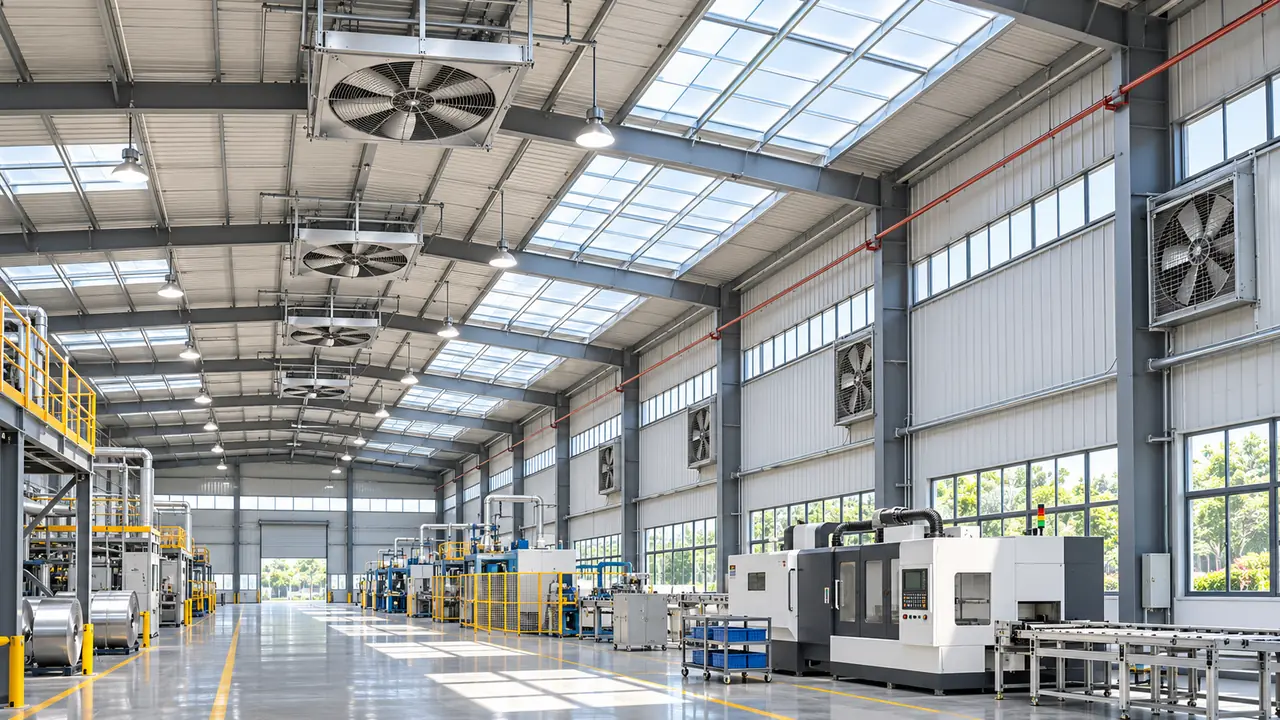
For the best effect, an exhaust fan should be positioned as close as practical to the strongest heat or contaminant source, discharge directly outdoors, and draw makeup air from the opposite side of the space. Those three principles are a sound starting point for a bathroom or a 50,000-square-foot plant, though industrial processes also need engineered capture and application-specific safety measures. In industrial buildings you have three common options for exhaust fan positioning: high-wall, roof, and source-capture. The right pick depends on your application, your building layout, and the codes your jurisdiction has adopted. A fan that seems weak is often well placed but starved of replacement air, or short-circuited by an inlet sitting too close to it.
View article
Custom Climate Control Project Planning: From Site Survey to Handover
A custom climate control project runs in six stages — survey, requirements, design, quotation, installation and acceptance. This guide walks through each stage, what it produces, and the checks that keep the project on time and on target.
View article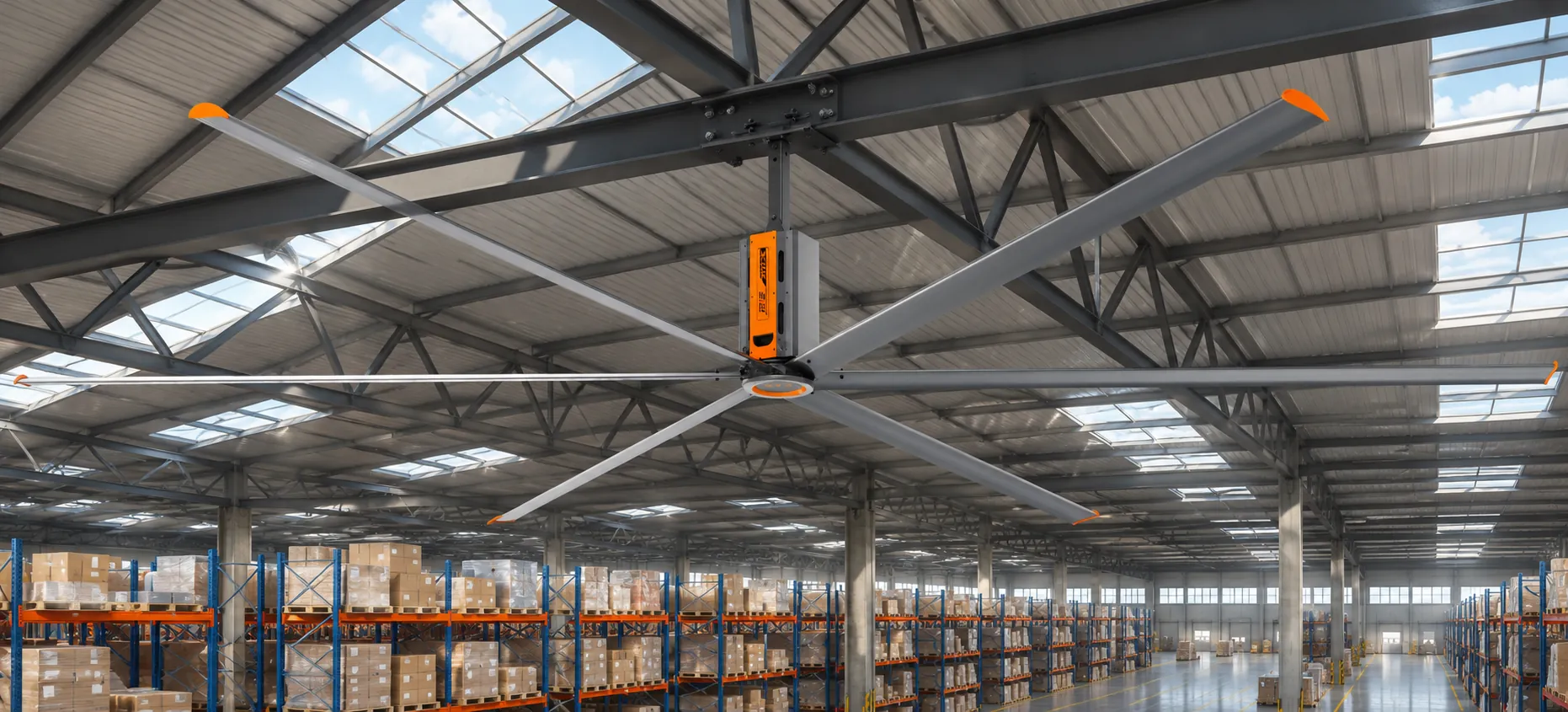
How Do Ventilation Companies Approach Tailored Solutions for Facilities With Unusual Layouts?
A standard ventilation package rarely fits an irregular building. This guide explains how a ventilation company surveys the site, zones the space around racking and mezzanines, sizes fans, exhaust and evaporative cooling to the real airflow path, and verifies the result — and what to prepare before asking for a quote.
View article