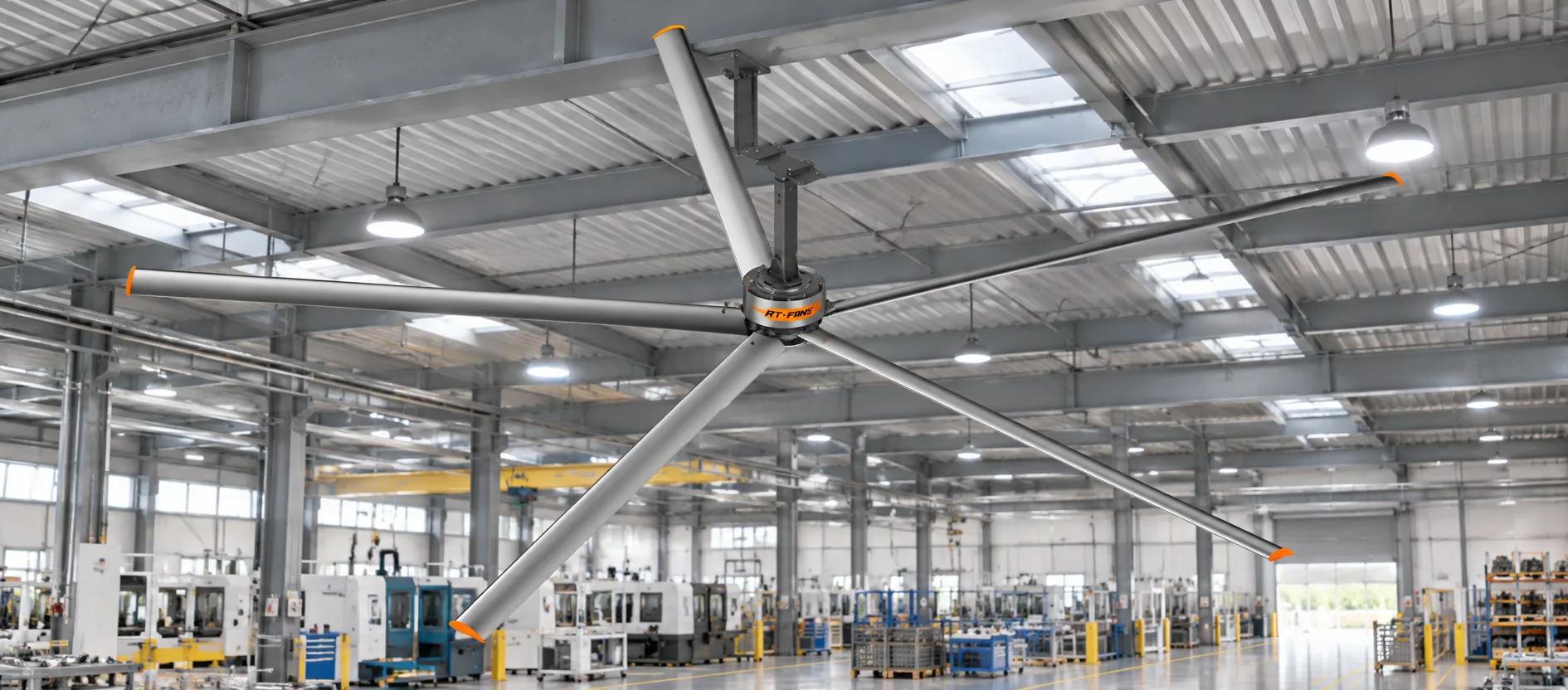
Manufacturing airflow has two separate jobs: improve conditions in occupied work areas and control heat or contaminants from the process. We help coordinate HVLS fans, evaporative air coolers, general exhaust, and source extraction around the way your plant actually operates.
Separate Comfort Airflow From Process Ventilation
A factory can have high heat, stagnant zones, and airborne contaminants at the same time. A useful design begins by mapping production lines, operator stations, heat sources, roof height, doors, and emission points. That map determines which areas need broad circulation, which need fresh-air cooling, and which need dedicated extraction.
Localized heat from production equipment, furnaces, motors, lighting, or process lines
Hot air collecting beneath high roofs while operator workstations remain unevenly ventilated
Welding fumes, oil mist, dust, vehicle exhaust, or other process contaminants requiring dedicated extraction
Open doors, cranes, partitions, and production changes that make a fixed one-size airflow plan unreliable
Build the System Around the Production Floor
HVLS fans for general circulation
Large-diameter, low-speed fans help mix air from floor to roof and distribute movement across production and assembly areas. Placement is checked against machinery, cranes, lights, sprinklers, walkways, and maintenance access.
Evaporative cooling for suitable climates
Evaporative air coolers can introduce fresh, water-cooled air to operator zones or high-heat areas where outdoor humidity and process requirements allow. Their selection should account for humidity, water quality, drainage, filtration, and the indoor conditions the process requires.
Exhaust and local extraction
Roof or wall exhaust can support general heat removal, but it is not a substitute for source capture. Welding, solvents, combustion engines, dust, and other emissions need extraction designed for the specific process and applicable safety requirements.
The right system depends on the heat sources, process emissions, building geometry, climate, and required indoor conditions. HVLS fans are commonly used for broad air circulation, while evaporative coolers can add fresh-air cooling in suitable climates and exhaust or local extraction handles hot or contaminated air.
Can HVLS fans cool a manufacturing plant?
HVLS fans move and mix air, improving perceived comfort and helping reduce temperature stratification. They do not refrigerate air or remove process contaminants. Manufacturing plants may use them with evaporative cooling, HVAC, roof ventilation, or local extraction as part of a coordinated design.
How should fans be placed around machinery?
Fan placement should follow the production layout rather than a simple grid. Engineers should review heat sources, operator locations, crane paths, machine clearances, roof structure, lighting, sprinklers, and whether air movement could disturb dust, fumes, or sensitive processes.
Do factory exhaust fans remove welding fumes and dust?
General exhaust can support air exchange, but it may not control contaminants at the source. Welding, grinding, solvents, combustion equipment, and similar processes usually require properly sized local exhaust or capture systems in addition to general circulation fans.
Are evaporative coolers suitable for industrial plants?
They can be suitable where the climate is relatively dry and adding moisture is acceptable. High-humidity environments or processes with strict humidity limits may require another approach. A site review should confirm climate, water, drainage, filtration, maintenance, and process constraints before selection.