
Can RTFANS HVLS fans work together with AC?
The Advantages of Integrating RTFANS HVLS Fans with Air Conditioning Systems With summer heat becoming increasingly intense, it’s crucial to [...]
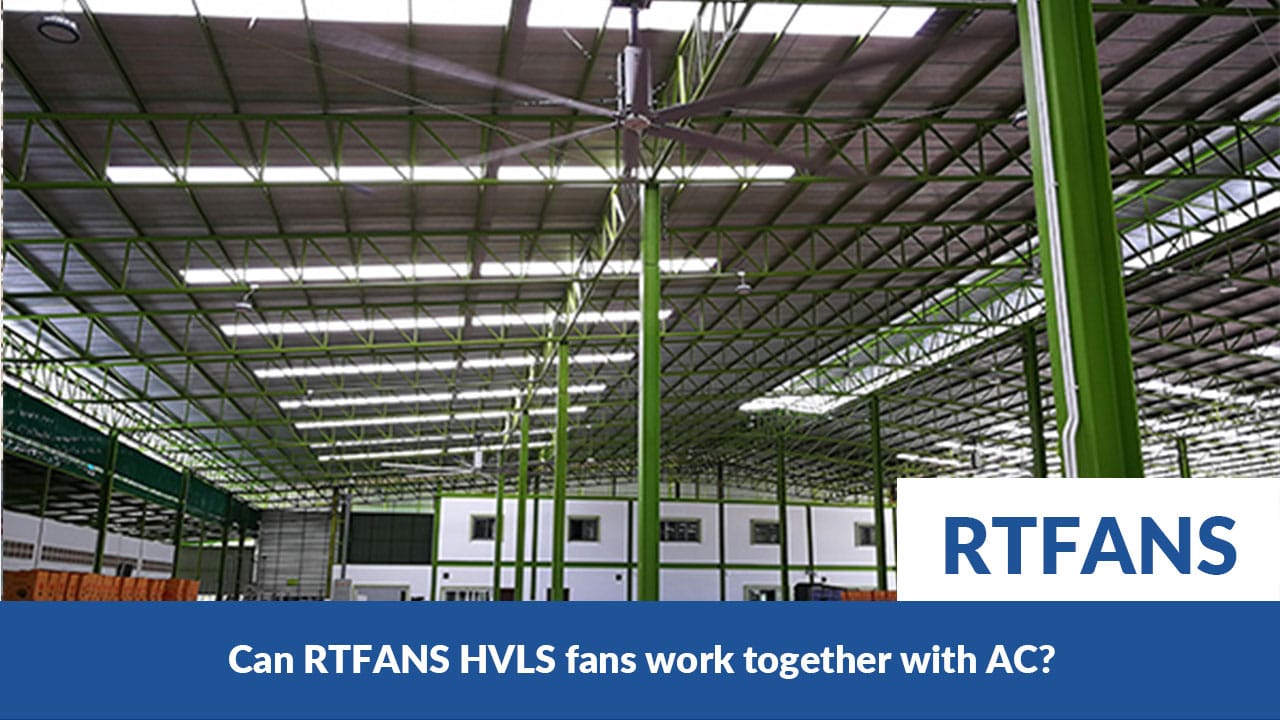
The Advantages of Integrating RTFANS HVLS Fans with Air Conditioning Systems
With summer heat becoming increasingly intense, it’s crucial to maintain comfortable indoor temperatures through proper ventilation and cooling. One cost-effective solution to achieve this is by integrating RTFANS HVLS fans with air conditioning (AC) systems. In this article, we will discuss the benefits of combining RTFANS HVLS fans, and AC systems for a more comfortable and energy-efficient indoor environment.
Energy Savings with HVLS Fans and AC Integration
One of the most significant advantages of integrating RTFANS HVLS fans with AC systems is the potential for energy savings. Research shows that by setting the AC temperature 1℃ higher, electric power consumption can be reduced by 7% to 10%. If the AC temperature is set 2℃ higher, electric power consumption can be reduced by 14% to 20%. These energy savings can add up, especially in large spaces where the cost of operating AC systems can be substantial.
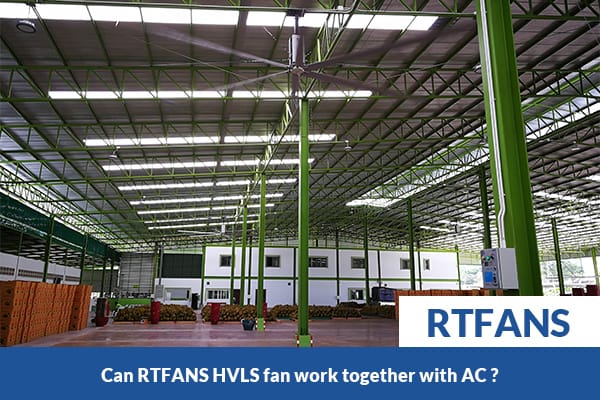
Improved Indoor Comfort with HVLS Fans and AC Integration
In addition to energy savings, integrating RTFANS HVLS fans with AC systems can also improve indoor comfort. HVLS fans can distribute cool air throughout the space, creating a breeze that accelerates the evaporation of sweat and makes people feel 2-5℃ cooler. Even with the AC temperature set 1-2℃ higher, the indoor environment remains comfortable compared to using AC alone.
Furthermore, during the spring and autumn seasons when temperatures are within the range of 20 to 30℃, switching on RTFANS HVLS fans for ventilation and cooling can eliminate the need for the AC system, saving on electricity bills.
The Importance of Indoor Temperature for Health and Productivity
Research has shown that the optimal indoor temperature for worker productivity is between 24℃ to 26℃. High temperatures can not only impact production efficiency but also pose health risks, such as dehydration and heatstroke. The incidence of accidents is also higher when temperatures are above 30℃ or below 10℃. By integrating RTFANS HVLS fans with AC systems, indoor temperatures can be maintained at a comfortable level, improving the health and safety of workers and contributing to higher productivity.
In conclusion, integrating RTFANS HVLS fans with AC systems offers a cost-effective solution for maintaining comfortable indoor temperatures and saving energy costs. If you’re interested in learning more about how RTFANS HVLS fans can improve your indoor environment, contact us at info@koolairint.com for more information.
Frequently Asked Questions
Can HVLS fans work together with air conditioning?
Yes, integrating RTFANS HVLS fans with air conditioning systems is a cost-effective way to keep indoor temperatures comfortable while saving energy.
How much energy can I save by combining HVLS fans with AC?
Setting the AC temperature 1°C higher can reduce electric power consumption by 7% to 10%, and setting it 2°C higher can reduce it by 14% to 20%.
How do HVLS fans improve comfort when used with AC?
HVLS fans distribute cool air throughout the space and create a breeze that accelerates sweat evaporation, making people feel 2–5°C cooler even when the AC is set 1–2°C higher.
Can HVLS fans replace air conditioning in mild weather?
Yes, in spring and autumn, when temperatures are between 20°C and 30°C, switching on HVLS fans for ventilation and cooling can eliminate the need for the AC system.
What is the best indoor temperature for worker productivity?
Research shows the optimal indoor temperature for worker productivity is between 24°C and 26°C, and accident rates are higher when temperatures rise above 30°C or fall below 10°C.
Related insights
Recommended Engineering & Ventilation Guides
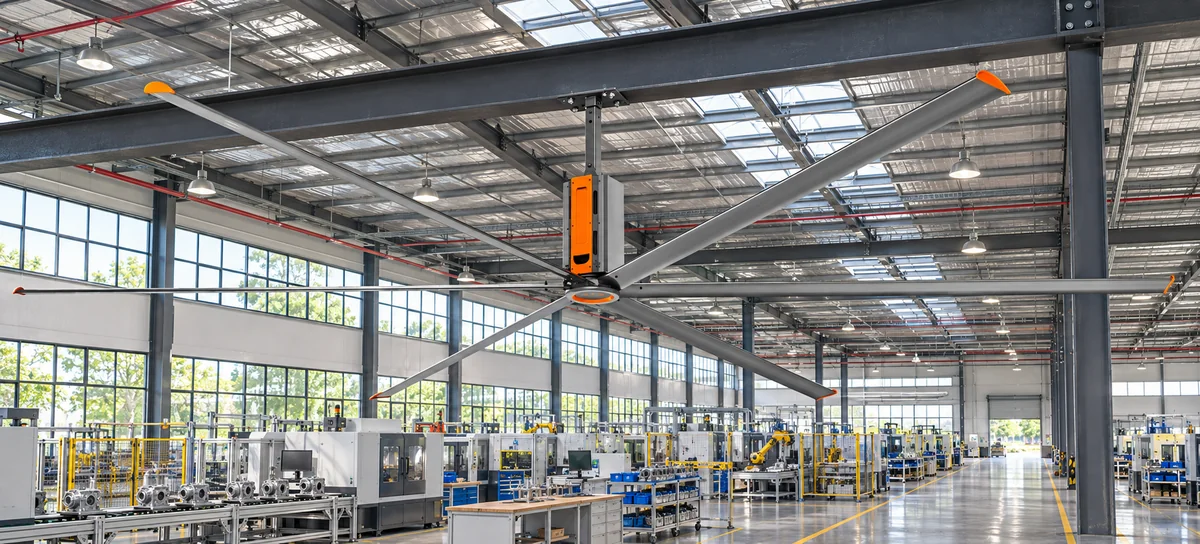
PMSM Direct-Drive vs Belt-Driven Fans for Manufacturing Plants
PMSM direct-drive fans remove the belt, pulleys and gearbox from the power path — compare energy loss, maintenance, downtime and 10-year cost against belt-driven fans for manufacturing plants.
View article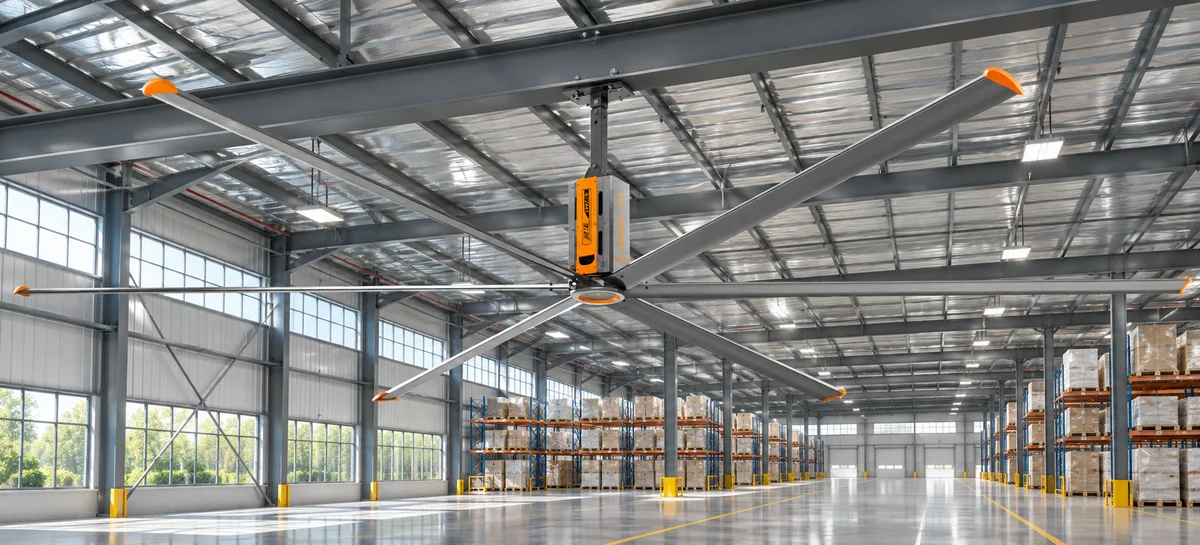
Where to Buy HVLS Fans With Professional Installation in the US
US buyers can buy an HVLS fan with professional installation through three routes — an industrial fan supplier, an authorized distributor, or a commercial HVAC contractor. How the routes differ, what a complete quote should include, and how to vet an installer before you sign.
View article
HVLS Fans for a German Dairy Barn: A Customer's Five-Star Review
A German dairy barn customer praises RTFANS fan assembly, supplied components and Angela Xie's support during ordering, shipping and installation.
View article