
Are Evaporative Air Coolers Good for High-Traffic Commercial Spaces?
Evaporative coolers can cool malls, markets and halls for about a quarter of the energy of air conditioning — but only where the air is dry enough and the building can exhaust the air they bring in. This guide covers the climate test, fresh-air maths, humidity limits, running costs and safety checks.
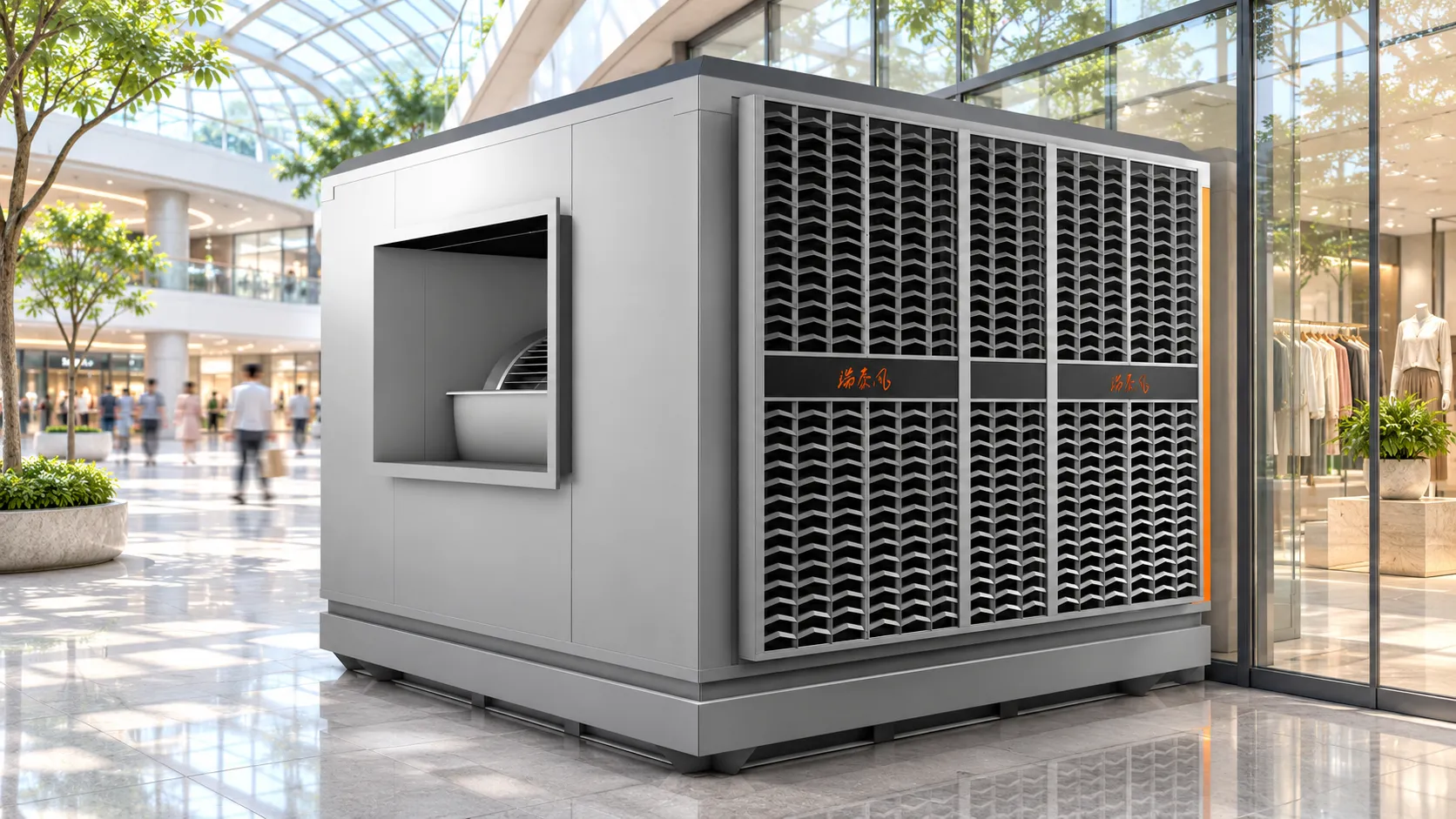
The short answer: yes — in the right building and the right climate. An evaporative cooler can cool a mall concourse, a supermarket floor, a food court or an exhibition hall for about a quarter of the energy of central air conditioning, while delivering far more fresh air than the ventilation minimum requires. But it is not a drop-in replacement for air conditioning: it only works where the outdoor air is dry enough, it adds humidity, and it needs a clear exhaust path. Get those three conditions wrong and the same machine leaves a busy space warm, damp and stuffy.
Key takeaways
- Evaporative coolers cost about half as much to install and use about a quarter of the energy of central air conditioning, according to the U.S. Department of Energy.
- A good direct evaporative cooler is 80–90% effective at approaching the wet-bulb temperature — but the wet-bulb temperature, not the machine, sets the limit.
- One 45,000 m³/h cooler moves roughly ten times the outdoor air a 1,000 m² retail floor needs under ASHRAE 62.1, so fresh air is a strength, not a weakness.
- Indoor relative humidity must stay below 60% (the EPA's ceiling, ideally 30–50%) — without an exhaust path, a cooler will push a sealed space past that limit.
- Standing water needs a maintenance routine: drain, clean and disinfect on schedule, or the unit becomes a hygiene risk in exactly the crowded space it serves.
What makes a commercial space "high-traffic" — and why does it change the cooling question?
A high-traffic commercial space is one where people, not machines, are the main heat and ventilation load: shopping malls, supermarkets, big-box retail, food courts, markets, exhibition halls and transport terminals. Doors open constantly, crowds arrive in waves, and occupancy can swing from near-empty to packed within an hour.
That changes the cooling question in three ways. First, the heat load is people-driven and spiky: the system must respond to a crowd arriving, not just to the afternoon sun. Second, the ventilation load is large, because every person needs outdoor air. Third, the space is usually open-plan with high ceilings and wide entrances, which makes it hard to seal — an advantage for evaporative cooling, because these machines need somewhere for the air to go.
How does an evaporative cooler actually cool a busy space?
An evaporative cooler — also called a swamp cooler — draws hot outdoor air through water-saturated cooling pads. As water evaporates from the pads it absorbs heat from the air, so the air leaving the unit is cooler and more humid than the air that entered. A fan then pushes that cooled air into the space. There is no compressor and no refrigerant: the only power draw is the fan and a small water pump.
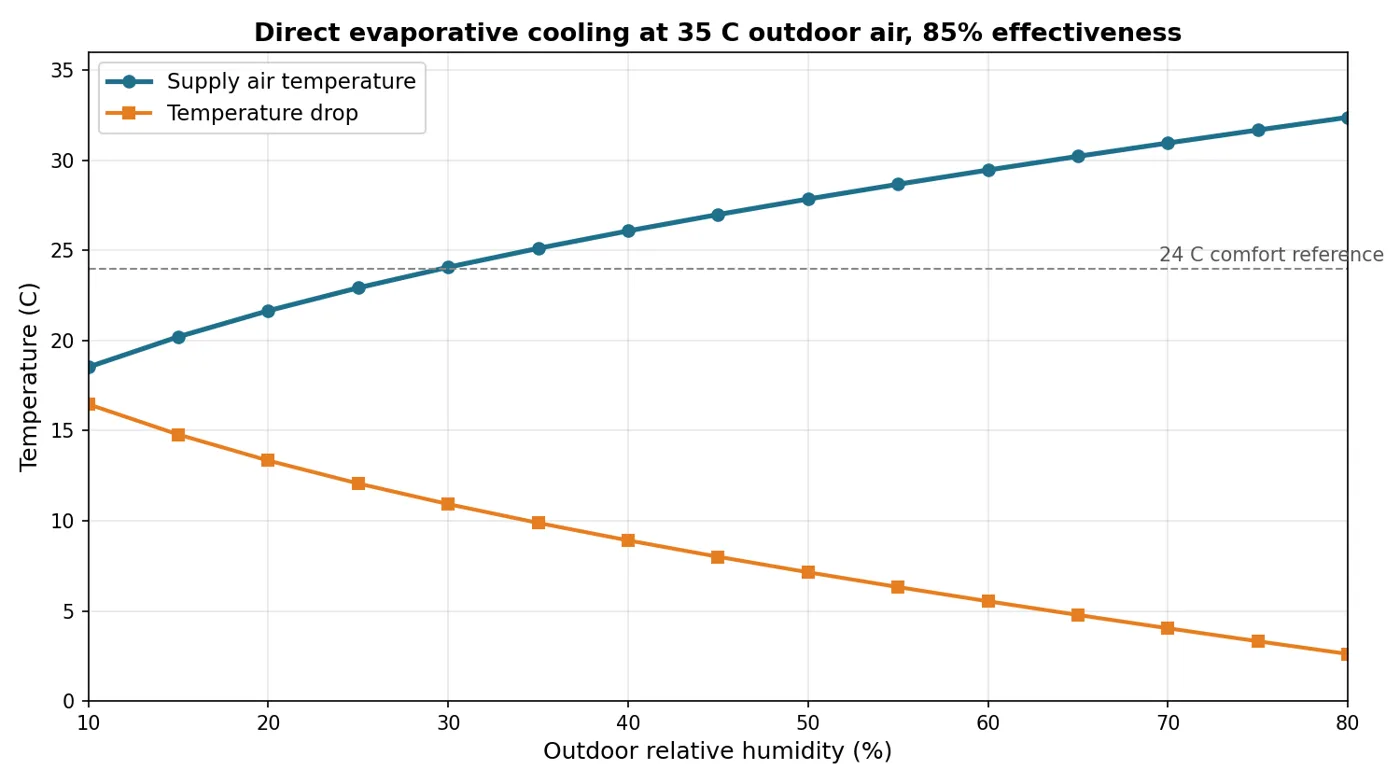
The cooling limit is set by physics, not by the size of the machine. A direct evaporative cooler cannot cool air below its wet-bulb temperature — the temperature a wet thermometer reads in the same air. Commercial direct coolers typically reach 80–90% effectiveness at approaching that limit, according to the CIBSE Journal's module on direct evaporative cooling, and the U.S. Department of Energy's Building America programme puts modern thick-pad coolers at 75–93%.
A worked example makes the limit concrete. Take outdoor air at 40 °C and 15% relative humidity, a hot dry afternoon. Its wet-bulb temperature is about 20 °C, so an 85%-effective cooler delivers supply air at roughly 23 °C — a 17-degree drop. Now take the same cooler on a 32 °C day at 70% humidity: the wet bulb is about 27 °C, so the supply air lands near 28 °C, only 4 degrees cooler and much more humid. The difference is the wet-bulb depression — the gap between dry-bulb and wet-bulb temperatures — and it is the single number that decides whether this technology fits your site.
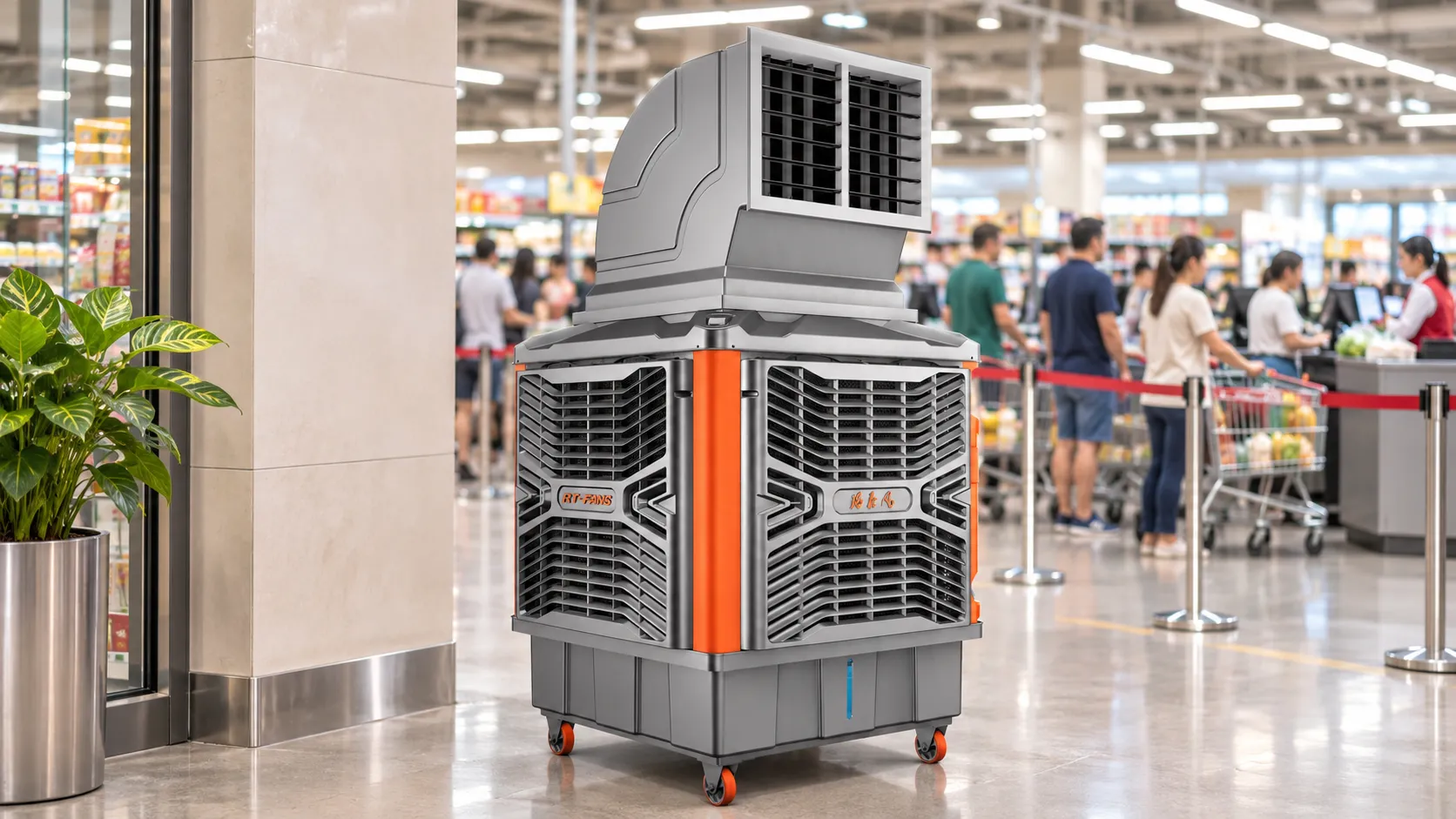
For a high-traffic space the airflow matters as much as the temperature drop. RTFANS industrial evaporative coolers range from 20,000 to 60,000 m³/h, and a single 45,000 m³/h unit can wash a large open floor with cooled fresh air rather than recirculating the same stale air.
Where do evaporative coolers work well — and where do they fail?
The short test is the local wet-bulb temperature. The Department of Energy's Building America guidance says evaporative coolers work best in dry climates where the 1% summer design wet-bulb temperature is below 70 °F (about 21 °C) — hot, dry regions such as the American Southwest, the Middle East, inland Australia and parts of North Africa and Central Asia, and any site where summer afternoons are hot with low humidity.
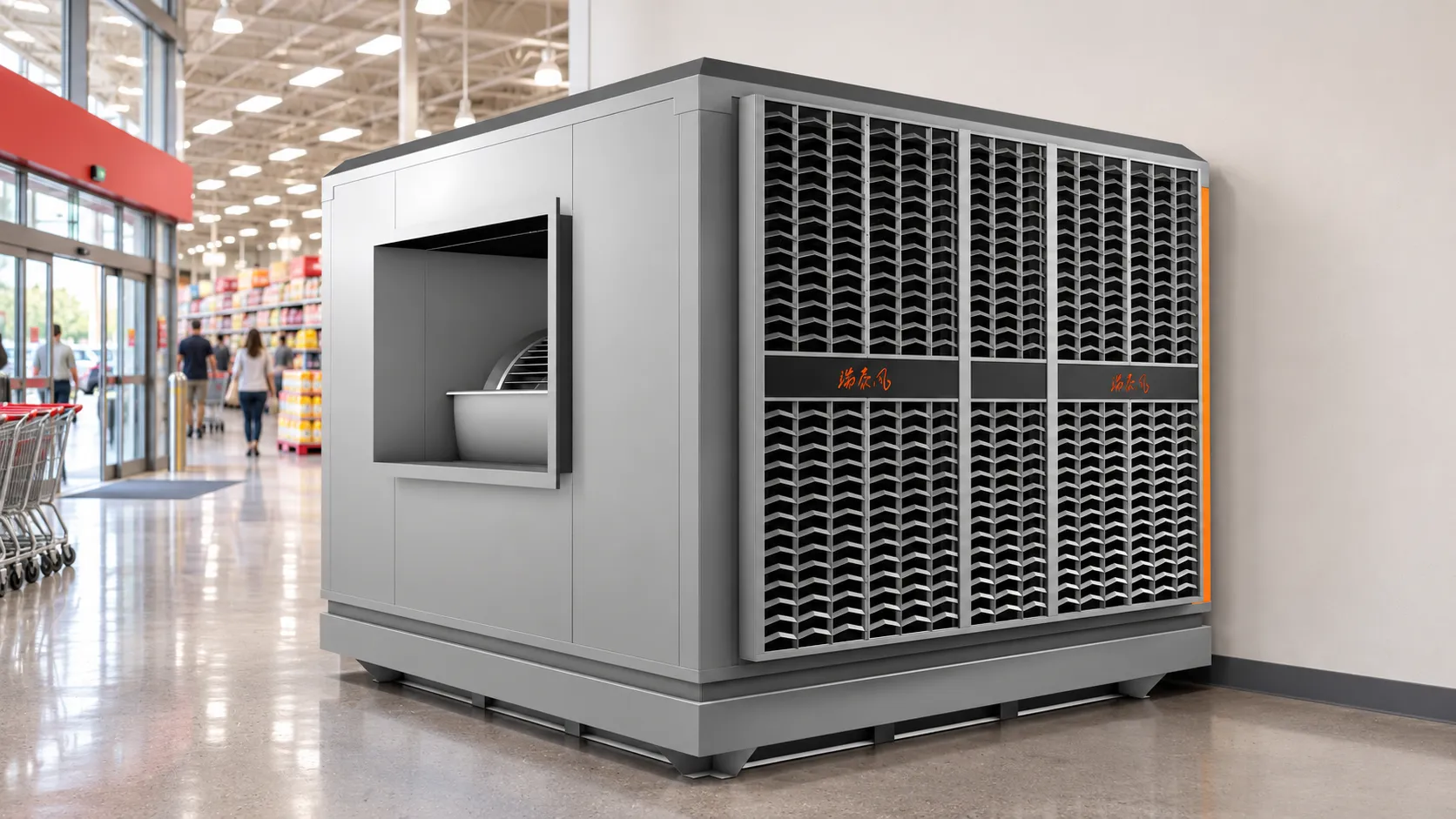
They fail, or underperform badly, in three situations. The first is a humid climate: where summer air already sits above roughly 60% relative humidity, the wet-bulb depression is small and the cooler mostly adds moisture without much cooling. The second is a space that must hold tight humidity control — a data hall, a paper store, a museum archive — where added moisture is itself the problem. Where the heat load is equipment rather than people, the design is different again: see our guide to evaporative cooling for data centers. The third is a sealed building with no exhaust path: the cooler keeps pumping humid air in with nowhere for it to leave.
Before specifying a single unit, check the local design wet-bulb temperature and count the hours per year with a wet-bulb depression above about 8–10 K. If that number is small, refrigerated cooling is the honest answer; if it is large, the cooler is likely the cheapest cooling you will ever run.
Can evaporative coolers meet the fresh-air needs of a crowded space?
Yes — and this is where they are strongest. A refrigerated system recirculates most of its air and brings in only the minimum outdoor air the standard requires. An evaporative cooler runs on 100% outdoor air by design.
The numbers show how large the margin is. ASHRAE Standard 62.1-2022, Table 6-1, sets the minimum breathing-zone outdoor air for retail sales at 7.5 cfm per person plus 0.12 cfm per square foot, with a default density of 15 people per 1,000 square feet. For a 1,000 m² (about 10,800 ft²) sales floor that works out to roughly 2,500 cfm — about 4,250 m³/h. A single 45,000 m³/h evaporative cooler delivers more than ten times that minimum.
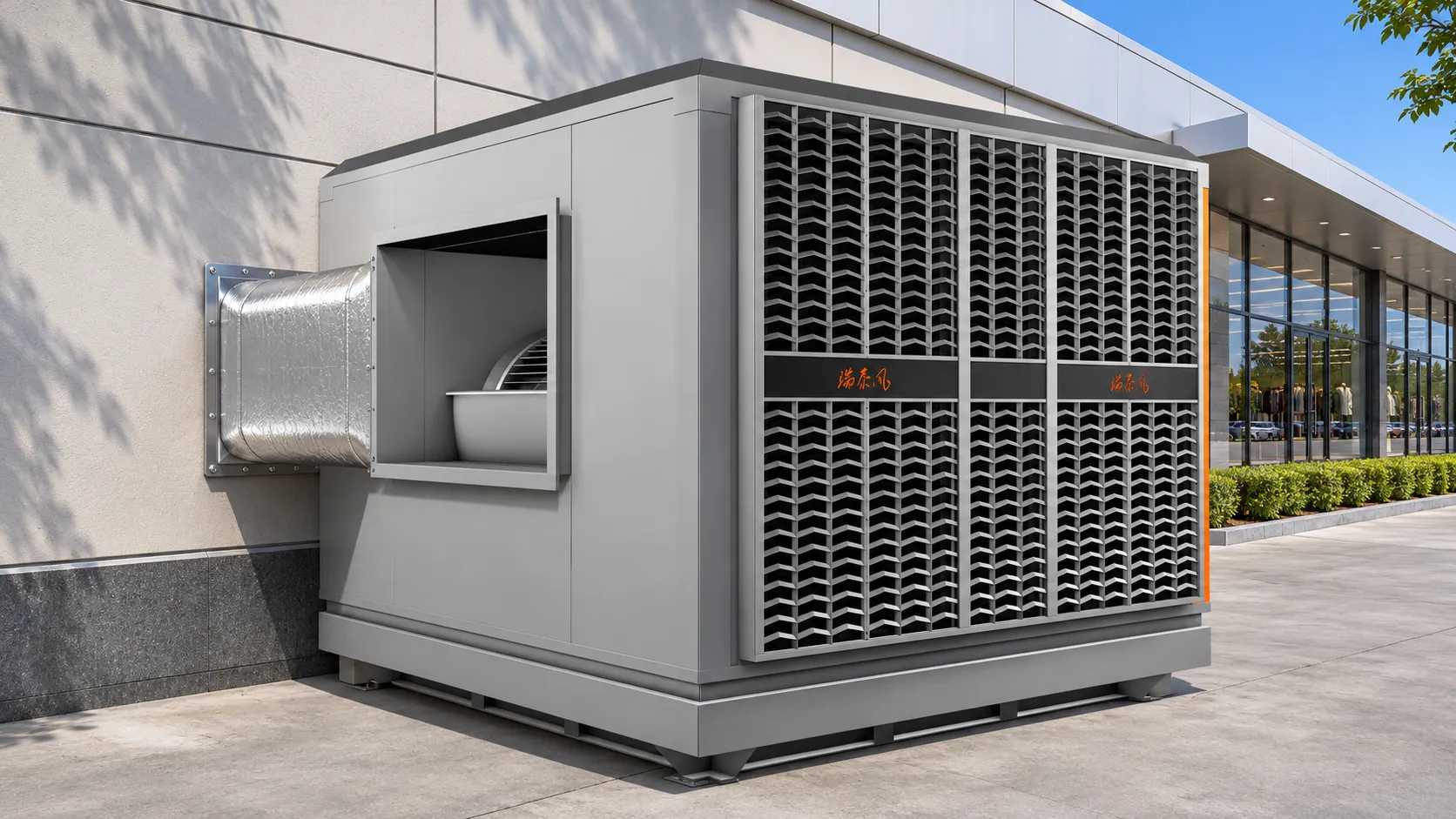
That margin matters: crowds raise carbon dioxide, odours and airborne contaminants quickly, and a constant stream of fresh air dilutes them in a way a recirculating system cannot match without a dedicated outdoor-air unit. The trade-off is that the building must let the air out: doors, windows, relief vents or exhaust fans on the far side. Plan the exhaust path first — if the air cannot leave, the cooler cannot work.
What happens to humidity and comfort when hundreds of people are inside?
Every person in a crowd adds heat and moisture, and the cooler adds moisture too. That is the central comfort risk, and it is managed, not wished away.
The guardrail is the U.S. Environmental Protection Agency's indoor humidity guidance: keep indoor relative humidity below 60%, and ideally between 30% and 50%. Above 60%, mould and dust mites thrive; below 30%, air feels dry and irritates eyes and throats. An evaporative cooler in a dry climate usually lands inside that band, because the outdoor air starts dry — provided the space is venting.
Three practices keep it there. First, measure: put a hygrometer at breathing height in the busiest zone and check it through the day. Second, ventilate: keep the exhaust path open whenever the coolers run, sized to roughly match the supply airflow. Third, stage the units: run fewer coolers on mild or humid mornings and bring the rest on as the afternoon dries out and the crowd builds. If the hygrometer sits above 60% for hours despite open exhausts, turn units down, open more exhaust, or accept that refrigerated cooling is needed for those hours.
Noise deserves a mention too. A cooler is a large fan: check the rated sound level, keep units away from till points and quiet zones, and use ducted discharge to put the machine outside the occupied space when the layout allows.
What do evaporative coolers cost to run in a high-traffic space?
The U.S. Department of Energy states that an evaporative cooler costs about half as much to install as a central air conditioner and uses about a quarter of the energy. The reason is simple: there is no compressor. The power draw is a fan motor and a small pump, so a unit moving tens of thousands of cubic metres of air per hour can still draw only a few kilowatts.
Water is the other running cost, and it should be budgeted honestly. The water a cooler consumes is the water it evaporates, and that scales with the cooling delivered. A worked estimate: a 45,000 m³/h unit cooling air by 10 K delivers roughly 150 kW of cooling, and evaporating water at about 2,450 kJ per kilogram means it uses on the order of 200 litres of water per hour at full load. That is a real operating cost and a real plumbing requirement — plan a permanent water connection and a drain.
Maintenance is the third cost line, and it is not optional. Pads need inspection and periodic replacement, sumps need draining and cleaning, and hard water leaves scale on pads and shortens their life. Budget for a seasonal service — pads and sump cleaned before the cooling season, inspected mid-season, drained and dried at the end of it — and treat that service as part of the running cost, not an afterthought.
What are the safety and maintenance risks in a busy public space?
A cooler in a public space is a piece of equipment the public walks past, so safety is a design question, not just a maintenance one.
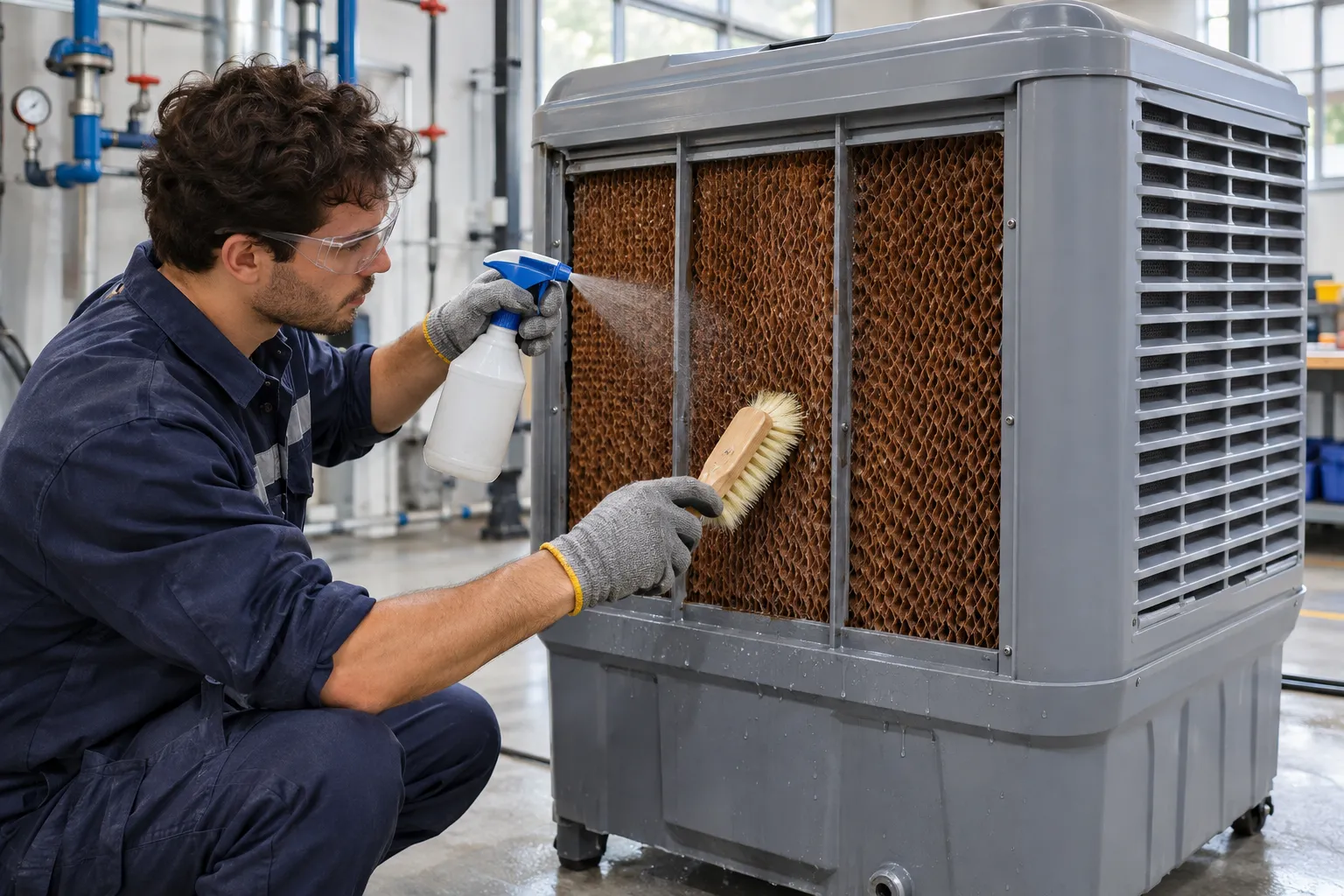
The first risk is water hygiene. Any system that holds standing water and moves air through it needs a water-management routine. OSHA's guidance on Legionella control stresses the same discipline for all evaporative equipment: good system design, routine cleaning and disinfection, and records of what was done and when. For a direct evaporative cooler that means draining and cleaning the sump on schedule, never letting water stand in an idle unit, and replacing pads that show biofilm or odour. Cooling towers have caused the large Legionnaires' disease outbreaks; a well-maintained direct cooler is a much smaller risk.
The second risk is the floor. A portable cooler placed in a walkway can leak or be knocked, and a wet floor in a mall is a slip hazard. Place portable units out of the main pedestrian flow, on a level surface, with water and power routed away from foot traffic. Ducted or wall-mounted units avoid the problem entirely by putting the machine outside the occupied space.
The third risk is electrical. A cooler is a mains-powered appliance in a space full of people; use a proper dedicated circuit, keep connections dry, and make sure the unit can be isolated quickly. The fourth is access: pads and sumps need to be reachable for cleaning without moving the unit through a crowd.
How should you size and place coolers in a high-traffic space?
Sizing an evaporative cooler is sizing airflow, not refrigeration tonnage. Start with the floor area and the air-change rate you want: for a busy retail or exhibition space, a common planning figure is 20–30 air changes per hour of cooled fresh air across the occupied zone. A 1,000 m² hall with a 6 m ceiling holds 6,000 m³ of air, so 20 air changes per hour needs about 120,000 m³/h — three 45,000 m³/h units, or an equivalent combination of fixed and portable machines. Treat that as a planning estimate to confirm with a proper heat-load and airflow calculation, not as a specification.
Placement follows the airflow, not the floor plan. Put fixed units on the windward or shaded side where they draw the coolest, driest outdoor air, and discharge through ducts to the zones where people actually gather — the sales floor, the queue, the food court — not into empty ceiling voids. Keep the exhaust path on the opposite side: open doors, high-level vents or exhaust fans that let warm, humid air leave.
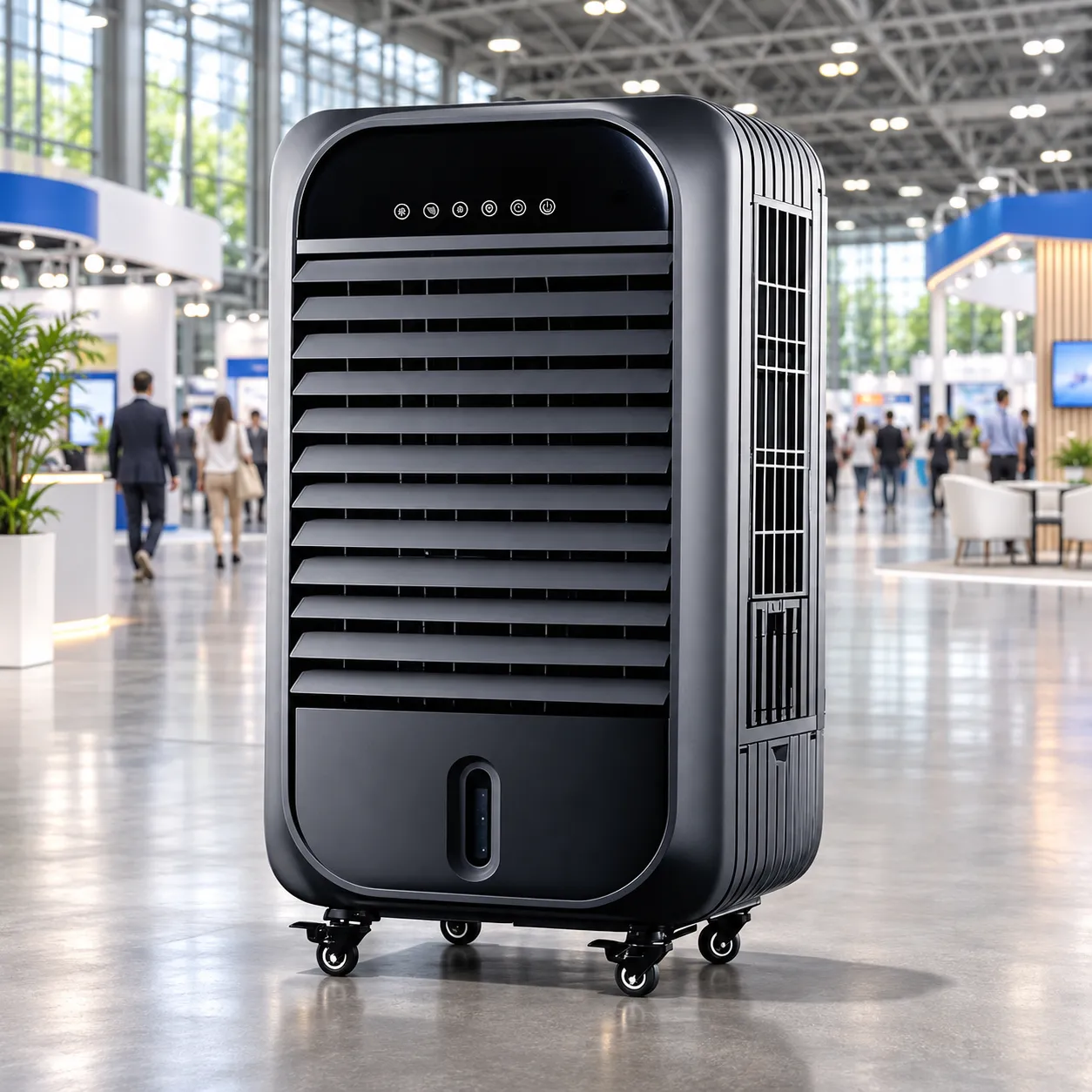
Portable coolers fill a different role: spot cooling. A mobile unit such as the RTF-20Y can be rolled to a checkout queue, a pop-up promotion or a crowded entrance on the day it is needed and moved away when it is not. They are the right answer for hot spots and temporary crowds, and the wrong answer as the sole cooling for a whole hall. For a closer look at how the same equipment performs where the heat load is people and activity rather than footfall, see our guide to why evaporative coolers suit gyms.
Evaporative coolers vs air conditioning for high-traffic spaces
| Factor | Evaporative cooler | Refrigerated air conditioning |
|---|---|---|
| Energy use | About a quarter of central AC (U.S. DOE) | Baseline — compressor-driven |
| Installation cost | About half of central AC (U.S. DOE) | Higher; ductwork, refrigerant, controls |
| Fresh air | 100% outdoor air by design | Mostly recirculated; outdoor air is a separate provision |
| Cooling limit | Wet-bulb temperature; weak above ~60% RH | Works in any humidity |
| Humidity effect | Adds moisture to the space | Removes moisture (dehumidifies) |
| Best climate | Hot and dry | Any climate |
| Maintenance | Pads, sump, water quality — frequent, simple | Filters, coils, refrigerant — less frequent, specialist |
| Comfort control | Temperature and humidity move together | Independent temperature and humidity control |
The honest summary is that the two technologies solve different problems. Where the air is dry and the building can breathe, the evaporative cooler wins on energy, fresh air and cost. Where the air is humid, the space must stay dry, or the temperature must be held regardless of the weather, refrigerated cooling wins. Many large buildings use both: evaporative cooling for the big open volumes, refrigerated cooling for enclosed rooms and humidity-sensitive zones. For the same trade-offs with food-service numbers, see our comparison of evaporative coolers and traditional air conditioning in restaurants.
A pre-purchase checklist for high-traffic spaces
- Climate check. Look up the local 1% summer design wet-bulb temperature. Below about 21 °C (70 °F), evaporative cooling is a strong candidate; well above it, look elsewhere.
- Exhaust path. Identify where the air will leave — doors, vents, exhaust fans — and confirm it can pass roughly as much air as the coolers supply.
- Humidity plan. Decide where the hygrometers go, who reads them, and what happens when indoor humidity passes 60%.
- Water and power. Confirm a permanent water connection, a drain, and a dedicated circuit for each fixed unit.
- Placement. Fixed units outside the occupied space with ducted discharge; portable units out of pedestrian flow, on level ground.
- Sizing. Work from floor area, ceiling height and a target air-change rate, and confirm with a heat-load calculation.
- Maintenance contract. Pads, sump cleaning, disinfection and seasonal drain-down, with dates and a named responsible person.
- Noise. Check the rated sound level and keep units away from quiet zones and till points.
- Hybrid plan. Decide in advance which zones, if any, need refrigerated cooling alongside the evaporative system.
- Quote basis. Ask for equipment, ducting, water and power, installation and first-year maintenance as separate lines. For a system sized to your building, request a quote with your floor area, ceiling height and location.
Frequently Asked Questions
Are evaporative coolers effective in a shopping mall?
Yes, in a dry climate and an open building. A mall is close to the ideal case: large open volumes, doors opening constantly and a big fresh-air need. In a humid climate, or in a sealed mall with no relief ventilation, the same units will raise humidity without cooling much — check the local wet-bulb temperature first.
Do evaporative coolers work in humid climates?
Poorly. A direct evaporative cooler cannot cool air below its wet-bulb temperature, and in humid air the wet bulb is close to the dry bulb, so the temperature drop is small while the added humidity is large. When outdoor relative humidity is above roughly 60% in warm weather, a direct cooler gives little useful cooling. Indirect or two-stage systems do better, but in a truly humid climate refrigerated cooling is the right choice.
How many evaporative coolers does a large retail space need?
It depends on floor area, ceiling height and the air-change rate you target. As a planning estimate, a 1,000 m² hall with a 6 m ceiling needs about 120,000 m³/h of cooled air for 20 air changes per hour — roughly three 45,000 m³/h units. Get a proper heat-load and airflow calculation before ordering.
Are evaporative coolers safe to run around customers?
Yes, when they are installed and maintained properly. Keep portable units out of pedestrian flow, secure water and power connections, and put fixed units outside the occupied space with ducted discharge. The main ongoing duty is water hygiene: drain and clean sumps on schedule, disinfect as the manufacturer directs, and never let water stand in an idle unit.
Can evaporative coolers replace air conditioning in a commercial building?
Sometimes entirely, often partially. In a hot, dry climate with an open building, they can be the whole cooling system for the large volumes — malls, markets, halls. Where humidity is high, where rooms must stay dry, or where temperature must be held regardless of the weather, refrigerated cooling is still needed, either for the whole building or for the sensitive zones.
The bottom line
Evaporative coolers are a good fit for high-traffic commercial spaces when three conditions hold: the climate is dry enough for a useful wet-bulb depression, the building can exhaust the air the coolers bring in, and someone owns the maintenance schedule. Meet those, and you get cooled fresh air at about a quarter of the energy cost of air conditioning, in exactly the kind of space — busy, open, full of people — where fresh air matters most. Miss any one of them, and the same equipment will disappoint.
Get a tailored quote
Every building is different — floor area, ceiling height, layout and local climate all change the answer. Send us your floor area, ceiling height and location through the request-a-quote page and we will return a sized system and an itemised quote, including ducting, water and power, installation and first-year maintenance.
Related insights
Recommended Engineering & Ventilation Guides
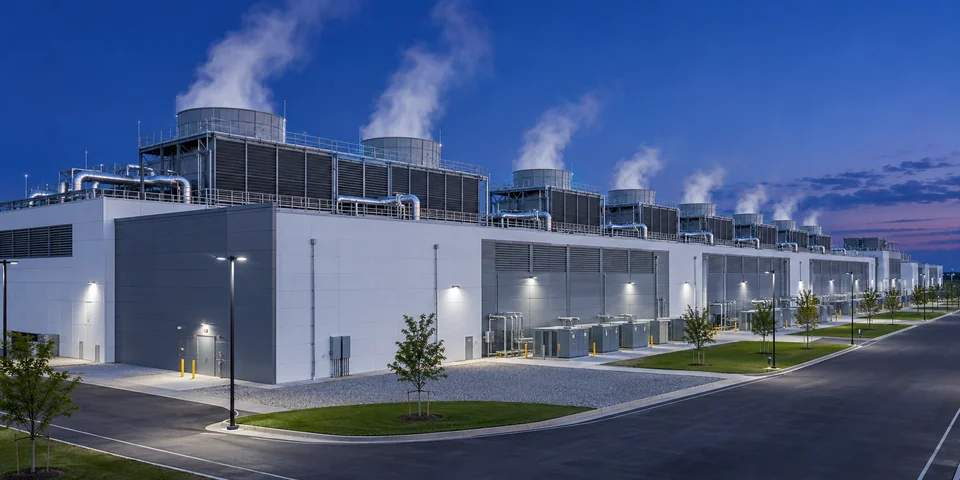
Can Evaporative Cooling Work for Data Centers? A Buyer's Guide to Water, Heat and Humidity
Evaporative cooling can cut a data center's cooling energy — but only inside the wet-bulb limit and the ASHRAE humidity envelope. This guide explains the three configurations, the water-versus-electricity trade-off, and where RTFANS equipment fits.
View article
Shop Evaporative Cooling Pad 5090 for Farm Cooling
Choose a 5090 evaporative cooling pad for farm ventilation by checking model configuration, dimensions, airflow, water distribution and equipment fit.
View article
Why Choose Between a Fan and a Cooler? The Best Answer Might Be Both.
If you’ve been researching industrial cooling, you’ve probably seen the debate: evaporative air cooler vs. industrial fan. Which one is better? [...]
View article