
Can Evaporative Cooling Work for Data Centers? A Buyer's Guide to Water, Heat and Humidity
Evaporative cooling can cut a data center's cooling energy — but only inside the wet-bulb limit and the ASHRAE humidity envelope. This guide explains the three configurations, the water-versus-electricity trade-off, and where RTFANS equipment fits.
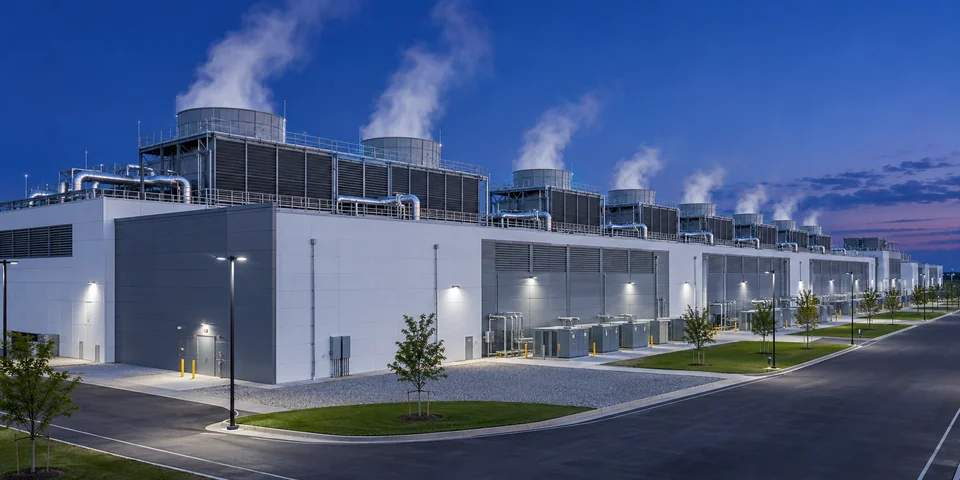
Yes — but not in the way most people picture it. In a data center, evaporative cooling works as heat rejection and pre-cooling: water evaporates in a cooling tower or across a wet pad, and the heat leaves with the vapor. It does not usually mean blowing humid air straight onto the servers. The wet-bulb temperature of the incoming air sets a hard limit on how far the air can be cooled, and the humidity of the supply air must stay inside the envelopes ASHRAE publishes for the equipment class. Get those two constraints right and evaporative cooling can cut cooling electricity by 20–30% against compressor chillers; get them wrong and you trade a power problem for a water and humidity problem.
Key takeaways
- A single large AI data center campus can use 1–5 million gallons of water a day, and modern AI racks draw 100–140 kW per cabinet — up from 5–10 kW a decade ago.
- Evaporative cooling is adiabatic: water absorbs heat as it evaporates, so there is no refrigerant compressor in the loop. But the wet-bulb temperature is a hard floor that no amount of water or airflow can beat.
- Direct systems add moisture to the supply air; indirect systems keep evaporation in a secondary airstream; hybrid systems use evaporation only as pre-cooling for a mechanical system.
- ASHRAE TC 9.9 sets humidity limits (relative humidity and dew point) by equipment class. High humidity risks condensation on server components; low humidity raises the risk of electrostatic discharge.
- Water and electricity are a trade-off, not a free win. Google reports water cooling cuts energy about 10% versus air cooling in many locations, while Microsoft's newest AI sites use closed-loop direct-to-chip cooling and accept a nominal power increase to use almost no water.
- RTFANS evaporative coolers and cooling pads serve the heat-rejection and support-space side of a data center project. They do not replace precision cooling inside the server hall.
Why are data centers asking about evaporative cooling now?
Data centers are asking because AI pushed rack power from 5–10 kW to 100–140 kW per cabinet, and the water needed to cool it has become a permitting and community issue. A 100-megawatt data center is, in effect, a 100-megawatt electric heater that must reject heat 24 hours a day.
That heat has to go somewhere, and the cheapest way to move it has long been water. A single large hyperscale AI data center campus can consume between 1 million and 5 million gallons of fresh water every single day — roughly the daily residential demand of a town of 10,000 to 50,000 people. On 3 November 2026, voters in ten US states decided 41 local ballot measures on data centres; in 40 of them the result backed limits on development, from outright bans and moratoriums to rejected rezonings. Local campaigns had already blocked $18 billion of US data centre projects and delayed another $46 billion between May 2024 and March 2025.
So the industry is split. Google says water cooling can cut a data centre's energy use by about 10% compared with air cooling in many locations, and about two-thirds of its data centres use evaporative cooling — the better choice, it argues, where water supplies are healthy. Microsoft's newest AI sites take the opposite approach: a closed-loop, direct-to-chip design that avoids evaporating water for cooling, accepting what the company calls a "nominal increase" in power use and a higher power usage effectiveness (PUE). Both answers are honest. Which one fits depends on the site's water, climate and power — and that is exactly what this guide helps you judge. For the wider market context, see our industrial cooling market and supplier landscape.
How does evaporative cooling actually work in a data center?
Evaporative cooling works in a data center as an adiabatic process: water absorbs heat as it evaporates, lowering air temperature without a refrigerant compressor, and it is used for heat rejection and pre-cooling rather than as direct supply air to the servers. A given volume of water can absorb roughly 3,000 times more heat than the same volume of air, which is why liquid cooling lets operators pack far more computing into the same floor space.
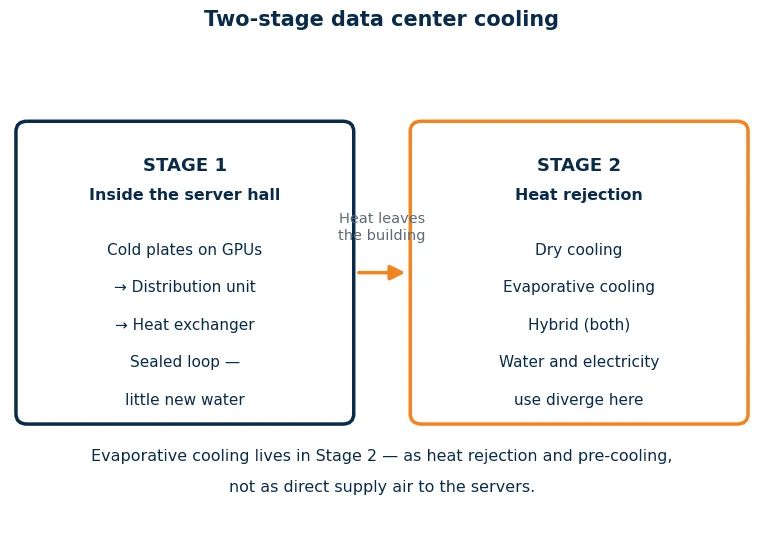
Cooling an AI data centre happens in two places. Inside the server, coolant runs through cold plates attached to the processors and carries their heat to a distribution unit; a heat exchanger passes that heat to a separate facility circuit. The coolant around the chips stays sealed in its own loop, so routine operation needs little new water. At an Equinix site in San Jose, eight racks of Nvidia Grace Blackwell servers each hold 72 GPUs; under heavy workloads the chips run at about 80°C, and liquid flowing through copper cold plates carries that heat away.
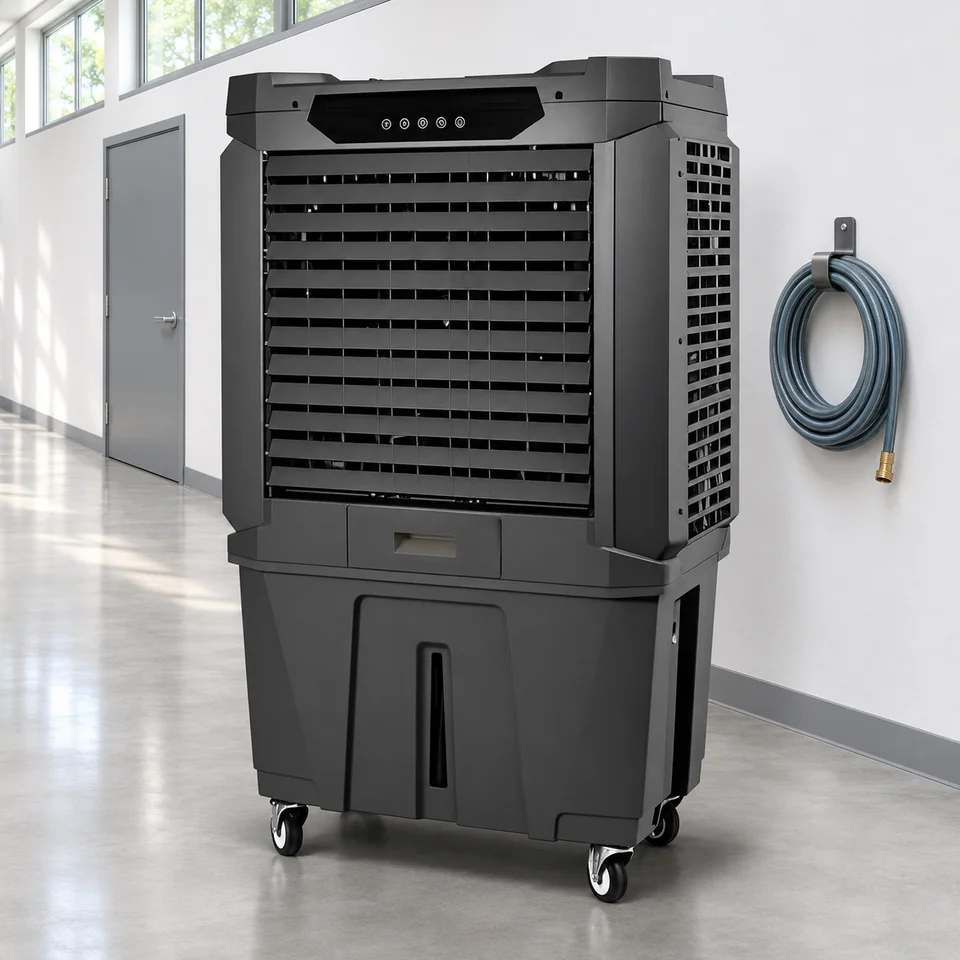
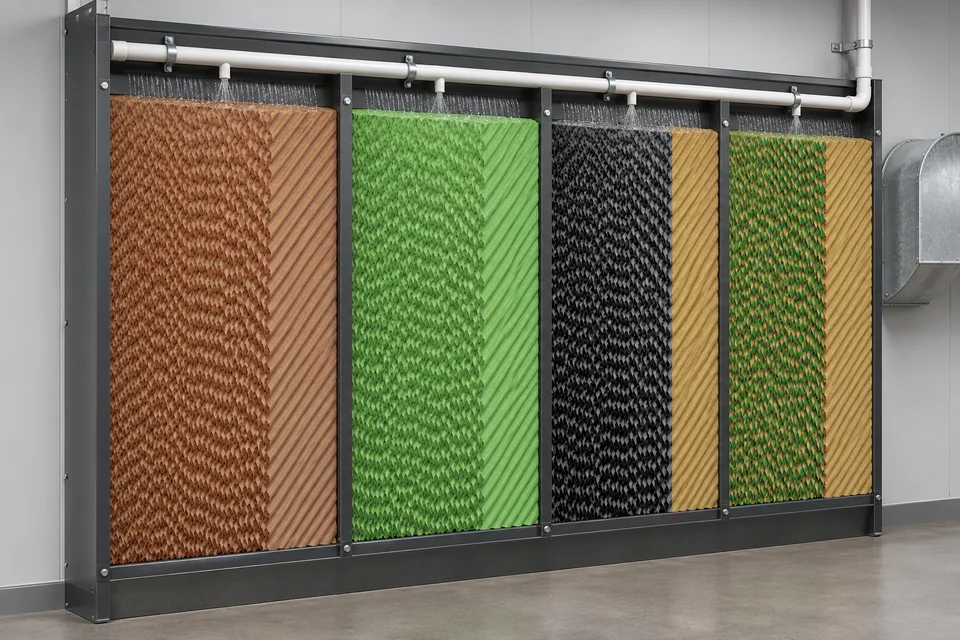
The second stage is where evaporative cooling lives: moving the heat out of the building. Operators use one of three broad approaches — dry cooling, evaporative cooling, or a hybrid of the two — and this is where water and electricity use diverge. In an evaporative system the water passes through cooling towers or across wet pads, and the part that evaporates carries the heat away. The wet media that makes this possible is the evaporative cooling pad: water trickles down the honeycomb cellulose surface while air is drawn through it, and the air leaves cooler and more humid. RTFANS cooling pad systems (5090 and 7090) are that media.
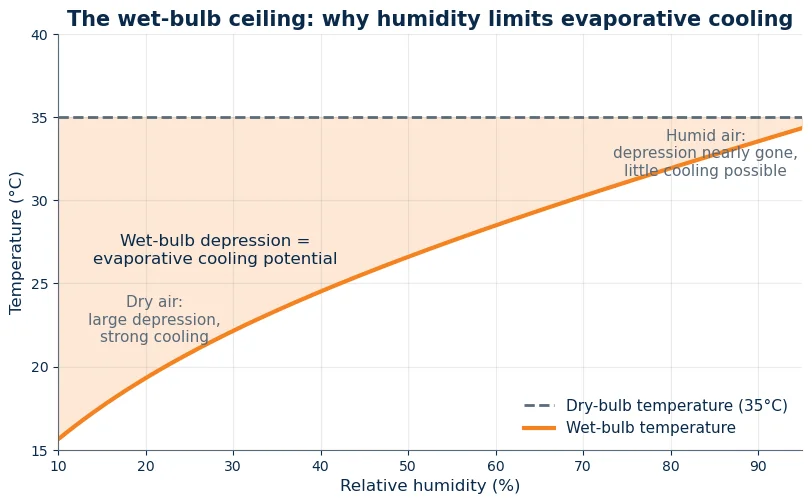
There is one limit that matters more than any other. The wet-bulb temperature of the entering air is the lowest temperature the supply air can reach, and water volume and airflow do not change that limit. When ambient humidity rises, the wet-bulb temperature approaches the dry-bulb temperature, narrowing the gap — the wet-bulb depression — and evaporative cooling contributes little. Evaluate site-specific wet-bulb profiles across the full year using ASHRAE design weather data before committing to an evaporative architecture.
Direct, indirect or hybrid — which configuration fits?
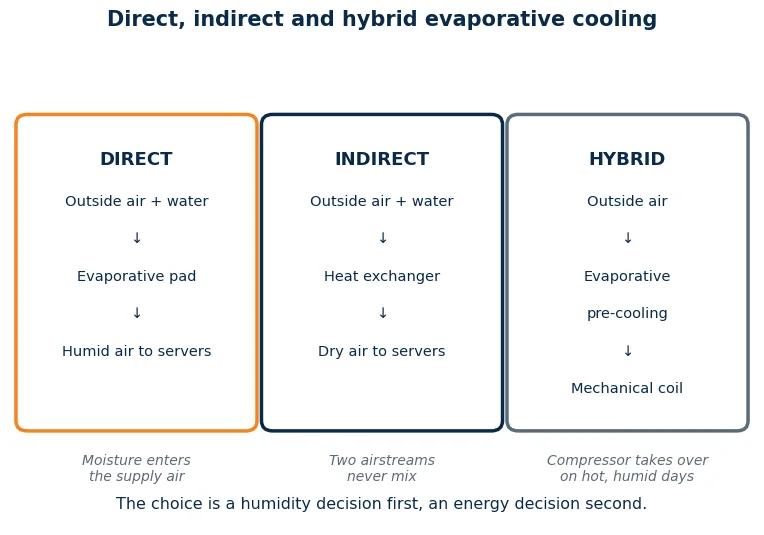
Whether moisture enters the supply airstream reaching IT equipment separates the three main configurations. The choice is a humidity decision first and an energy decision second.
| Configuration | How it cools | Moisture in supply air? | Humidity management | Best climate | Backup needed? |
|---|---|---|---|---|---|
| Direct | Water evaporates directly into the primary supply airstream | Yes — humidity rises | High complexity; supply humidity must be actively controlled to stay within the equipment class limits | Arid and semi-arid, large wet-bulb depression | Recommended for year-round uptime or humid seasons |
| Indirect | A heat exchanger transfers cooling from a wetted secondary airstream; the two airstreams do not mix | No — moisture stays in the secondary circuit | Lower than direct; monitoring still required | Broader range; maximum cooling potential is lower | Often paired with chiller backup |
| Hybrid / adiabatic pre-cooling | Evaporative cooling reduces the load on a downstream mechanical cooling system | Depends on configuration; indirect variants add none | Moderate; pre-cooling moisture must be counted in the total supply-air moisture load | Facilities with limited free-cooling hours that still want to cut compressor energy | Mechanical cooling is integrated by design and carries the full load when conditions exceed the evaporative range |
Direct systems are the most effective where the air is dry, but they carry the highest humidity-management burden. Indirect systems give up some cooling potential in exchange for keeping the supply air dry, which is why they are the common choice where uptime cannot depend on the weather. Hybrid systems are the pragmatic middle: evaporative pre-cooling does the work whenever conditions allow, and the compressor takes over on hot, humid days. The right system depends on climate, load density and uptime needs — site-specific psychrometric data should guide the final choice, not regional generalizations. A related comparison for other industrial buildings is our guide to evaporative coolers versus HVAC systems in manufacturing plants.
What does ASHRAE require for humidity?
ASHRAE Technical Committee 9.9 publishes the environmental guidelines data center designers use: a recommended envelope and wider allowable envelopes by equipment class, setting relative humidity and dew point limits for IT equipment. Your equipment class and your operator's specification determine which limits apply. Adding evaporative cooling creates a humidity management obligation that belongs in the engineering design, not in post-commissioning fixes.
The two limits guard against opposite failures. Upper limits guard against condensation on server components. Lower limits address electrostatic discharge risk. In a direct evaporative system, evaporation adds moisture to the supply airstream continuously; if that addition does not match the facility's thermal and moisture load, relative humidity can drift toward or past the upper limit for the equipment class. Indirect systems carry lower direct risk, but humidity still needs monitoring because supply air interacts with the broader facility environment.
One more constraint is easy to miss: rising chip and memory power can shrink the number of hours when evaporative pre-cooling works. Dense systems may need lower facility water temperatures, and lower water temperatures leave fewer hours for economization — cooling without compressors. Precision humidity control is therefore a required design element in any data center evaporative cooling system, not an optional upgrade. It must be specified together with the evaporative system from the outset.
Water or electricity — which bill do you want?
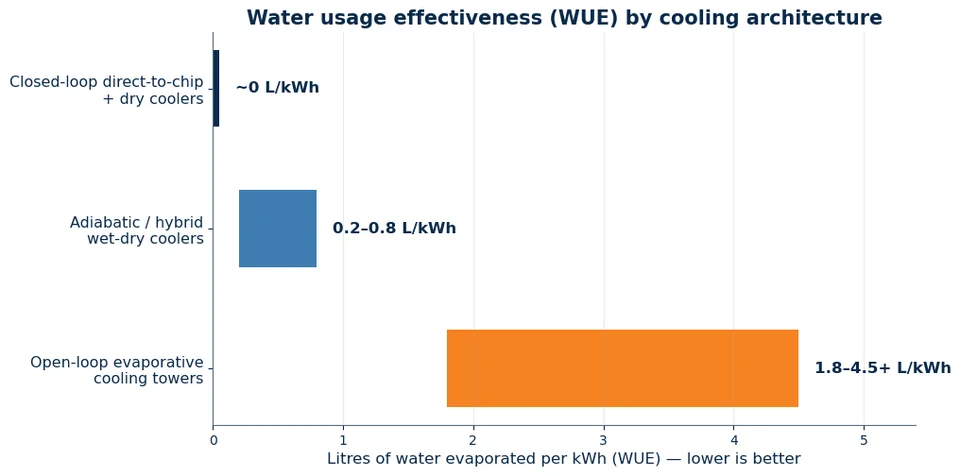
Evaporative systems trade electrical energy for water consumption, and power usage effectiveness (PUE) captures only the electrical half. Water usage effectiveness (WUE) is the metric operators use to account for site water consumption. Evaluate energy and water impacts together, not separately.
| Architecture | On-site water consumption (WUE) | Electrical cooling overhead | Fit for drought-stressed regions |
|---|---|---|---|
| Open-loop evaporative cooling towers | 1.8–4.5+ litres evaporated per kWh | Low fan and pump power | Poor — drains municipal drinking water in summer |
| Adiabatic / hybrid wet-dry coolers | 0.2–0.8 litres per kWh (peak days only) | Moderate electrical load | Moderate — cuts annual water use by 70–85% |
| Closed-loop direct-to-chip + dry coolers | Near 0.0 litres (sealed glycol/water loop) | Slightly higher dry-radiator fan draw | Excellent — zero ongoing evaporative water loss |
The numbers behind the trade-off are stark. Lawrence Berkeley National Laboratory put US data centres' direct water consumption at about 17.4 billion gallons in 2023 — and the water consumed generating their electricity at roughly 211 billion gallons, about 12 times as much. A data centre that cuts its water use by drawing more electricity may simply shift part of its footprint to the grid, and the answer depends on the local generation mix. The same laboratory puts US data centre electricity at 192 terawatt-hours in 2024, or 4.7% of the country's electricity, with a reference case reaching 649 TWh by 2030.
Siting makes the choice sharper. About two-thirds of new data centres built or in development since 2022 sit in areas of high water stress, and municipal systems supply an estimated 97% of data centres' on-site water — which puts the pressure on local utilities rather than on any national supply. In Virginia, home to the world's largest data centre market, a December 2024 state study estimated the industry used about 2.1 billion gallons in 2023, less than 0.5% of state withdrawals, and found current use sustainable — while still recommending tighter rules so localities with limited water do not commit too much of it. The lesson is the same in both directions: water is a local issue, and the site's water supply, its hottest-day demand, and the electricity each cooling option would need are the figures that matter before any approval. For how the same trade-off plays out in logistics buildings, see evaporative coolers versus HVAC systems in logistics centers.
Where does RTFANS equipment fit — and where does it not?
RTFANS industrial evaporative air coolers (20,000–60,000 CMH) and 5090/7090 cooling pads fit the heat-rejection and support-space side of a data center project; they do not replace precision cooling inside the server hall. In a data center project they fit in three places:
- The evaporative media and heat-rejection side. The cooling pad is the wet media inside an evaporative system — the surface where water evaporates and air cools. Specifying proven pad media matters because the pad's saturation efficiency and pressure drop set how much cooling the airstream actually gets.
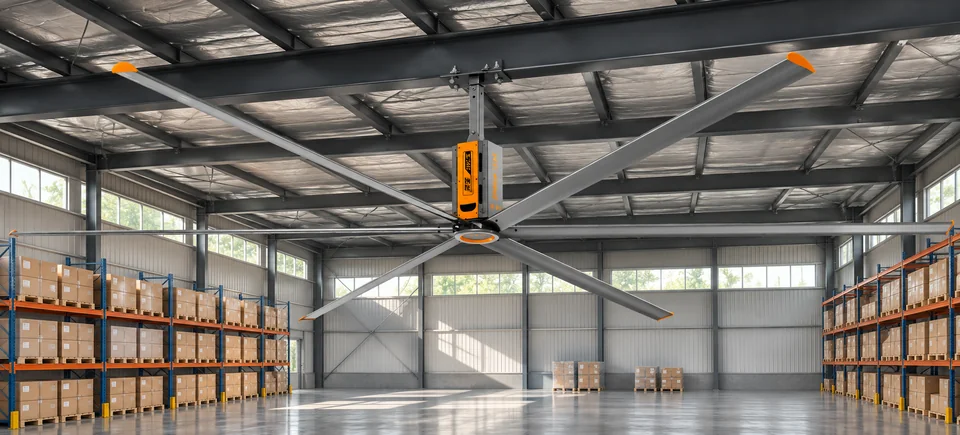
- The building around the servers. A data center campus is mostly not server halls: warehouses, loading docks, workshops, electrical rooms, offices and staff areas. Those spaces are exactly what an industrial evaporative cooler or an HVLS fan is built for, and they are usually cooled by the same kind of equipment as any other large industrial building.
- Temporary and spot cooling. During maintenance, fit-out or a cooling failure, a portable evaporative cooler is a practical way to keep a support space workable while the main system is down.
What RTFANS equipment does not do is replace precision cooling inside the server hall. Server-hall cooling — computer-room air handlers, direct-to-chip liquid cooling, immersion — is a precision discipline with its own vendors, controls and redundancy rules. No RTFANS product should be presented as doing that job. If a buyer needs server-hall cooling, the right answer is a precision-cooling vendor; RTFANS covers the rest of the building. If your project includes support spaces, a warehouse or a loading dock alongside the data hall, tell us about the facility and we will size the right equipment for those spaces.
Frequently Asked Questions
Can you blow evaporatively cooled air directly onto servers?
Only in a direct evaporative system designed for it, and only while the supply air stays inside the ASHRAE envelope for the equipment class. Most facilities use indirect or hybrid configurations so the air reaching the servers stays dry, with evaporation confined to a secondary airstream or used only as pre-cooling.
How much water does evaporative cooling use?
It depends on the architecture. Open-loop evaporative cooling towers consume roughly 1.8–4.5+ litres per kWh; adiabatic or hybrid wet-dry coolers use about 0.2–0.8 litres per kWh on peak days; closed-loop direct-to-chip systems with dry coolers use near zero. Ask any supplier for the site's expected water usage effectiveness (WUE), not just its PUE.
Does evaporative cooling work in a humid climate?
Its useful hours shrink as humidity rises, because the wet-bulb temperature approaches the dry-bulb temperature and the wet-bulb depression narrows. Humid sites usually need a hybrid configuration with mechanical backup, and the decision should rest on site-specific psychrometric data, not on regional generalizations.
Does evaporative cooling replace the chiller?
No. It reduces the chiller's load. In hybrid systems the mechanical cooling is integrated by design and carries the full load on hot, humid days when conditions exceed the evaporative system's effective range.
What should I ask a supplier before choosing evaporative cooling for a data center project?
Ask for the design wet-bulb data for the site, the equipment class and its ASHRAE envelope, the expected WUE across the year, how water supply and blowdown are handled, and what happens on the hottest, most humid day of the year. If a supplier cannot answer those five, the design is not ready.
The bottom line
Evaporative cooling is a real, proven way to cut data center cooling energy — as heat rejection and pre-cooling, inside the wet-bulb limit and the ASHRAE humidity envelope, with the water bill understood up front. It is not a way to blow humid air onto servers and hope for the best. The operators getting it right treat water and electricity as one decision, design the humidity control in from the start, and keep precision cooling where it belongs: inside the server hall.
For the building around the servers — the warehouse, the loading dock, the workshop, the offices — RTFANS can help. Tell us about your facility and get a free cooling recommendation.
Related insights
Recommended Engineering & Ventilation Guides
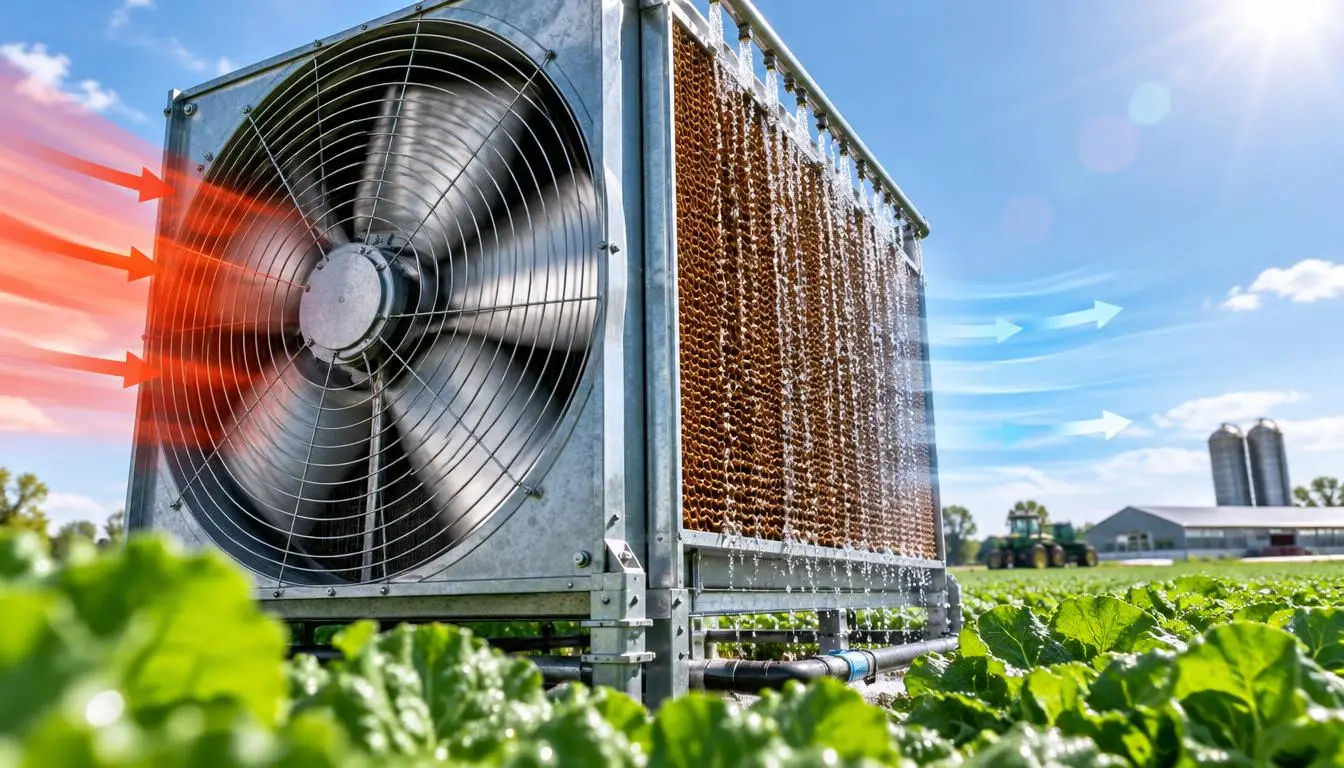
Shop Evaporative Cooling Pad 5090 for Farm Cooling
Choose a 5090 evaporative cooling pad for farm ventilation by checking model configuration, dimensions, airflow, water distribution and equipment fit.
View article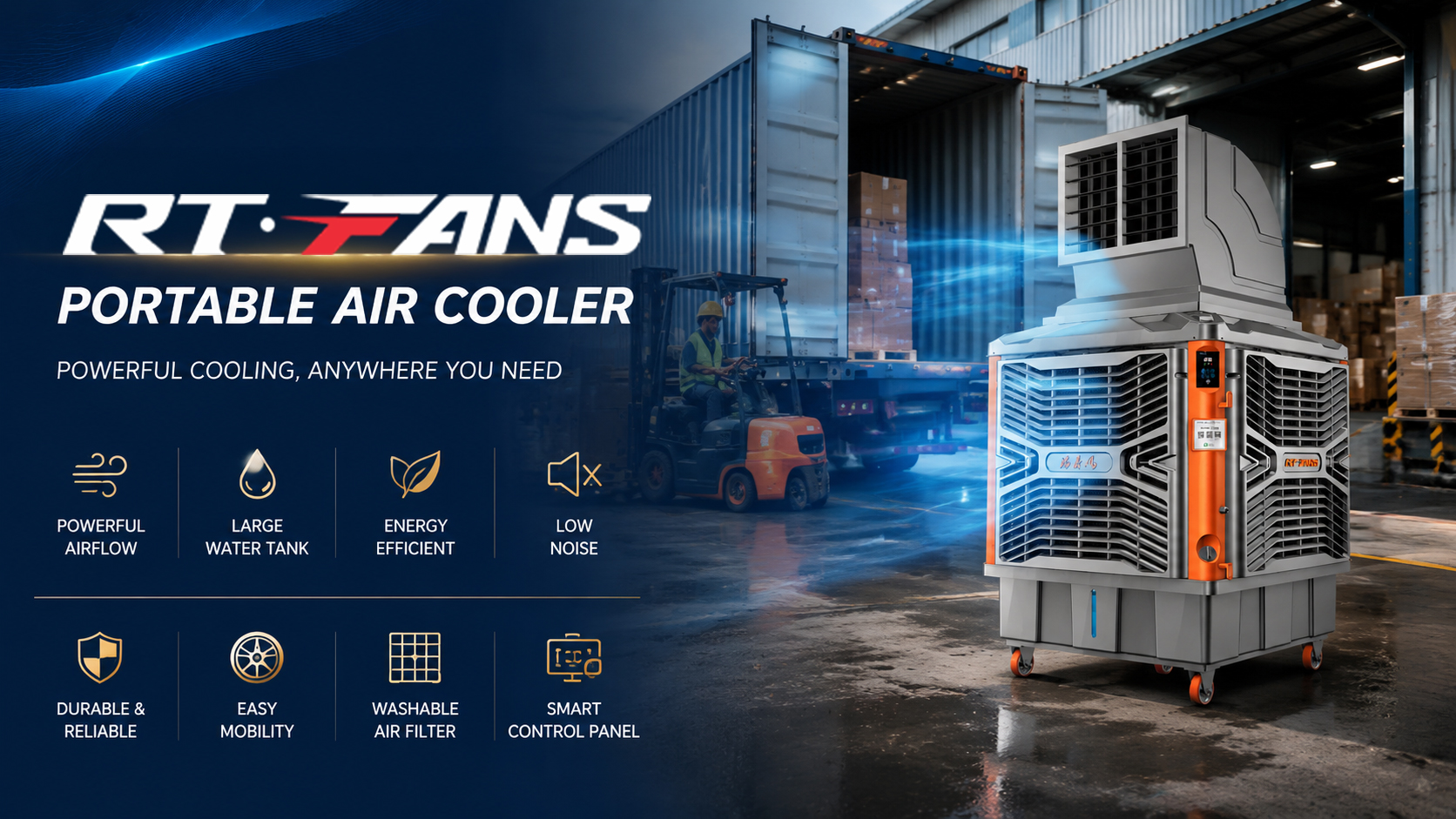
Why Choose Between a Fan and a Cooler? The Best Answer Might Be Both.
If you’ve been researching industrial cooling, you’ve probably seen the debate: evaporative air cooler vs. industrial fan. Which one is better? [...]
View article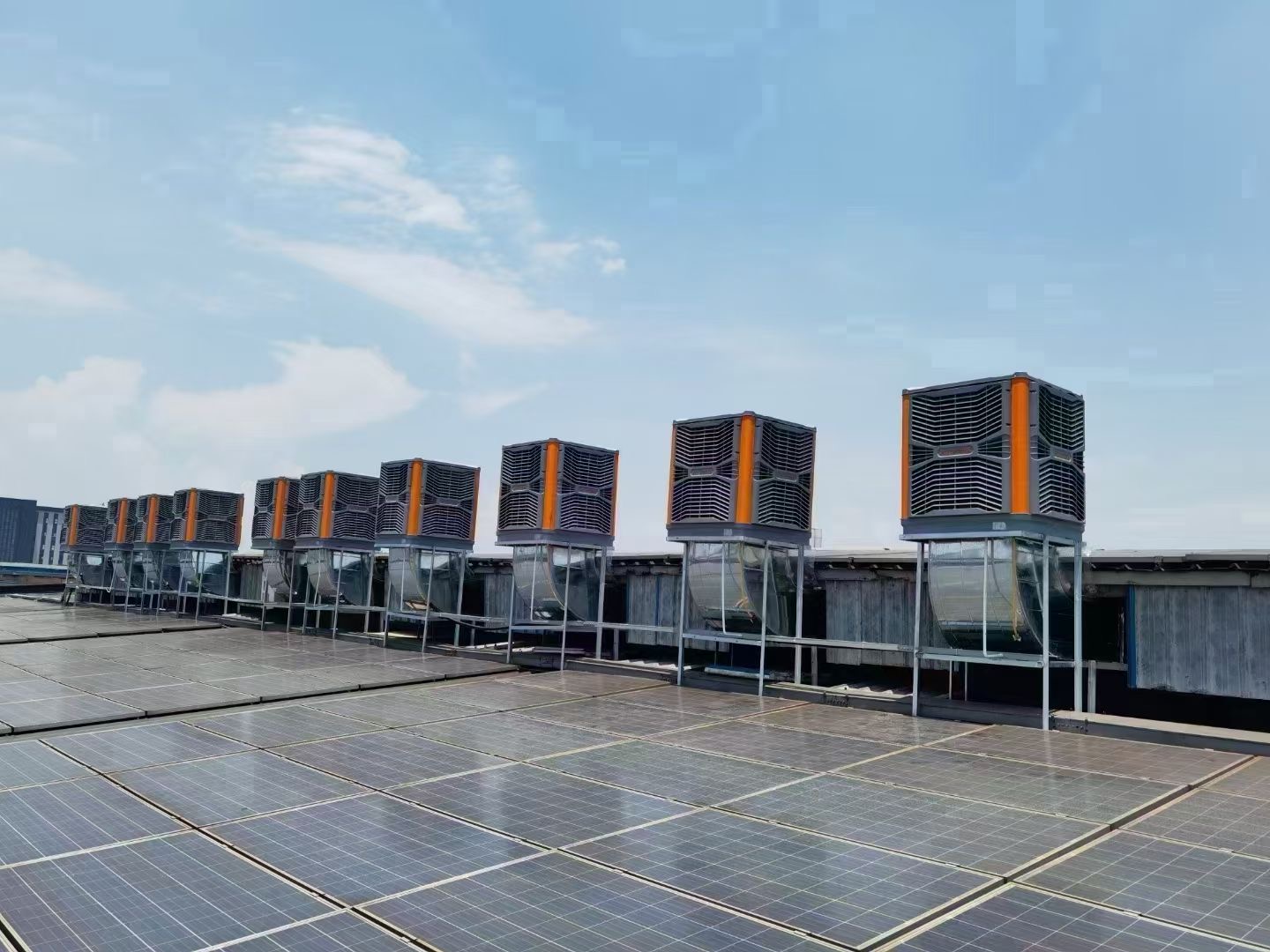
Portable Air Cooler: Evaporative Cooling for Your Home | RTFANS
Portable Air Cooler: Evaporative Cooling for Your Home As the summer heat intensifies, finding an efficient and cost-effective cooling solution [...]
View article