
THE SELECTION AND INFLUENCE OF INSTALLATION LOCATION FOR INDUSTRIAL HVLS FANS
The installation of industrial HVLS fans does not occupy ground space, does not affect the normal working process of any [...]
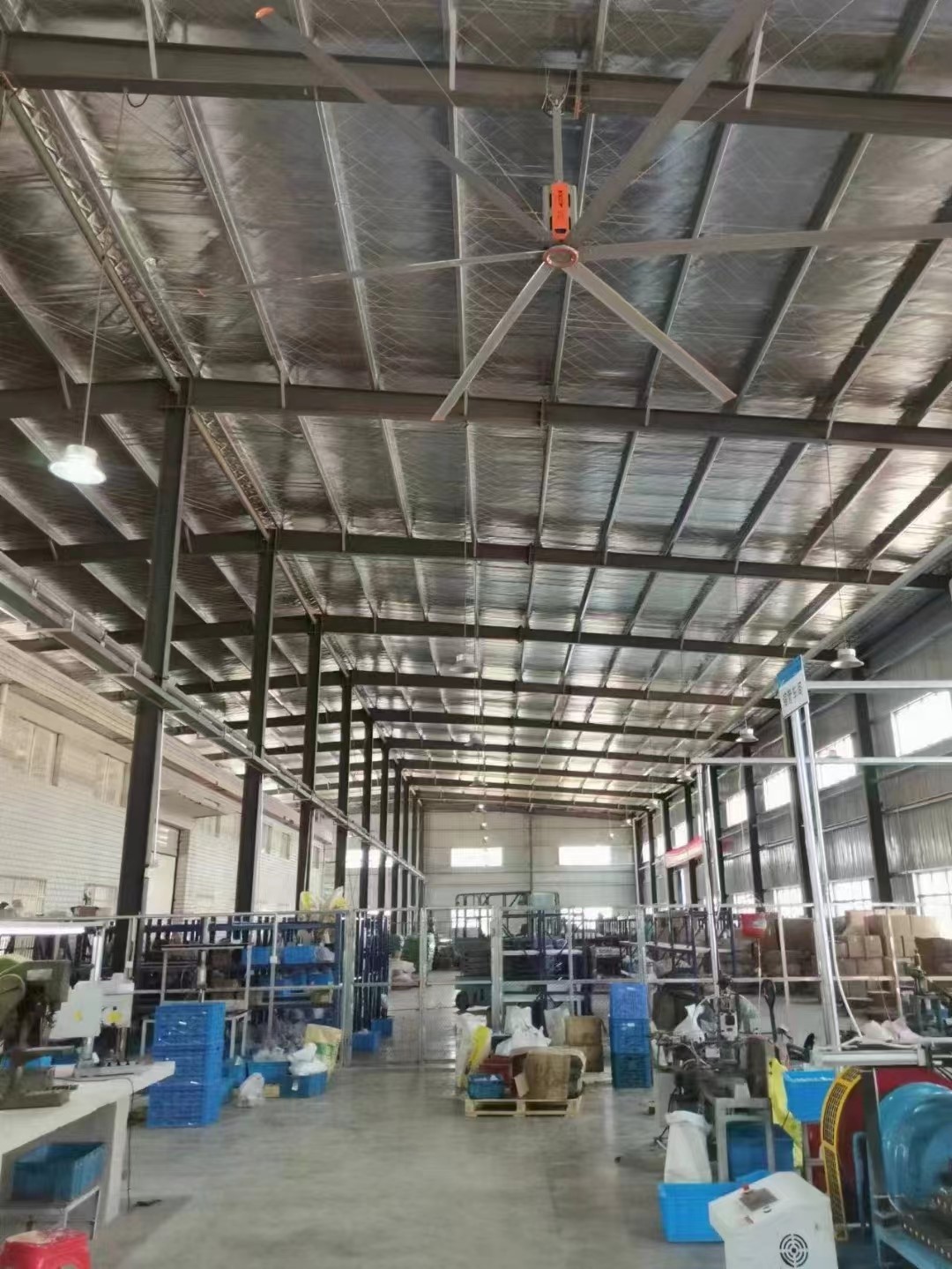
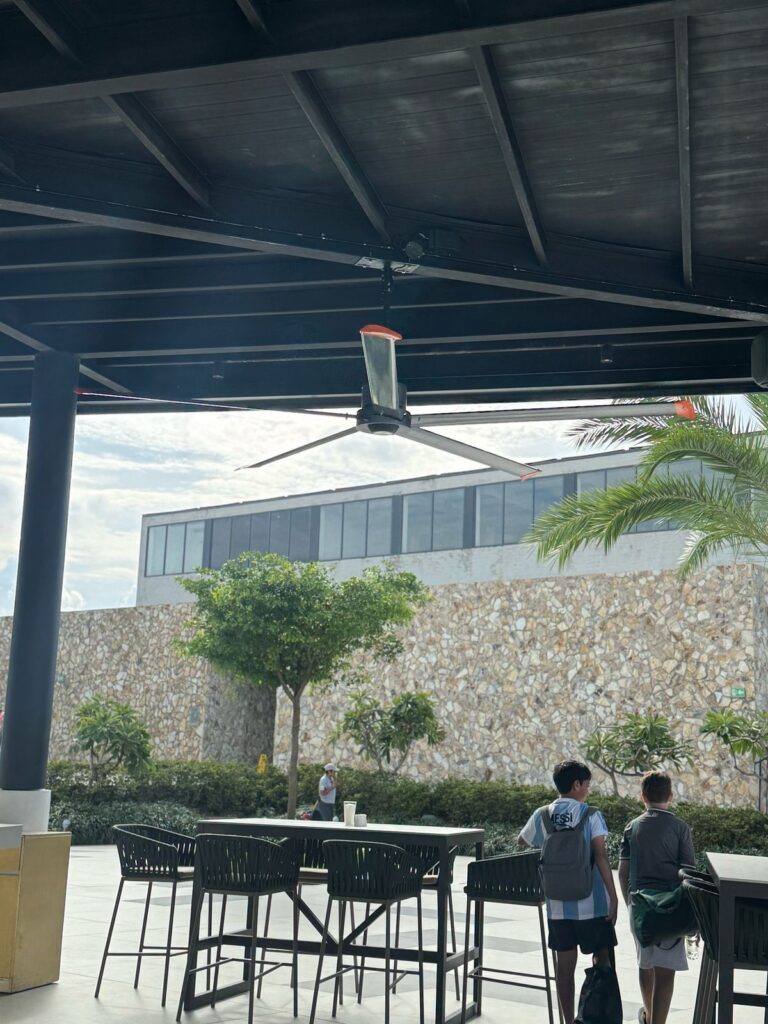
The installation of industrial HVLS fans does not occupy ground space, does not affect the normal working process of any ground work area, and is safe and reliable. However, there are certain requirements for the installation position of big fans, and a suitable installation position can maximize the function of the big fans. There are the following points.
Impact of Height
①Excessive Height:
Reduced Airflow Coverage: If the big fan is too far from the ground, airflow may not effectively reach the target area, diminishing cooling performance.
Increased Energy Consumption: Higher speeds may be required to compensate for the height, leading to higher power usage.oling performance.
Tip: Typically 3-6 meters above the ground (adjust based on fan diameter and space layout).
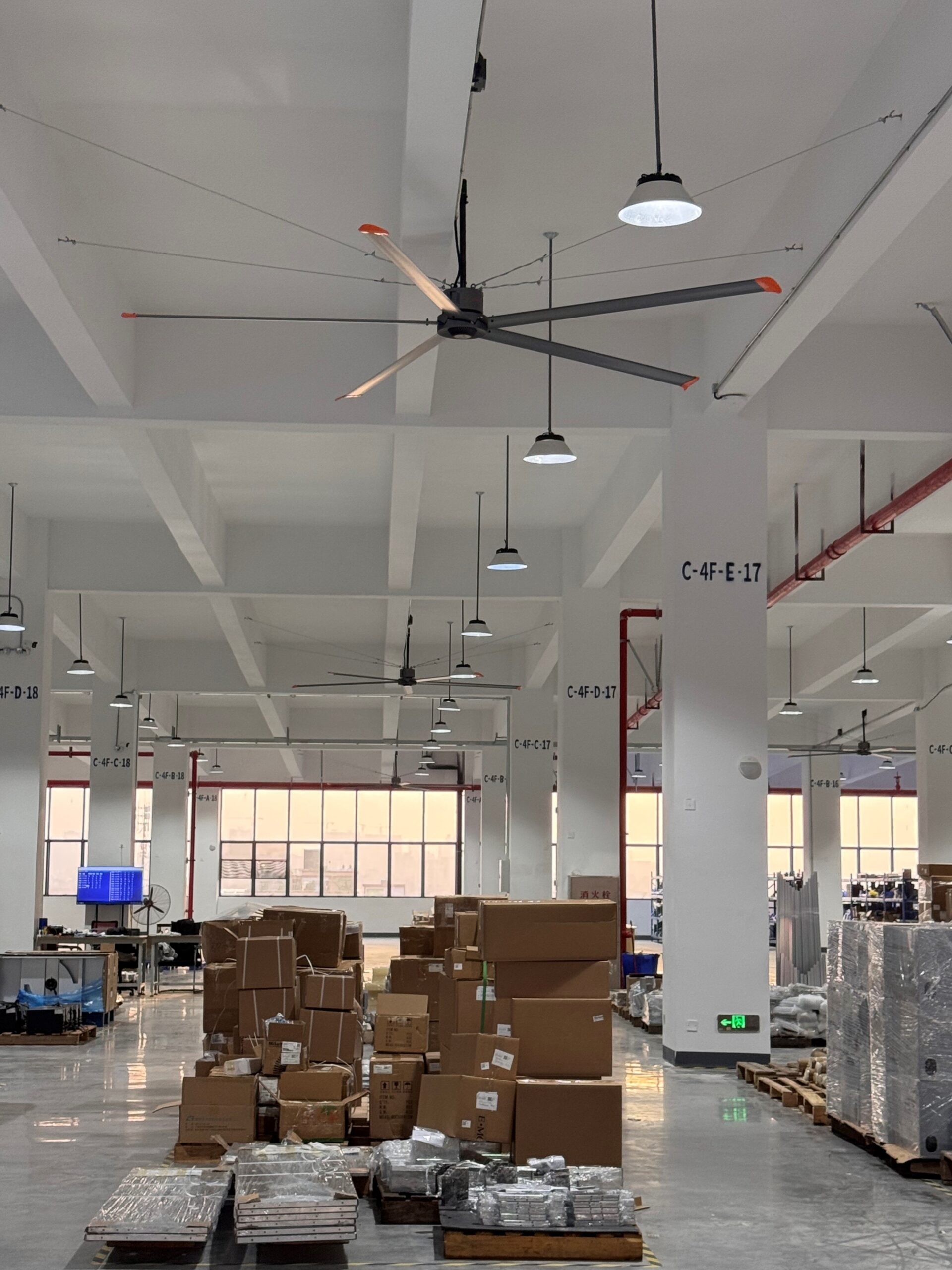
②Insufficient Height:
Safety Hazards: Risk of collision with personnel or equipment, especially in areas with forklift traffic.
Excessive Airflow: Direct strong airflow may cause discomfort (e.g., paper scattering, dust dispersion).
Horizontal Positioning
①Optimizing Coverage: Install directly above the target cooling area (production lines, rest zones) for even airflow distribution. In large spaces, multiple fans should be arranged in a diagonal or grid pattern to avoid dead zones.
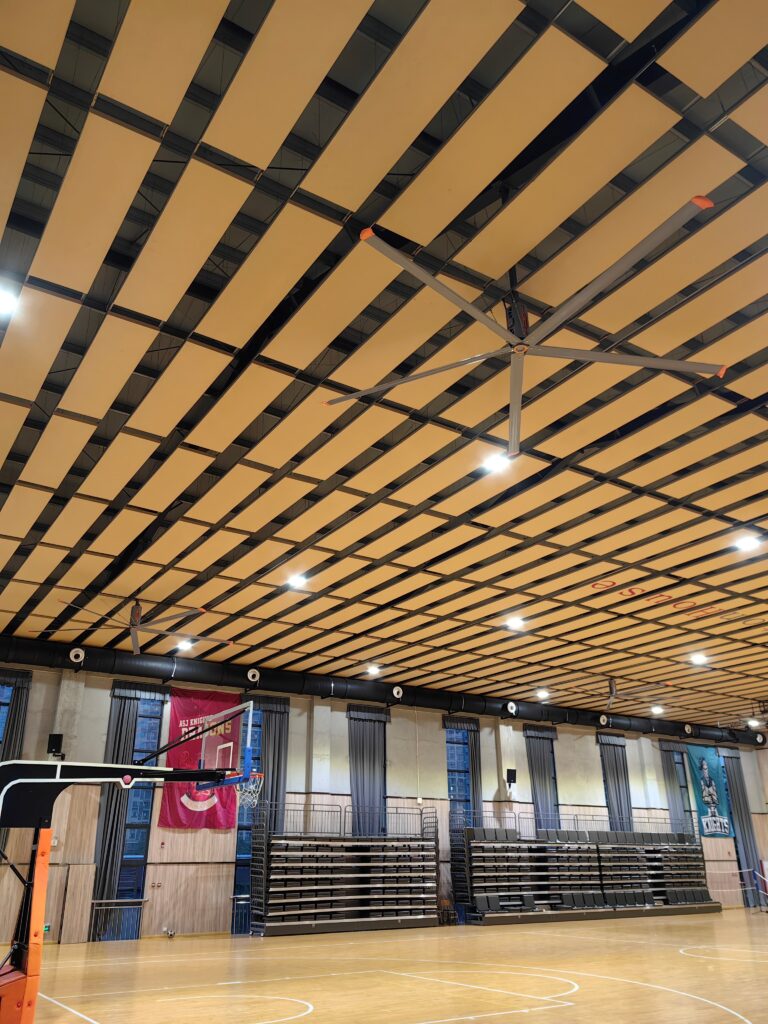
②Avoiding Obstructions: Maintain at least 1-1.5 meters from walls, beams, or columns to prevent airflow rebound or turbulence.Keep clear of lighting, pipes, or other fixtures to facilitate maintenance and avoid interference.
Structural Load-Bearing & Mounting
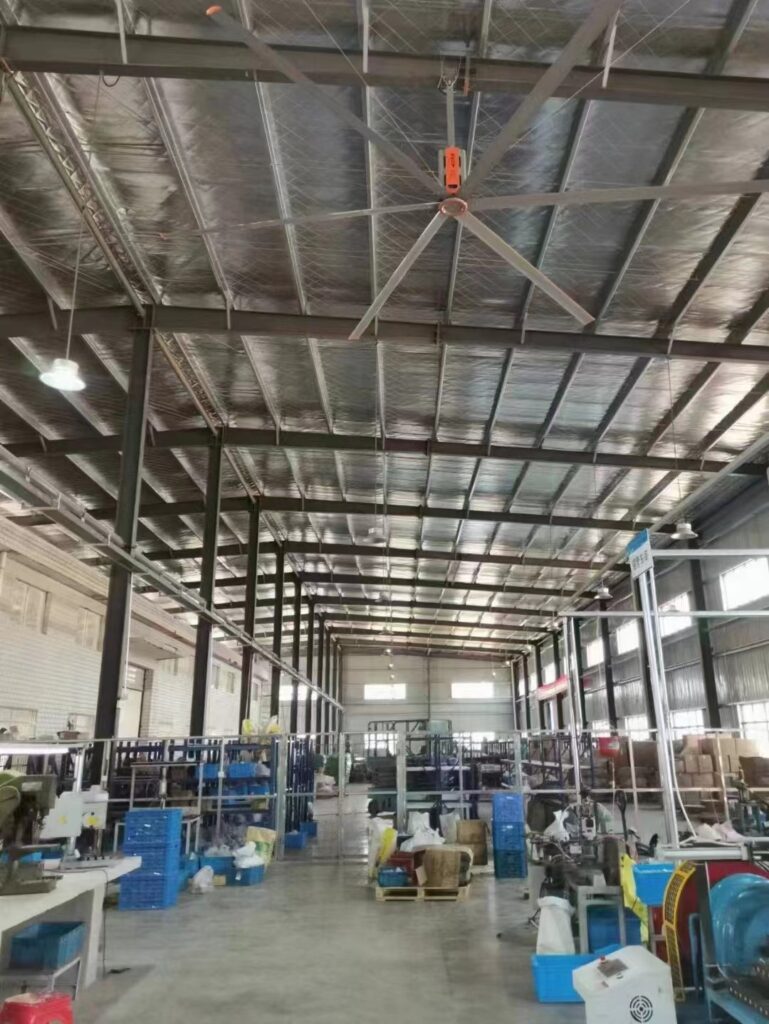
Large industrial HVLS fans can weigh 50-200kg—ensure mounting points can handle dynamic loads (reinforced steel or concrete). Motor vibration may cause the fixture to loosen, and it is necessary to regularly check the bolts and brackets.
Environmental Adaptability
High-Temperature/Humid Areas: Avoid installation near heat sources orhighly humid zones to prolong motor life.
Ventilation Synergy: Coordinate with doors, windows, or ventilation systems to expel hot air.
If you have ventilation needs, you can contact us. We will help you design a ventilation plan that is exclusive to you.
Frequently Asked Questions
How high should an industrial HVLS fan be installed?
Typically 3 to 6 metres above the ground, adjusted according to the fan diameter and the space layout.
What happens if an HVLS fan is installed too high?
The airflow may not effectively reach the target area, so cooling performance drops, and higher speeds may be needed to compensate, which uses more energy.
What happens if an HVLS fan is installed too low?
It creates a safety hazard, with a risk of collision with personnel or equipment, especially in areas with forklift traffic, and the direct strong airflow can cause discomfort such as scattering paper or dispersing dust.
Where should an HVLS fan be positioned horizontally?
Install it directly above the target cooling area, such as production lines or rest zones, arrange multiple fans in a diagonal or grid pattern in large spaces to avoid dead zones, and keep at least 1 to 1.5 metres clear of walls, beams, columns, lighting and pipes.
What must the mounting structure support?
Large industrial HVLS fans weigh 50 to 200 kilograms, so mounting points must handle dynamic loads using reinforced steel or concrete, and bolts and brackets should be checked regularly because motor vibration can loosen them.
Related insights
Recommended Engineering & Ventilation Guides
PMSM Direct-Drive vs Belt-Driven Fans for Manufacturing Plants
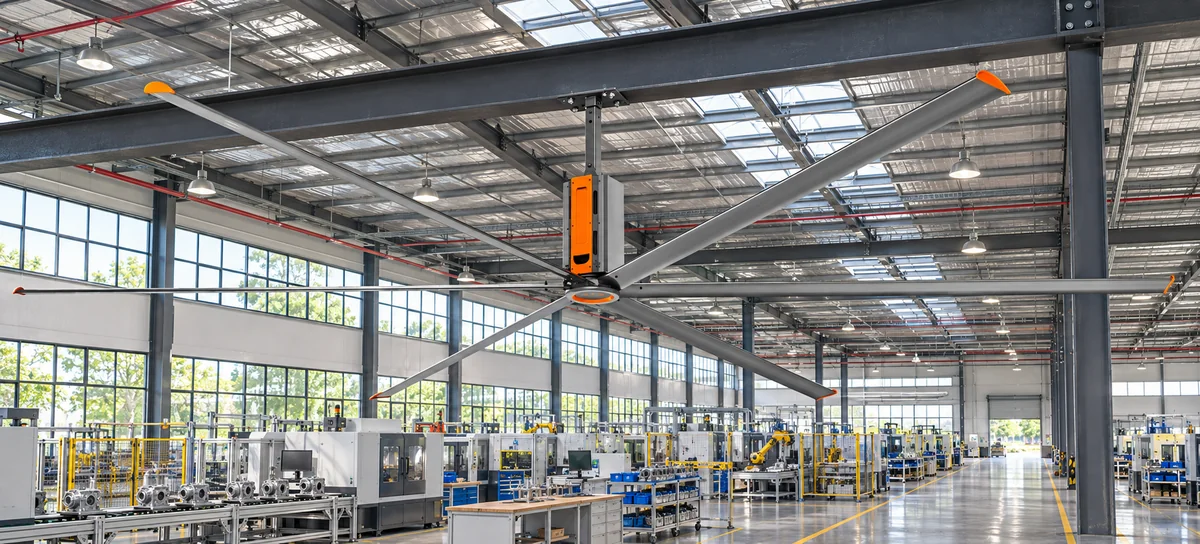
PMSM direct-drive fans remove the belt, pulleys and gearbox from the power path — compare energy loss, maintenance, downtime and 10-year cost against belt-driven fans for manufacturing plants.
View article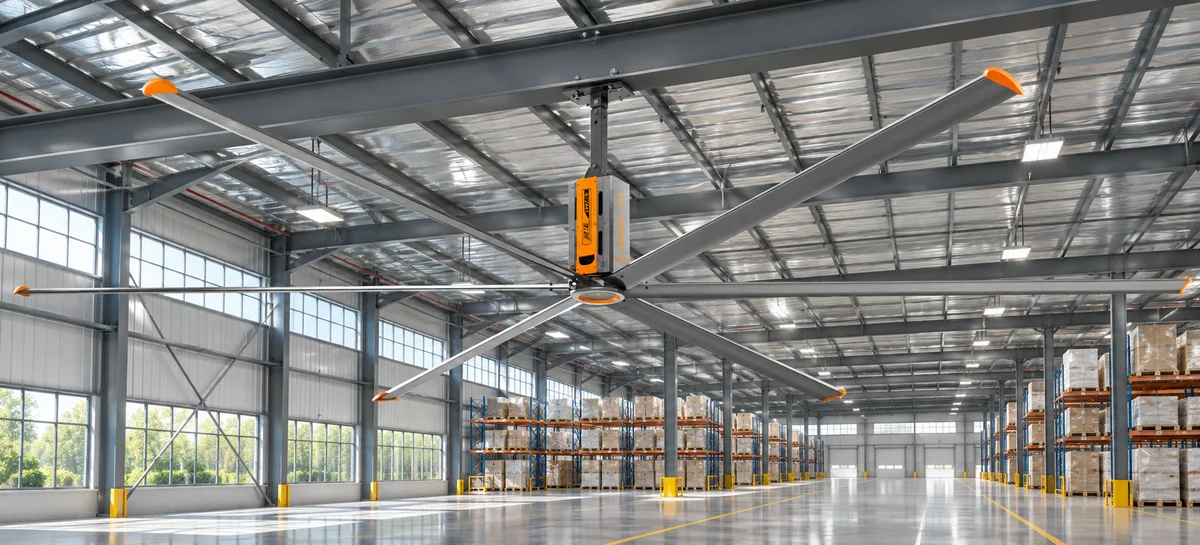
Where to Buy HVLS Fans With Professional Installation in the US
US buyers can buy an HVLS fan with professional installation through three routes — an industrial fan supplier, an authorized distributor, or a commercial HVAC contractor. How the routes differ, what a complete quote should include, and how to vet an installer before you sign.
View article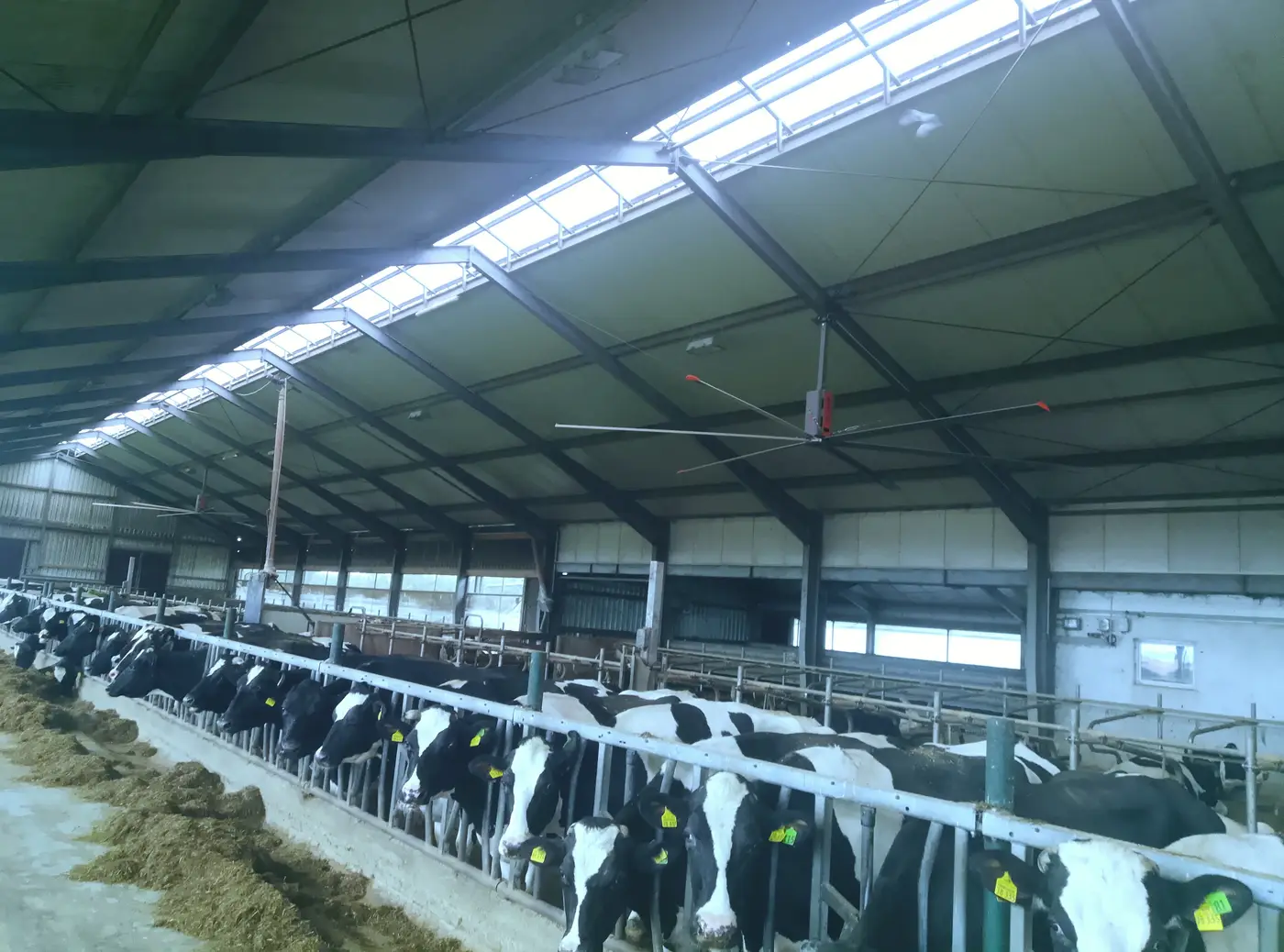
HVLS Fans for a German Dairy Barn: A Customer's Five-Star Review
A German dairy barn customer praises RTFANS fan assembly, supplied components and Angela Xie's support during ordering, shipping and installation.
View article