
How Do You Ventilate a Warehouse Loading Dock? Fans, Exhaust and Spot Cooling That Work
A loading dock is the hottest, stuffiest part of most warehouses — open doors, idling trucks, sun-baked trailers and no airflow. This guide explains why dock ventilation fails, what OSHA expects, and the fan, exhaust and spot-cooling combination that actually works.
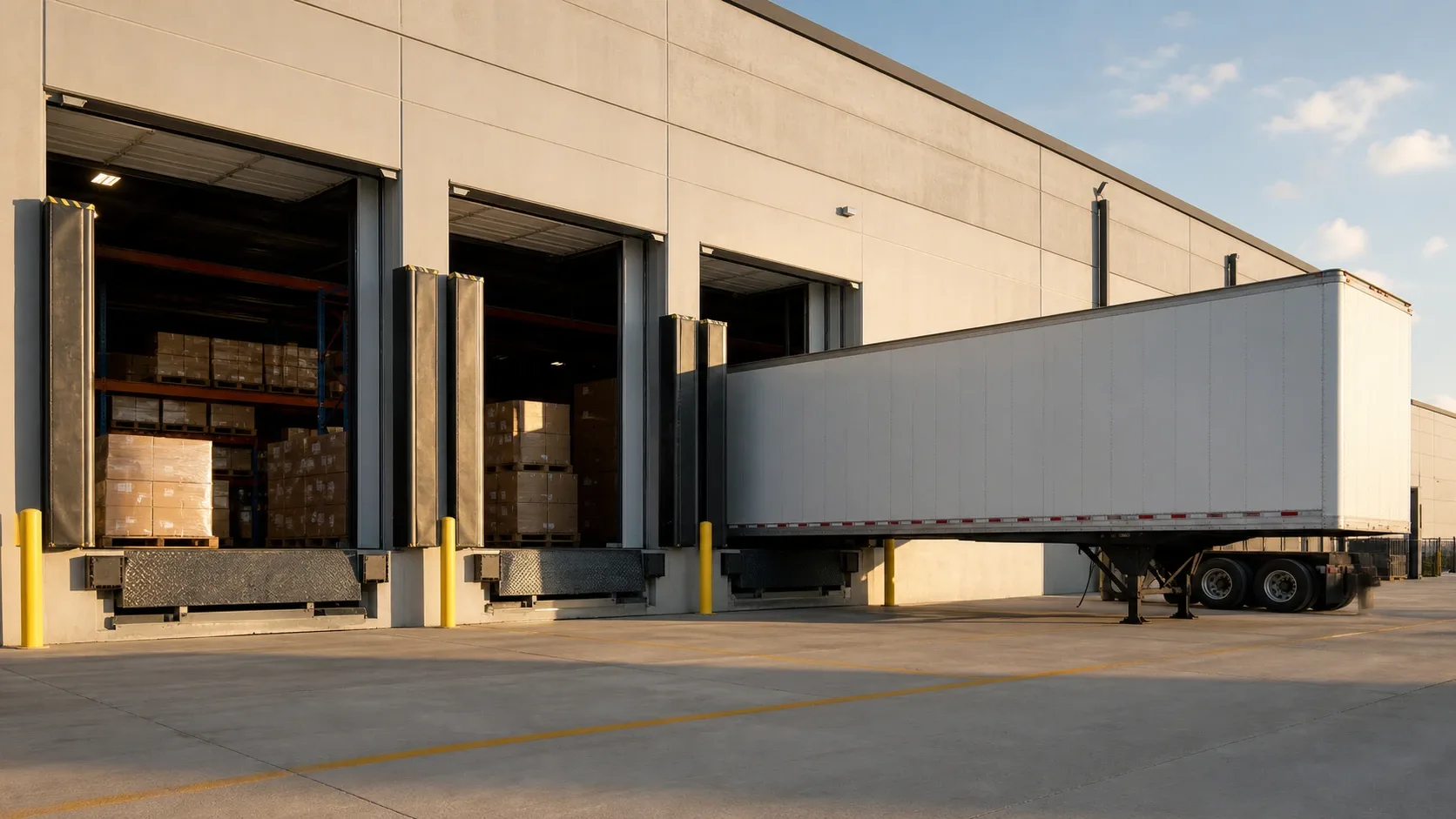
A loading dock needs three things working together: fresh air supplied in, hot and fume-laden air exhausted out, and big slow air movement to break up the heat at the ceiling and inside trailers. A single wall fan is not a ventilation plan — it stirs the same hot air without removing heat or fumes, and it does nothing for the worker inside a sun-baked trailer. This guide explains why dock ventilation fails, what OSHA expects, and the combination that works.
Key takeaways
- A dock is the warehouse's main source of fresh air — and where heat, truck exhaust and humidity concentrate. Open doors alone are not a ventilation strategy.
- OSHA 1910.28 requires fall protection at any dock edge with a drop of 4 feet or more — bay doors cannot simply be left open for air without a compliant guardrail.
- Carbon monoxide from vehicle exhaust has a federal limit of 50 ppm over an 8-hour shift; enclosed docks need mechanical ventilation to stay under it.
- Dock accidents account for about 25% of all warehouse injuries, and hot trailers add heat stress to an already high-risk area.
- Cal/OSHA's indoor heat standard (in force since July 2024) treats dock zones as first-priority heat areas: at 87°F, engineering controls — fans, ventilation, shielding — come first.
- What works: a cooler supplies fresh air, an exhaust fan pulls hot air out, an HVLS fan keeps air moving, and a portable cooler cools the worker in the trailer.
Why is the loading dock the hardest area to ventilate?
The loading dock is the hardest area to ventilate because it is a large opening in the building envelope that is also the hottest workplace in the warehouse: the sun heats the concrete apron and the trailer roofs, trucks idle at the doors, forklifts run inside trailers, and every open bay door lets hot, humid outdoor air pour in while conditioned air pours out.
Four heat sources stack up at once: solar gain on the apron, dock wall and trailer roofs; engine heat and exhaust fumes from idling trucks and forklifts; heat from the workers' labor; and warm air collecting at the high dock ceiling.
The open-door paradox makes it worse. Open bay doors do let air in — but they also let cooled air out and humid outdoor air in, turning the dock into an uncontrolled opening rather than a managed airstream. The result is a dock that is drafty and hot at once: air moves near the doors, but the air deep in the dock and inside the trailers barely moves.
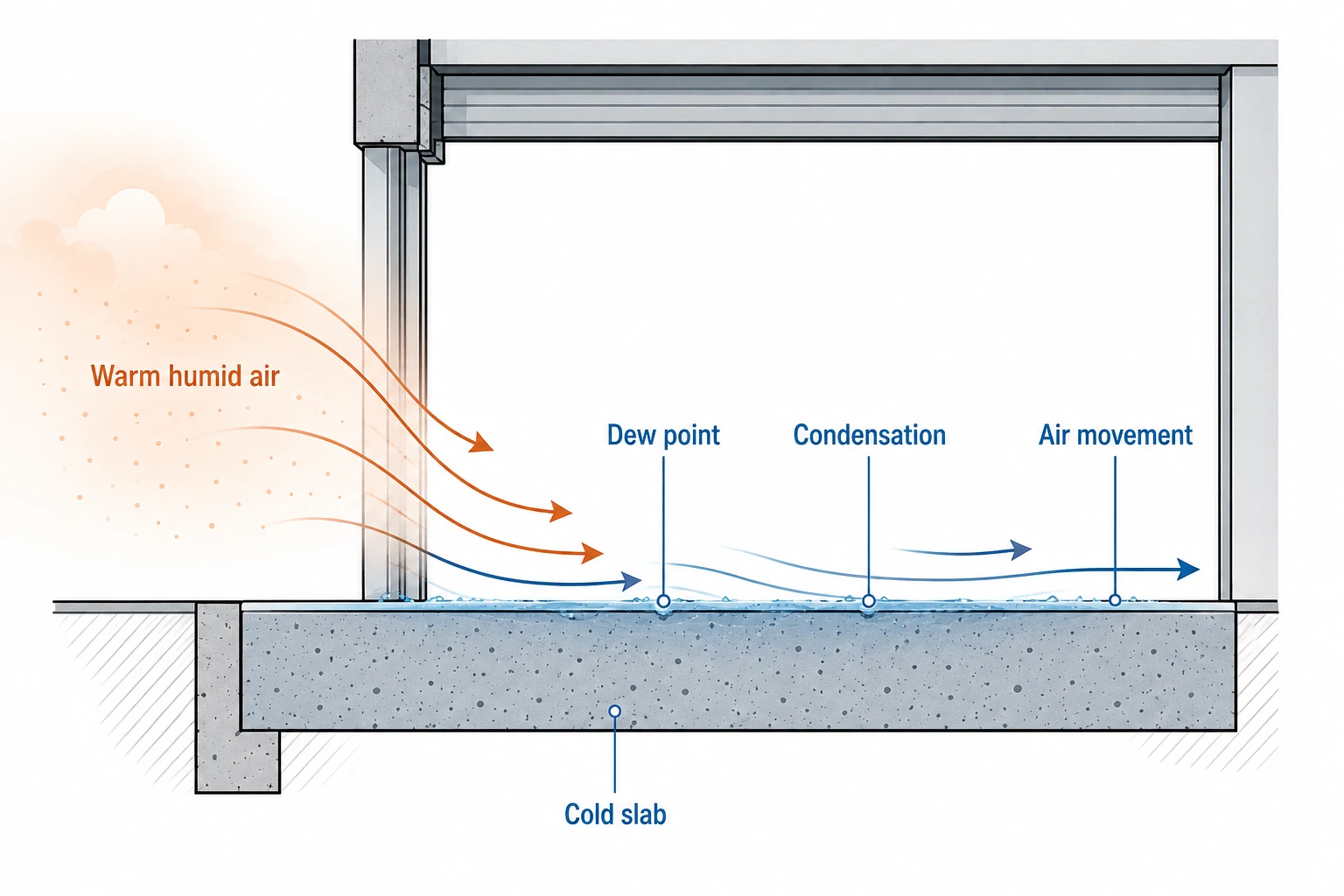
Condensation is the hidden third problem. When humid outdoor air meets cool dock surfaces — concrete floors, steel doors, trailers that sat overnight — moisture condenses on them. Wet floors are a slip hazard around forklifts. Moving air keeps condensation from settling, but only if it moves across the whole dock, not just near one fan. For the wider warehouse, see our guide to summer heat in warehouses and how ceiling fans prevent productivity losses.
What does OSHA require at a loading dock?
OSHA requires two things that directly shape dock ventilation: fall protection at the dock edge under 29 CFR 1910.28, and control of carbon monoxide from vehicle exhaust under the 50 ppm permissible exposure limit — plus, under the General Duty Clause and the Heat National Emphasis Program, protection from recognized heat hazards. There is no final federal heat-specific standard yet, so build to the proposed triggers and the state rules that already exist.
Fall protection comes first, and it limits the open-door option. Under OSHA 1910.28, fall protection is required at a dock edge where the drop is 4 feet (1.2 m) or more — a guardrail, safety net, travel restraint, or personal fall arrest system. That leaves two practical options: keep bay doors shut when no truck is present, or install an OSHA-compliant guardrail so doors can stay open for airflow with the edge protected. Doors open for ventilation with an unguarded edge are a citable fall hazard. The stakes are high: dock accidents account for approximately 25% of all warehouse injuries, and heat makes every hazard worse.
Carbon monoxide has a hard number. The OSHA permissible exposure limit for carbon monoxide is 50 parts per million over an eight-hour period (29 CFR 1910.1000). Trucks and forklifts produce carbon monoxide at the dock, and in an enclosed dock the fumes have nowhere to go — which is why enclosed docks need a ventilation system. Limiting idling helps, but it does not replace ventilation.
The heat rules are tightening, and California already enforces them. The Cal/OSHA indoor heat standard, in effect since July 2024, sets two triggers: at 82°F employers must provide water, a cooldown area and encouraged rests; at 87°F the requirements escalate to mandatory measurement and records, engineering controls first — air conditioning, fans, ventilation or shielding — then administrative controls such as rotation or schedule changes, with personal heat-protective equipment only as a last resort. Dock zones with bay doors open are among the first areas to reach 87°F by mid-morning, and loading and unloading has no incidental-exposure exemption.
At the federal level, the rule is proposed, not final — but enforcement is not waiting. OSHA published its proposed Heat Injury and Illness Prevention rule in August 2024, with 80°F and 90°F heat-index triggers; as of late 2026 it has not been finalized. Its Heat National Emphasis Program — renewed in April 2026 for five years — authorizes proactive heat inspections in warehousing.
How do HVLS fans help at a dock?
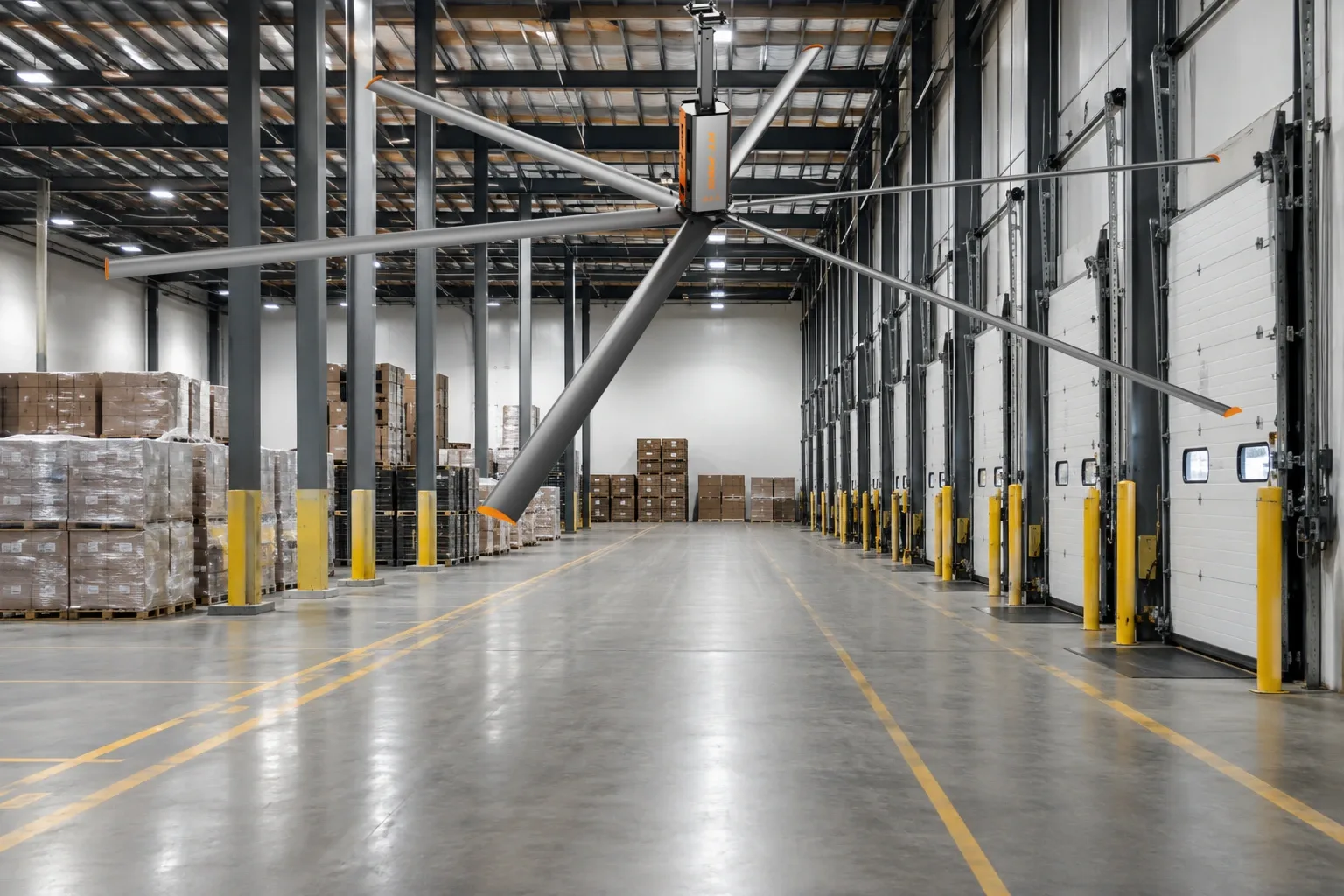
An HVLS fan helps at a dock by moving a large volume of air slowly across the whole dock apron and into the trailer mouths, breaking up the layer of hot air that collects at the ceiling and replacing still, stagnant air with steady circulation. It does not cool the air or remove exhaust fumes, so it is a circulation and comfort measure — not a ventilation system on its own.
The mechanism is destratification: an HVLS fan's slow, wide column of air pushes the warm ceiling layer down and mixes it with the cooler air below. One unit covers a wide area — RTFANS HVLS fans run from 2.8 to 7.3 m in diameter and cover up to 1,800 m², with airflow of 4,500 to 15,000 m³/min — and the breeze helps workers shed heat even when the air itself is warm. In summer the fans rotate clockwise, pushing air down onto the work zone.
The fan belongs above the dock apron, centered over the working area between the bay doors and the staging lanes, so its air column reaches the doors and the trailer mouths. And the mounting rule is non-negotiable: the extension rod must be fixed to a beam, with the top bracket attached to the underside of the beam — never to a flat ceiling.
There is real evidence that circulation across trailers works. A 2026 Journal of Safety Research study found that fan-based circulation across 100 loading-dock trailers significantly reduced the trailer heat index compared with a single-fan setup. For the range itself, see our HVLS fans.
Where do exhaust fans and evaporative coolers fit?
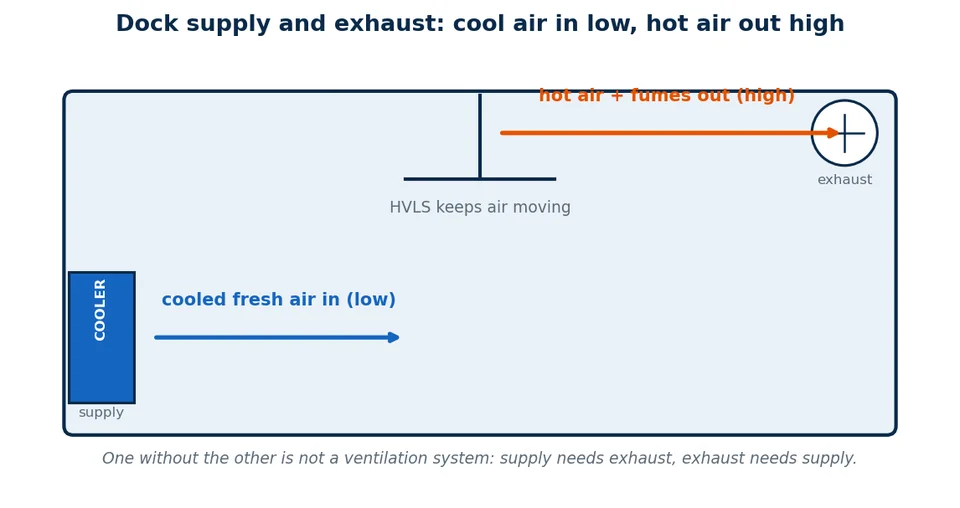
Exhaust fans and evaporative coolers are the two halves of a real dock ventilation system: the exhaust fan pulls hot, fume-laden air out of the building, and the evaporative cooler pushes cooled fresh air in. One without the other either pressurizes the dock or pulls unconditioned outdoor air in through every gap — neither is a ventilation system.
The exhaust fan is the removal half. Mounted high on the dock wall or the roof, it draws the hottest air — the stratified layer at the ceiling, the air carrying truck and forklift exhaust — out of the building. That takes heat out and takes carbon monoxide and fumes out, which is what keeps the dock under the 50 ppm limit. Our industrial exhaust fans are built for exactly this duty.
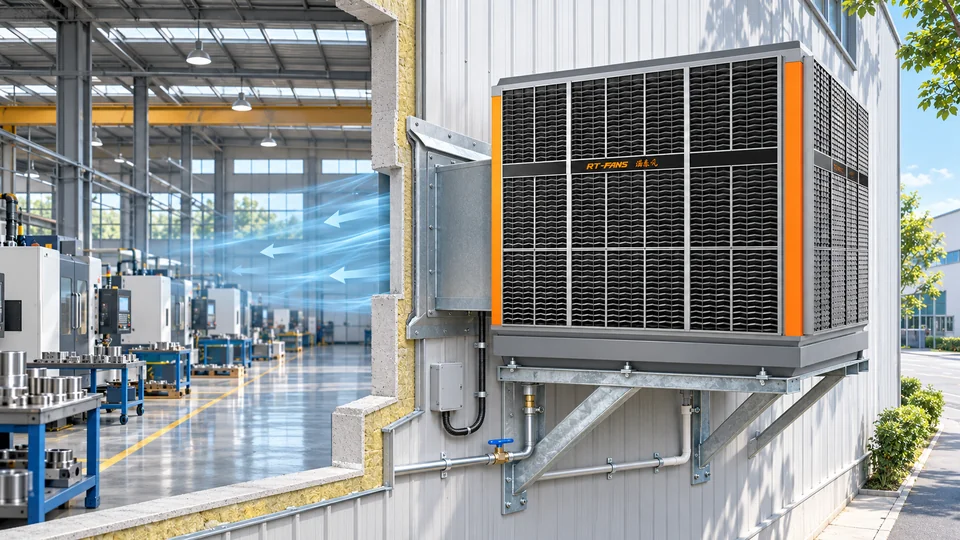
The evaporative cooler is the supply half. It draws outdoor air across wet 5090 or 7090 cooling pads, cools it by evaporation, and delivers it into the dock as fresh air — RTFANS evaporative air coolers run from 20,000 to 60,000 CMH. For a large dock area, a high-volume unit such as the KA-38Y (38,000 CMH, 45 m throw, 400–500 m²) pushes cooled air deep across the apron from a wall-mounted position. Without an exhaust path, a cooler in a sealed dock makes a humid room; without supply, an exhaust fan sucks hot air in through every crack.
| Ventilation option | What it does best | Its limit |
|---|---|---|
| HVLS fan | Moves large air volumes across the apron; breaks up ceiling heat | Does not cool air or remove fumes; circulation only |
| Exhaust fan | Removes hot, fume-laden air; controls carbon monoxide | Needs a fresh-air source |
| Evaporative cooler | Supplies cooled fresh air at high volume | Adds moisture; needs an exhaust path |
| Portable spot cooler | Cools the worker directly in a trailer or at a door | Cools a small zone only; does not ventilate the dock |
Humidity is the condition to watch. Evaporative cooling adds moisture, and at a dock that moisture meets cool concrete, steel doors and trailer walls — the same surfaces where condensation forms. In a dry climate the added humidity is usually welcome; in a humid climate, or on a humid day, the cooler should run with the exhaust fan carrying moisture out, and the dock should be checked for wet floors.
How do you cool the inside of a trailer?
You cool the inside of a trailer with spot cooling aimed at the worker, not by trying to air-condition the whole trailer: a portable evaporative cooler placed at the dock door or just inside the trailer mouth blows cooled air directly onto the loading crew, and an HVLS fan above the dock keeps that cooled air moving.
The trailer is the worst heat spot on the dock. Its metal roof and walls absorb the sun all day, the doors open onto the hot apron, and the forklift inside adds engine heat while the crew works in a space with no windows and no air movement. Workers inside trailers face heat, dehydration, discomfort and lower productivity — a hot trailer is a genuine heat-stress risk, not just an unpleasant shift.
The practical setup is simple and movable. A portable cooler such as the RTF-20Y sits at the dock door or just inside the trailer mouth, aimed down the length of the trailer at the crew, and moves with the crew from door to door as the shift progresses. It needs power and water, and it must not block the forklift path or the dock edge. Pair it with the HVLS fan above the apron, which carries the cooled air further into the trailer. And the basics still count: water within reach, scheduled rest breaks, and rotation out of the hottest trailer.

What does a complete dock ventilation layout look like?
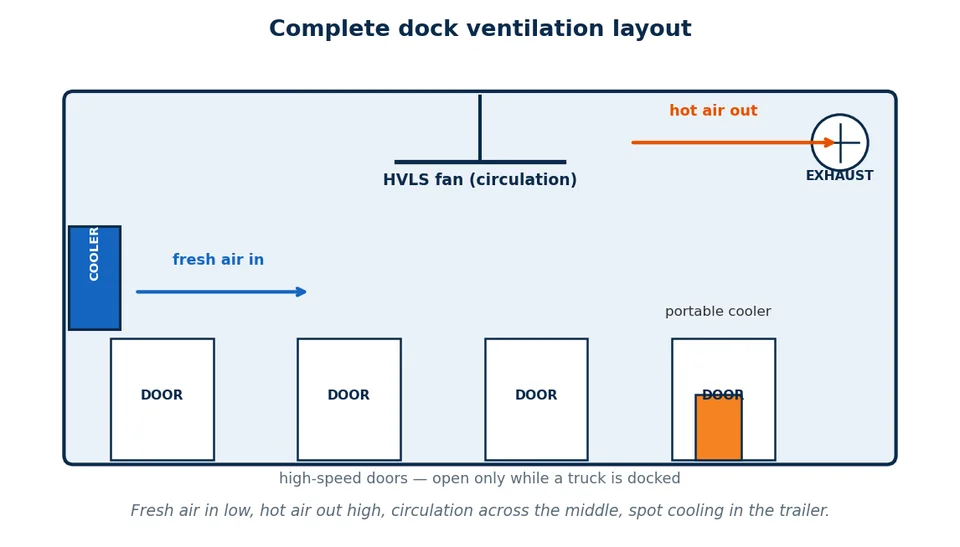
A complete dock ventilation layout puts four pieces in their places: an HVLS fan above the dock apron for circulation, an exhaust fan high on the dock wall to pull hot air out, an evaporative cooler supplying cooled fresh air at the dock, and a portable cooler for spot cooling inside trailers — with high-speed doors limiting how long each bay stays open.
The airflow path runs in one direction: cooled fresh air enters low from the evaporative cooler, the HVLS fan keeps it moving and pushes circulation into the trailer mouths, and the exhaust fan draws the warm, fume-laden air out high. Fresh air in low, hot air out high, circulation across the middle — any layout missing one of those three flows is incomplete.
Sizing is a calculation, not a guess: floor area, ceiling height, bay doors, trailer dwell time, climate and truck and forklift heat all change the answer. Our ventilation and cooling calculator turns the room, the heat sources and the equipment choice into a scheme — the right starting point before any equipment is ordered.
And the honest boundary: fans, coolers and pads address the heat and airflow problem, but they do not by themselves satisfy OSHA. The guardrail, the carbon-monoxide controls, the written heat plan, the water and rest breaks, and the temperature measurements are the employer's duties — the equipment makes those duties achievable, it does not replace them.
Frequently Asked Questions
Can I leave dock doors open for ventilation?
Only if the dock edge is protected. OSHA 1910.28 requires fall protection where the drop is 4 feet or more, so doors can stay open for airflow only behind a compliant guardrail system; otherwise the doors must be shut whenever no truck is present.
How do you ventilate an enclosed loading dock?
With mechanical ventilation, not open doors: an exhaust fan high on the wall or roof to remove hot, fume-laden air, and an evaporative cooler to supply fresh air in. An HVLS fan adds circulation across the apron. The combination keeps carbon monoxide under the 50 ppm limit in a space with no natural airflow.
What is the OSHA carbon monoxide limit at a dock?
The OSHA permissible exposure limit for carbon monoxide is 50 parts per million averaged over an eight-hour shift (29 CFR 1910.1000). Vehicle exhaust is the source, so enclosed docks need ventilation; limiting idling alone does not replace it.
Do HVLS fans work at a loading dock?
Yes, for circulation and destratification: an HVLS fan above the dock apron moves a large volume of air slowly across the doors and trailer mouths and breaks up the hot ceiling layer. It does not cool the air or remove fumes, so pair it with an exhaust fan and a fresh-air supply, and mount its extension rod on a beam, never on a flat ceiling.
How do you keep workers cool inside a trailer?
With spot cooling aimed at the crew: a portable evaporative cooler at the dock door or just inside the trailer mouth, blowing cooled air down the trailer at the workers, paired with HVLS circulation above the apron. Add water within reach, scheduled rest breaks, and rotation out of the hottest trailer.
The bottom line
A loading dock is the hardest area in the warehouse to ventilate because it is an open hole in the building that is also the hottest workplace in it — and the fix is a system, not a fan. Supply cooled fresh air in, exhaust hot air out, circulate it with an HVLS fan, spot-cool the workers in the trailers, and keep the doors disciplined with guardrails and high-speed operation. Do that, and the dock stops being the place where heat, fumes and injuries concentrate.
Tell us about your dock — get a free ventilation recommendation.
Related insights
Recommended Engineering & Ventilation Guides
Is Your Warehouse Ready for OSHA Heat Rules? A Compliance Guide for 2026
There is no final federal OSHA heat standard yet — but OSHA is already inspecting warehouses for heat hazards under the General Duty Clause and a renewed National Emphasis Program. This guide explains the proposed 80°F and 90°F triggers, the state rules already in force, and the cooling measures that count as engineering controls.
View article
Sustainability and Green Cooling for Logistics Centers
Discover how evaporative air coolers enable sustainable logistics centers, cutting energy use, emissions, and costs while supporting ESG goals and worker comfort.
View article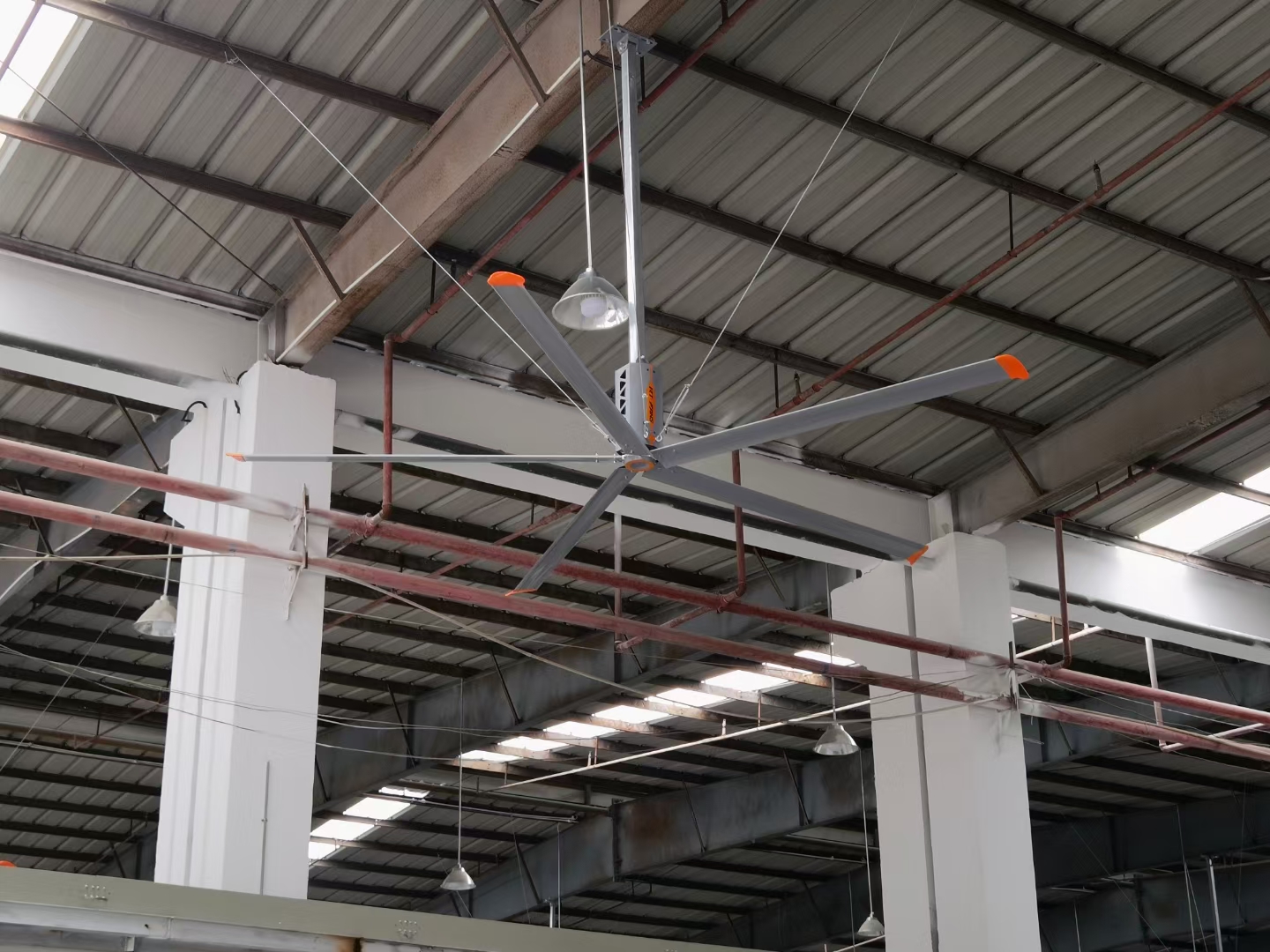
From Traditional Warehouses to E-Commerce Fulfillment Centers: Cooling Needs Are Changing
E-commerce fulfillment centers demand advanced cooling for automation and workers. As a logistics expert, I’ll show how warehouse ceiling fans logistics meet how cooling needs are changing in e-commerce warehouses with efficient, sustainable solutions.
View article