
Is Your Warehouse Ready for OSHA Heat Rules? A Compliance Guide for 2026
There is no final federal OSHA heat standard yet — but OSHA is already inspecting warehouses for heat hazards under the General Duty Clause and a renewed National Emphasis Program. This guide explains the proposed 80°F and 90°F triggers, the state rules already in force, and the cooling measures that count as engineering controls.
No — there is no final federal OSHA heat standard in force in 2026. The rule is still a proposal. But warehouses cannot wait: OSHA is already inspecting for heat hazards under the General Duty Clause, and a renewed National Emphasis Program effective April 10, 2026 authorizes proactive heat inspections for five years. The proposed rule's two triggers — 80°F and 90°F heat index — show where enforcement is heading, and seven states already enforce their own heat rules.
Key takeaways
- No final federal OSHA heat standard exists as of late 2026. The proposed rule (August 30, 2024) is still in the post-hearing phase; a supplemental proposal is scheduled for December 2026 and final action for October 2027.
- OSHA enforces heat hazards today under the General Duty Clause, and the revised heat National Emphasis Program (effective April 10, 2026) authorizes proactive inspections through April 2031 — a serious violation carries a maximum penalty of $16,550.
- The proposed rule would trigger basic protections at an 80°F heat index and mandatory paid rest breaks at 90°F — proposed numbers, not final law.
- Seven states already enforce their own heat rules: California, Washington, Maryland, Nevada, Colorado, Oregon and Minnesota.
- Cal/OSHA's indoor heat standard (in force since July 2024) requires engineering controls — air conditioning, fans, ventilation, shielding — at 87°F indoors, with administrative controls and PPE only after engineering controls.
- Loading docks are the hardest area to keep cool: open bay doors, hot trailers, vehicle exhaust and fall-protection rules collide there — and dock accidents account for about 25% of all warehouse injuries.
Is there a federal OSHA heat standard in 2026?
No. As of late 2026 there is no final federal OSHA heat standard in force — the Heat Injury and Illness Prevention rule is still a proposal, and the earliest it could become law is after a supplemental proposal scheduled for December 2026 and final action scheduled for October 2027.
OSHA published the Notice of Proposed Rulemaking — "Heat Injury and Illness Prevention in Outdoor and Indoor Work Settings" — on August 30, 2024 (89 FR 70698, Federal Register document 2024-14824), covering outdoor and indoor work in general industry, construction, maritime and agriculture. The comment period closed January 14, 2025, an informal public hearing ran June 16 through July 2, 2025, and post-hearing comments closed October 30, 2025. You can follow the proposed rule's timeline for the next steps.
The path forward is genuinely uncertain. H.R. 6213, introduced in the House in November 2025, would prohibit finalizing or enforcing the proposed standard; it advanced out of committee in July 2026. The Department of Labor's agenda projects a supplemental proposal by late 2026 and a final standard in late 2027 — but a supplemental proposal means OSHA revises its text and reopens it for comment, so the 2024 draft's numbers may change. The proposed standard remains unfinished, yet OSHA is inspecting for heat hazards more actively than at any point in its history.
The practical point is simple: do not build your heat plan around the exact numbers in the 2024 draft, but do build one. Heat is already a warehouse problem — summer heat in warehouses costs productivity long before it becomes a compliance problem.
What would the proposed rule require at 80°F and 90°F?
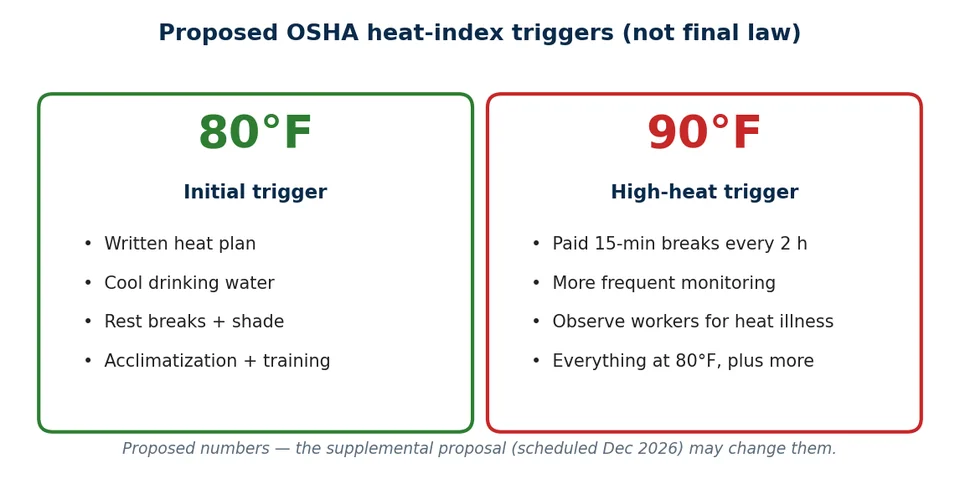
The proposed rule would set two heat-index triggers: at 80°F, employers would have to provide water, rest and shade access, acclimatization for new workers and a written heat plan; at 90°F, it would add paid 15-minute rest breaks every two hours and more frequent monitoring. These are proposed requirements, not final law.
The initial trigger — a heat index of about 80°F — would start the basic protections: a written Heat Injury and Illness Prevention Plan (HIIPP), readily accessible cool drinking water, rest breaks and shade or a cool rest area, acclimatization for new and returning workers, heat-illness training, and monitoring of temperature and heat index. Heat illness can begin well below the temperatures most people expect.
The high-heat trigger — a heat index of about 90°F — would escalate the requirements: paid 15-minute rest breaks every two hours, more frequent monitoring, and observation of workers for signs of heat illness. The hotter it gets, the less the body can recover between bouts of work, so rest becomes mandatory and scheduled rather than left to individual judgment.
Note that the triggers are based on heat index, not air temperature alone. Heat index combines temperature and humidity, so a warehouse at 85°F with high humidity can cross the 80°F heat-index trigger even though the thermometer reads below 90°F. Treat 80°F and 90°F as the direction of travel, not the final text.
How is OSHA enforcing heat hazards today?
OSHA enforces heat hazards today without a final heat standard, using the General Duty Clause of the OSH Act and a renewed National Emphasis Program that authorizes proactive heat inspections in high-risk industries. There is no single compliance checklist while the rule is unfinished, but heat is fully enforceable.
The General Duty Clause — Section 5(a)(1) of the OSH Act — requires every employer to provide a workplace free from recognized hazards that can cause death or serious physical harm. Heat is a recognized hazard, and OSHA has cited employers for heat-related hazards under this clause for years. An inspector needs no heat-specific standard to cite a warehouse where workers have no water, rest breaks, shade or training.
Enforcement got sharper in 2026. On April 10, 2026, OSHA issued a revised National Emphasis Program for Outdoor and Indoor Heat-Related Hazards (Directive CPL 03-00-024), effective immediately for five years, through April 2031. It authorizes proactive inspections — inspectors can visit high-risk workplaces for heat hazards without waiting for a complaint or an injury.
The penalties are real: a serious violation carries a maximum penalty of $16,550 under the penalty amounts applicable after January 15, 2026. An inspector visiting for another reason who finds workers in a hot warehouse with no water stations, no heat plan and no training can raise heat as a hazard on the spot. What inspectors look for is straightforward: water, rest, shade, acclimatization, training, a written heat plan and temperature or heat-index monitoring. For the wider picture, see the safety and compliance benefits of evaporative cooling in manufacturing.
Which states already have their own heat rules?
Seven states — California, Washington, Maryland, Nevada, Colorado, Oregon and Minnesota — already enforce their own heat rules, so a warehouse in one of those states must comply with the state standard today regardless of what the federal rule does. The state rules are the law now, not a proposal.
The most detailed is California's. The Cal/OSHA indoor heat standard (Heat Illness Prevention in Indoor Places of Employment) took effect in July 2024, with two thresholds that trigger progressively stricter requirements. At 82°F, employers must provide cool drinking water, a cooldown area and encouraged cooldown rests. At 87°F, the employer must measure temperature and heat index, keep detailed records, and use engineering controls — air conditioning, fans, ventilation or shielding — to reduce the temperature below the threshold.
Loading docks are where the Cal/OSHA standard bites hardest. Metal-roofed warehouses in California's Central Valley, Inland Empire and Imperial Valley routinely hit 87°F or more indoors by mid-morning on summer days, particularly at upper racks and dock zones with bay doors open. Many operators assume brief outdoor exposure falls outside the regulation — but loading and unloading have no incidental-exposure exemption under Cal/OSHA, making the dock a primary compliance failure point.
| Proposed federal rule | Cal/OSHA indoor standard | |
|---|---|---|
| Status | Proposed, not final | In force since July 2024 |
| First trigger | 80°F heat index | 82°F indoor temperature |
| At first trigger | Water, rest, shade, acclimatization, written heat plan | Water, cooldown area, encouraged cooldown rests |
| Second trigger | 90°F heat index | 87°F indoor temperature |
| At second trigger | Paid 15-minute breaks every 2 hours, more frequent monitoring | Mandatory measurement and records; engineering controls first, then administrative controls, PPE last |
Why are loading docks the hardest area to keep cool?
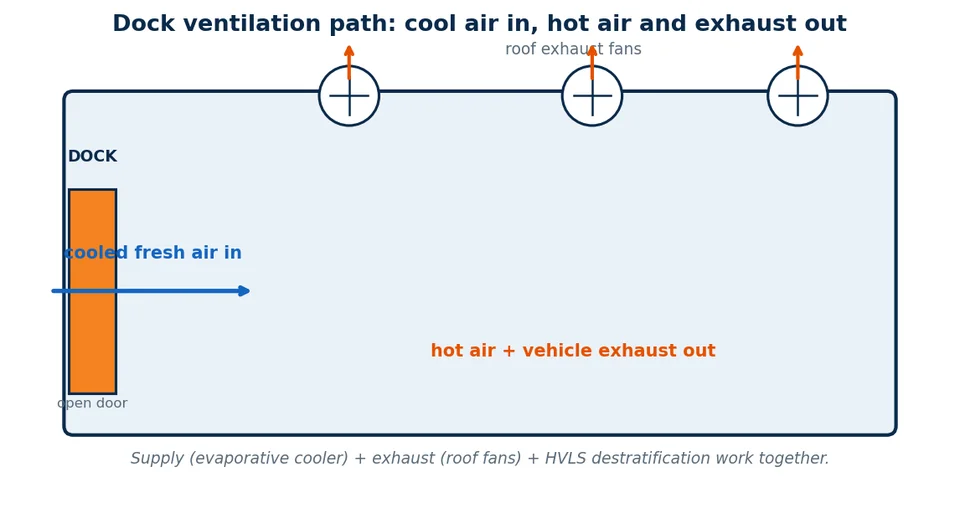
Loading docks are the hardest area to keep cool because open bay doors let in hot outside air, trailers become heat boxes in the sun, vehicle exhaust adds carbon monoxide, and the same open doors that ventilate the space trigger OSHA fall-protection rules.
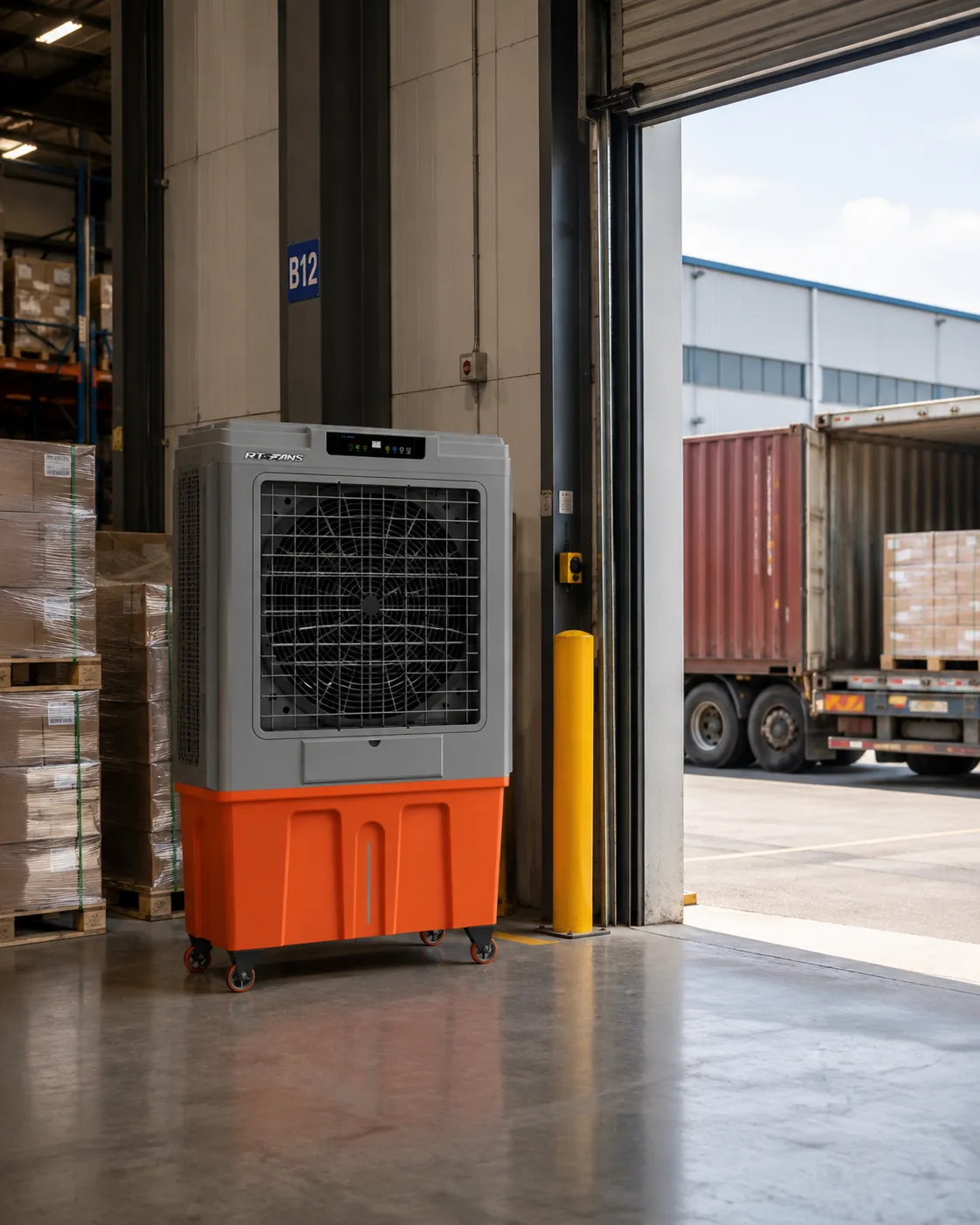
The heat itself is the first problem. A trailer parked in the sun becomes an oven: workers step into a metal box that has absorbed solar heat all day, and the air inside barely moves. A 2026 Journal of Safety Research study found that fan-based circulation across 100 loading-dock trailers significantly reduced the trailer heat index compared with a single-fan setup — the air inside a trailer needs to be moved, not just the air in the warehouse. Spot cooling at the dock door, with a portable evaporative cooler aimed into the trailer, is one practical way to do that.
The second problem is exhaust. Forklifts and trucks produce carbon monoxide, and ventilation must keep exposure below OSHA's Permissible Exposure Limit of 50 parts per million over an 8-hour period (29 CFR 1910.1000). Closing the doors to keep heat out worsens exhaust; opening them to ventilate worsens heat. Docks need deliberate air movement — fans and exhaust ventilation that exchange the air without relying on an open door alone.
The third problem is the open door itself. OSHA Standard 1910.28 requires fall protection where a dock edge drops 4 feet (1.2 m) or more: a guardrail system, safety net, travel restraint system or personal fall arrest system. Many facility managers leave dock doors open for ventilation, but without proper safety measures that simple fix can result in substantial fines. The practical answer is to protect the edge — typically with an OSHA-compliant guardrail or safety gate — so the door can stay open for ventilation legally, and then cool the air that comes through it. Loading dock accidents account for approximately 25% of all warehouse injuries.
What cooling measures count as engineering controls?
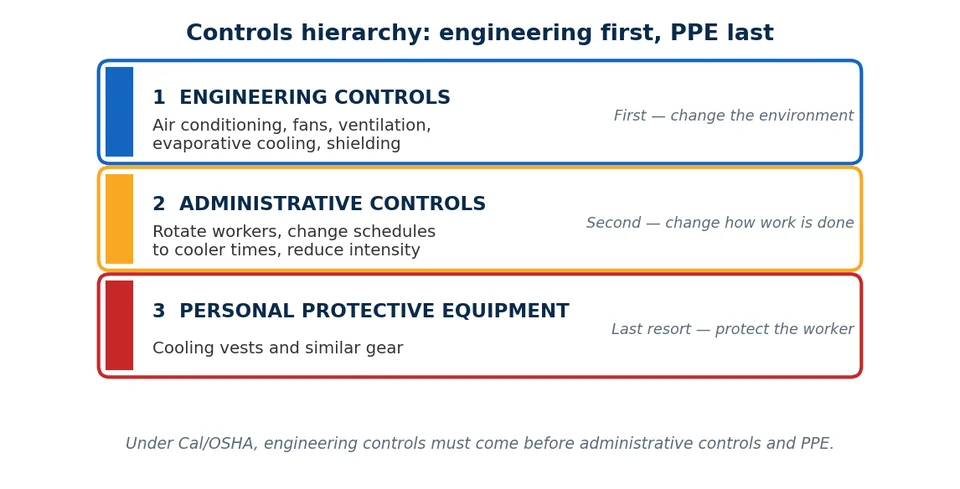
Engineering controls are the physical measures that lower the temperature or move the air — air conditioning, fans, ventilation, evaporative cooling and shielding — and under Cal/OSHA they must come before administrative controls like shift rotation, with personal protective equipment such as cooling vests only as a last resort.
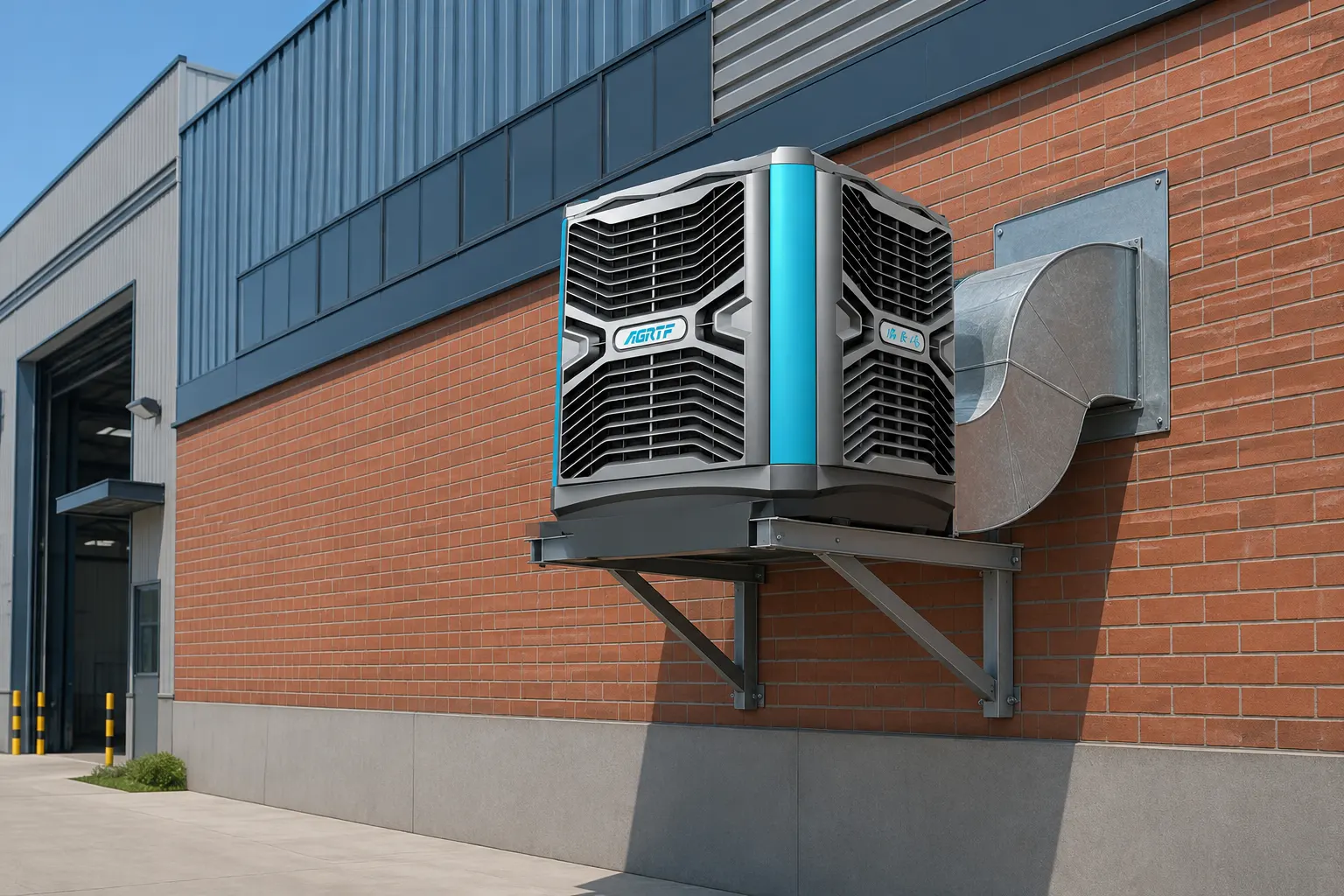
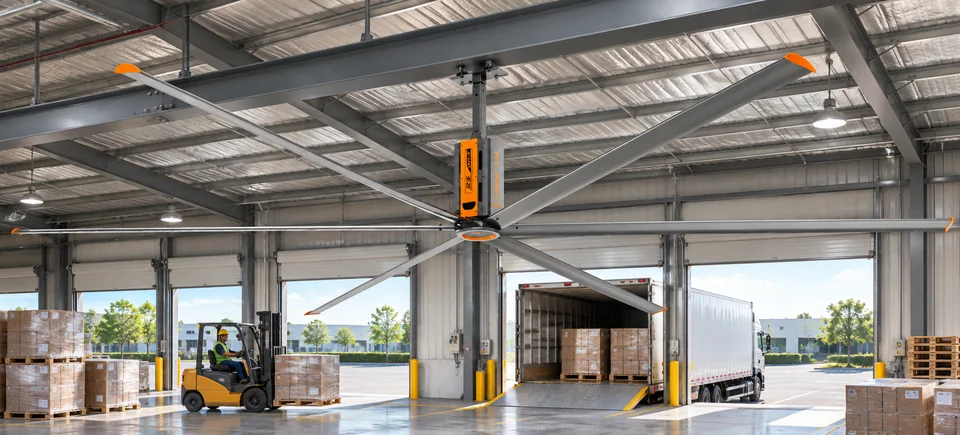
The controls that matter most move large volumes of air and bring in cooler air from outside. HVLS fans (2.8–7.3 m diameter, covering up to 1,800 m², moving 4,500–15,000 m³/min) circulate air across the whole floor, breaking up the hot layer under the roof. Evaporative air coolers (20,000–60,000 CMH) supply cooled fresh air through a duct and diffuser, and cooling pads (5090 and 7090) are the wet media that makes evaporative cooling work. Exhaust fans pull hot, stale air — and vehicle exhaust — out of the building. For a dock or a large open area, the KA-38Y cooler (38,000 CMH, 45 m throw, 400–500 m²) cools where workers actually stand. The felt cooling effect of moving air is typically 3–5°C. See our guide to warehouse and manufacturing cooling with evaporative systems.
What these measures do not do is guarantee OSHA compliance. No fan or cooler, on its own, makes a warehouse compliant. Compliance is the employer's responsibility, and it rests on the whole program: the written heat plan, water and rest access, acclimatization, training, monitoring — and the engineering controls that keep the temperature down. RTFANS equipment is one part of that program: it lowers the temperature and keeps the air moving. But the final federal rule is not yet set and state rules differ, so measure temperature and heat index at the dock, the upper racks and the floor before buying equipment — then size cooling to the hottest spot, not the average.
Frequently Asked Questions
Is the OSHA heat rule final?
No. The proposed rule was published on August 30, 2024 and is still in the post-hearing phase as of late 2026. A supplemental proposal is scheduled for December 2026 and final action for October 2027 — agenda targets that may slip — and H.R. 6213 (introduced November 2025) would prohibit finalizing or enforcing the proposed standard.
What temperature triggers OSHA heat protections?
Under the proposed federal rule, the triggers would be an 80°F heat index for basic protections (water, rest, shade, acclimatization) and a 90°F heat index for high-heat protections, including paid 15-minute breaks every two hours — proposed numbers, not final law. Under Cal/OSHA's indoor heat standard, already in force, the thresholds are 82°F and 87°F.
Can OSHA fine my warehouse for heat if there is no final rule?
Yes. OSHA cites heat hazards under the General Duty Clause (OSH Act Section 5(a)(1)), which requires employers to keep the workplace free from recognized hazards. The revised heat National Emphasis Program (CPL 03-00-024, effective April 10, 2026) authorizes proactive inspections for five years, through April 2031. A serious violation carries a maximum penalty of $16,550.
What counts as an engineering control for warehouse heat?
Engineering controls are physical measures that change the environment: air conditioning, fans, ventilation, evaporative cooling and shielding. Under Cal/OSHA they come before administrative controls (rotation, schedule changes, reduced intensity) and personal protective equipment such as cooling vests, which is the last resort. In a warehouse, HVLS fans, evaporative coolers, cooling pads and exhaust fans are the typical controls.
How do I cool a loading dock without breaking fall-protection rules?
Protect the edge first, then cool the air. OSHA Standard 1910.28 requires fall protection — a guardrail, safety net, travel restraint or personal fall arrest system — where a dock edge drops 4 feet or more. With a compliant guardrail or safety gate in place, the dock door can stay open for ventilation legally. Then add air movement: HVLS fans across the dock, a portable evaporative cooler for spot cooling inside trailers, and exhaust ventilation to keep carbon monoxide below the 50 ppm limit.
The bottom line
There is no final federal OSHA heat standard yet — but waiting for one is the expensive bet. OSHA is already inspecting warehouses for heat under the General Duty Clause, the renewed National Emphasis Program runs through April 2031, and seven states enforce their own heat rules today. The proposed 80°F and 90°F triggers show where the federal rule is heading, and Cal/OSHA's 82°F and 87°F thresholds show what enforcement looks like once a rule is in force. The warehouses that will be ready treat heat as a program, not a purchase: a written plan, water and rest, training and monitoring — and engineering controls that move and cool the air, starting with the loading dock.
Tell us about your facility and get a free cooling recommendation.
Related insights
Recommended Engineering & Ventilation Guides
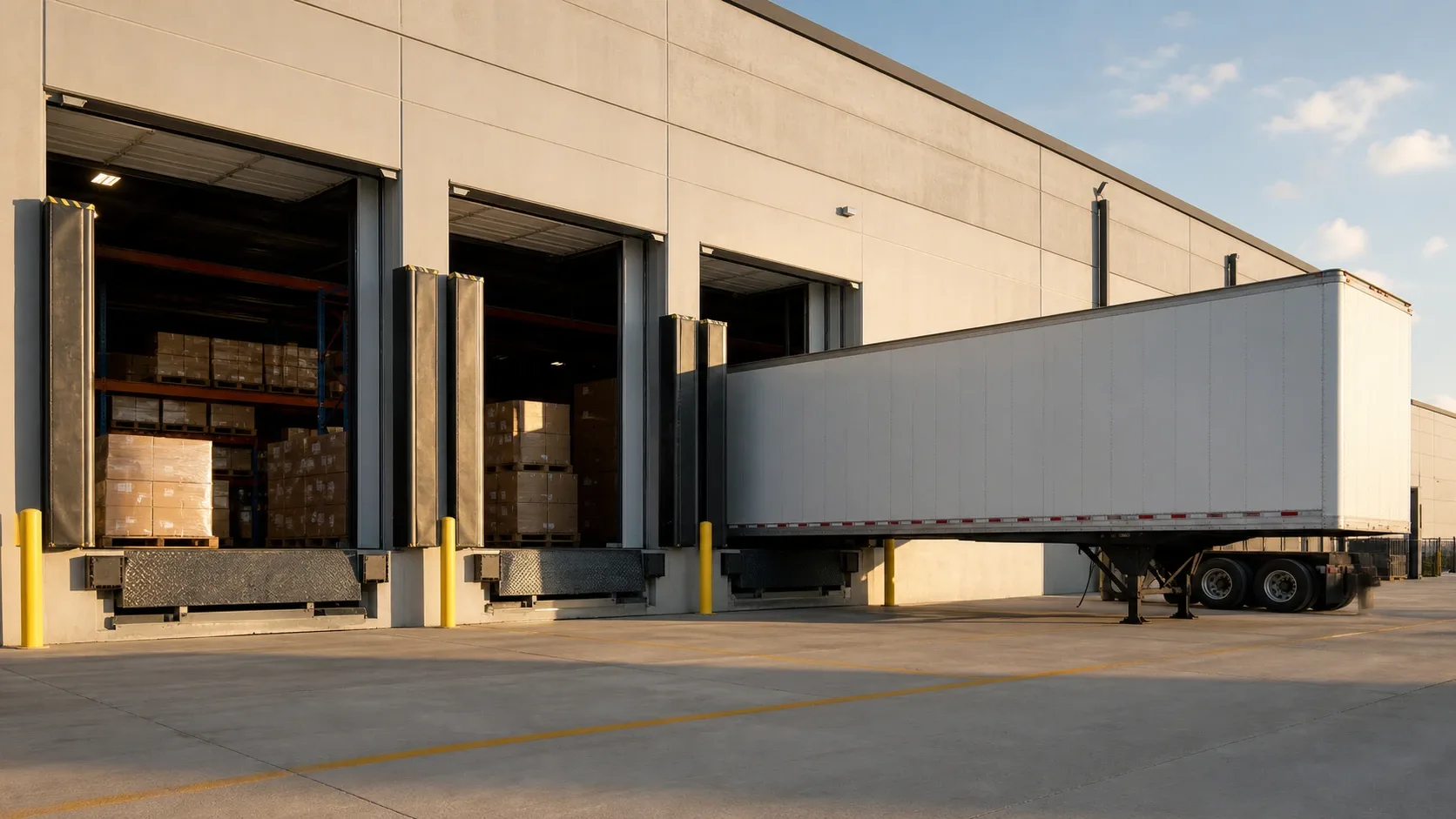
How Do You Ventilate a Warehouse Loading Dock? Fans, Exhaust and Spot Cooling That Work
A loading dock is the hottest, stuffiest part of most warehouses — open doors, idling trucks, sun-baked trailers and no airflow. This guide explains why dock ventilation fails, what OSHA expects, and the fan, exhaust and spot-cooling combination that actually works.
View article
Sustainability and Green Cooling for Logistics Centers
Discover how evaporative air coolers enable sustainable logistics centers, cutting energy use, emissions, and costs while supporting ESG goals and worker comfort.
View article
From Traditional Warehouses to E-Commerce Fulfillment Centers: Cooling Needs Are Changing
E-commerce fulfillment centers demand advanced cooling for automation and workers. As a logistics expert, I’ll show how warehouse ceiling fans logistics meet how cooling needs are changing in e-commerce warehouses with efficient, sustainable solutions.
View article