
Eco-Friendly Cooling for Large Commercial Environments
Cooling a warehouse, a factory floor, a shopping mall or a logistics hub is a different problem from cooling a house. This guide explains HVLS fans, evaporative coolers, wet-curtain walls and natural ventilation — how to combine them, and where their limits are.
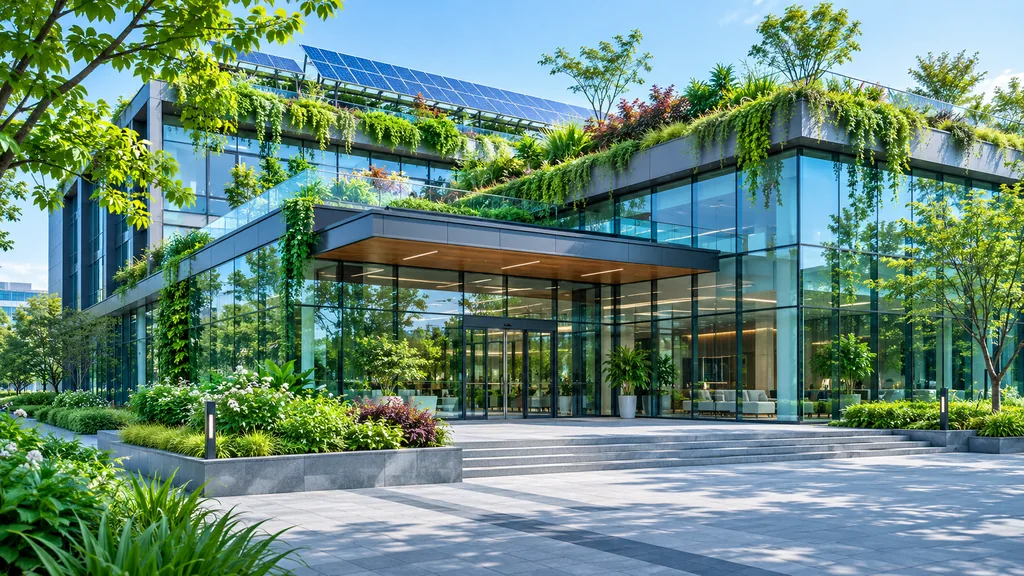
Cooling a warehouse, a factory floor, a shopping mall or a logistics hub is a different problem from cooling a house. The volume is enormous, the doors open all day, and the heat sources — people, machines, sunlight on a metal roof — never switch off. A conventional air-conditioning system sized for the whole space can dominate the building's electricity bill for life, while relying on refrigerants and compressors with their own environmental cost.
Buyers who ask for eco-friendly cooling usually mean lower energy use, less water wasted, fewer refrigerants, and a system that still keeps people comfortable on the hottest day of the year. This guide explains the options that meet that description — HVLS fans, evaporative coolers, wet-curtain walls and natural ventilation — how to combine them, and where their limits are.
The problem with cooling big spaces
Large commercial buildings fight cooling on three fronts at once. First, volume: a warehouse with a 10-metre ceiling holds far more air than its floor area suggests, and warm air rises, so the top can be far hotter than the working zone. Second, openings: loading docks, roller doors and entrances let cooled air out and hot air in all day. Third, internal heat: people, lighting, machinery and stored goods all add heat — in a factory, process equipment can add more than the weather.
Conventional air conditioning answers all three by brute force, cooling the entire volume all day with compressors — and the energy cost scales with the volume. Demand keeps growing: the International Energy Agency notes that space cooling is the fastest-growing end use in buildings, and that cooling comfort can be delivered by equipment, by mechanical ventilation such as fans, or by natural ventilation, not only by air conditioning. In a big ventilated space the goal is rarely to hold the whole volume at 22°C. It is to keep the working zone comfortable, keep air moving, and bring in cooler outside air when the weather allows — running the compressor only where nothing else will do.
What "eco-friendly" actually means here
Judge any option on four tests.
Energy. How much electricity per hour of comfort? A fan uses far less electricity than a compressor moving the same air; an evaporative cooler uses a fan and a small pump instead of a compressor. The US Department of Energy puts it plainly: evaporative coolers cost about half as much to install as central air conditioners and use about one-quarter as much energy.
Water. Evaporative cooling trades electricity for water, so a saving on the power bill is a water bill somewhere else. Count both: where power is expensive and water is plentiful, evaporation usually wins; where water is scarce, it may not.
Refrigerants. Compressor systems depend on refrigerants, and the IEA notes that releasing hydrofluorocarbons from cooling equipment causes warming — which is why the Kigali Amendment brought HFCs under the Montreal Protocol. Fans, evaporative coolers and natural ventilation use no refrigerant at all.
Lifecycle. How long the equipment lasts, how much can be serviced rather than replaced, and whether it fits the building for decades — a heavy steel fan with a geared motor that can be maintained is a different purchase from a disposable unit.
Just as important is what eco-friendly does not promise: not zero energy, not zero water, and not an exact temperature in any weather. A fan does not cool air, an evaporative cooler cannot beat the wet-bulb temperature of incoming air, and natural ventilation depends on the weather. An honest supplier says so and designs around it.
HVLS fans: moving air instead of cooling it
HVLS — high-volume, low-speed — fans are the workhorse of eco-friendly cooling in large spaces. A single large fan moves a huge volume of air slowly, doing two jobs: breaking up the layer of hot air trapped at the ceiling, and creating a breeze that helps people shed heat even when the air itself is warm.
The first job is destratification. In a tall building, warm air collects at the ceiling while the working zone below stays cooler. A fan's slow, wide column of air pushes the warm layer down and mixes it with the cooler air below. In summer the fan runs forward, pushing air down onto the work zone. In winter it runs slowly in reverse, drawing warm ceiling air back down without creating a draught below.
The second job is comfort: moving air evaporates moisture from the skin, so a worker in a breeze feels cooler than one in still air. RTFANS HVLS fans run from 2.8 to 7.3 metres in diameter, cover up to 1,800 m², and move 4,500 to 15,000 m³/min. The King has six blades; Grace, Virtue, Paragon and Charm II have five. Smaller models suit lower ceilings: Grace (4.0 m) and Virtue (4.7 m) run on a 0.55 kW motor, rated by volume — 400 and 550 m³, not square metres. The King uses a NORD asynchronous geared motor for continuous industrial duty.
One installation rule is not negotiable: the extension rod must mount to a beam, with the top bracket fixed to the underside of the beam — never to a flat ceiling, which cannot carry the load safely.
Evaporative coolers and wet-curtain walls
Evaporative cooling is the oldest cooling principle there is: water absorbs heat as it evaporates, and the air left behind is cooler. A cooler draws outdoor air across wet pads, cools it by evaporation, and delivers it into the building as fresh air — no compressor, only a fan, a pump and water.
US Department of Energy guidance: evaporative coolers can lower incoming air temperature by 15–40°F while using about one-quarter of the energy of conventional air conditioning — roughly a 75% saving. Whether that applies to your building depends on humidity: evaporation only works when incoming air is dry enough to absorb more moisture. The wet-bulb temperature is the floor: no water or airflow can cool below it. In a dry climate the gap between dry-bulb and wet-bulb temperatures is wide and evaporative cooling is powerful; in a humid climate it narrows and the cooler contributes little.
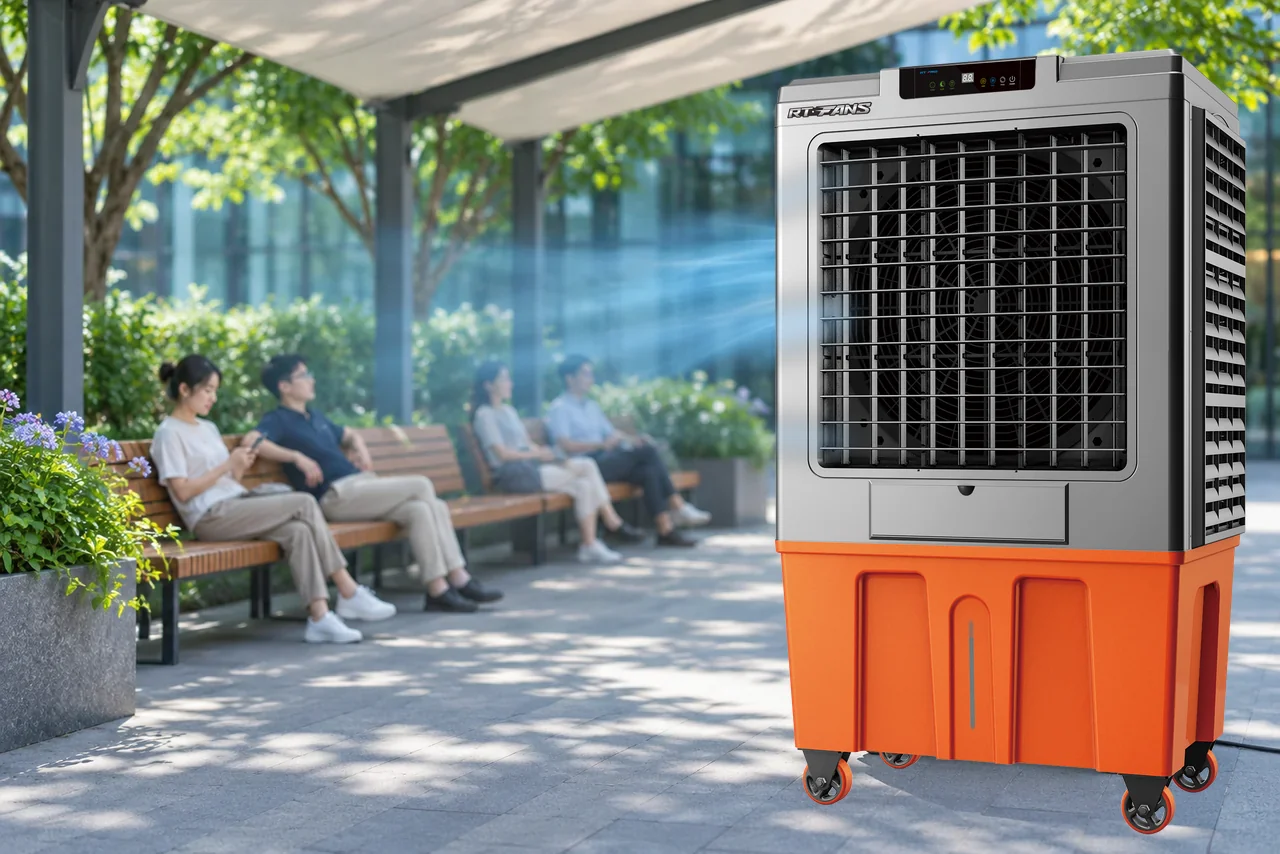
RTFANS industrial evaporative air coolers run from 20,000 to 60,000 CMH, built for large ventilated spaces, not single rooms. A high-volume unit such as the KA-38Y delivers 38,000 CMH with a 45-metre throw, covering 400–500 m² from a wall-mounted position. The 5090 and 7090 cooling pads are where evaporation happens, and their saturation efficiency and pressure drop set how much cooling the airstream gets.
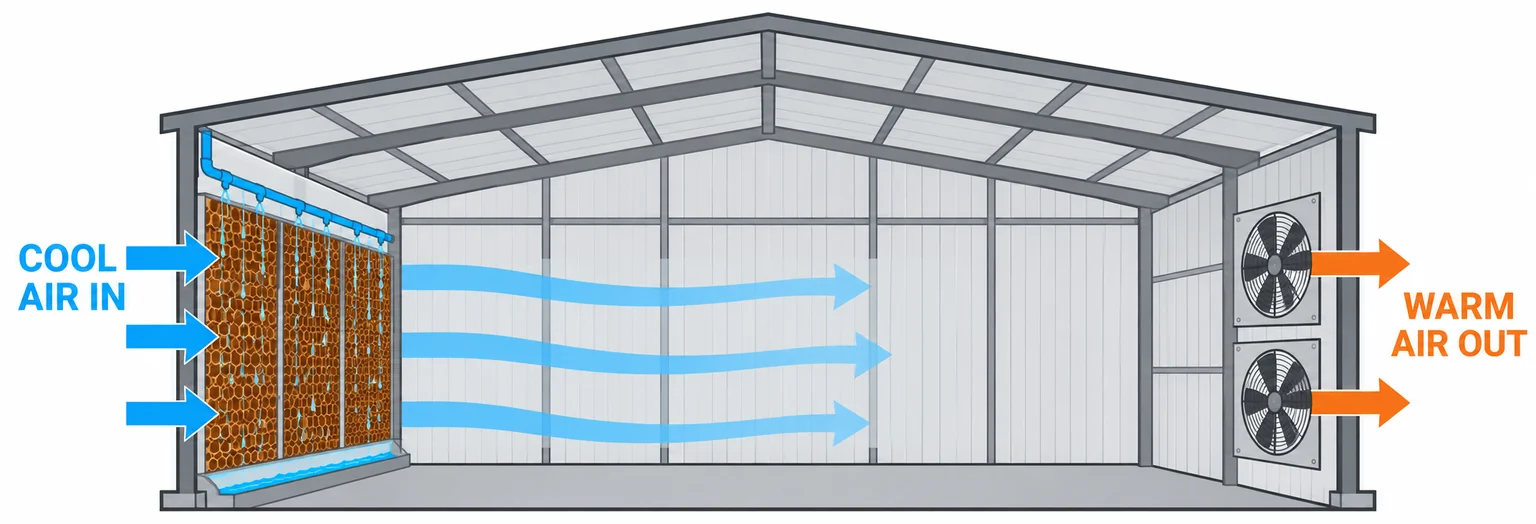
The wet-curtain wall is the same principle at building scale: a wall of wetted pads forms the air inlet, and exhaust fans on the opposite wall pull air through the building, making the whole space one airstream. The direction must not be reversed — the wet curtain is the inlet, the exhaust fan the outlet on the opposite wall. Evaporative coolers are not normally mounted on the wet-curtain side; cooled air from a cooler is ducted in where needed.
Two practical limits govern every evaporative installation: water and exhaust. The system needs reliable water, drainage for the pad water, and a maintenance routine — and without an exhaust path, a cooler in a sealed building makes a humid room. Supply and exhaust are a pair. For the wet-bulb limit and humidity rules in detail, see our guide to evaporative cooling for data centers.

Natural ventilation: let the building breathe
Natural ventilation is the cheapest cooling there is, because wind and the temperature difference between inside and outside do the work. A building designed for it uses facade, roof and openings as part of the cooling system: openable vents and louvres on the shaded side bring air in, high vents or roof ventilators let it out, and the stack effect — warm air rising — keeps the flow moving even without wind.
Getting the airflow direction right is the whole design: air enters low, travels across the occupied zone, and leaves high. In a building with a wet-curtain wall, the wet curtain is the inlet and the exhaust fans on the opposite wall are the outlet. Doors left open at random do not achieve this — they create draughts near the opening and dead zones elsewhere, while letting humid air in and cooled air out.
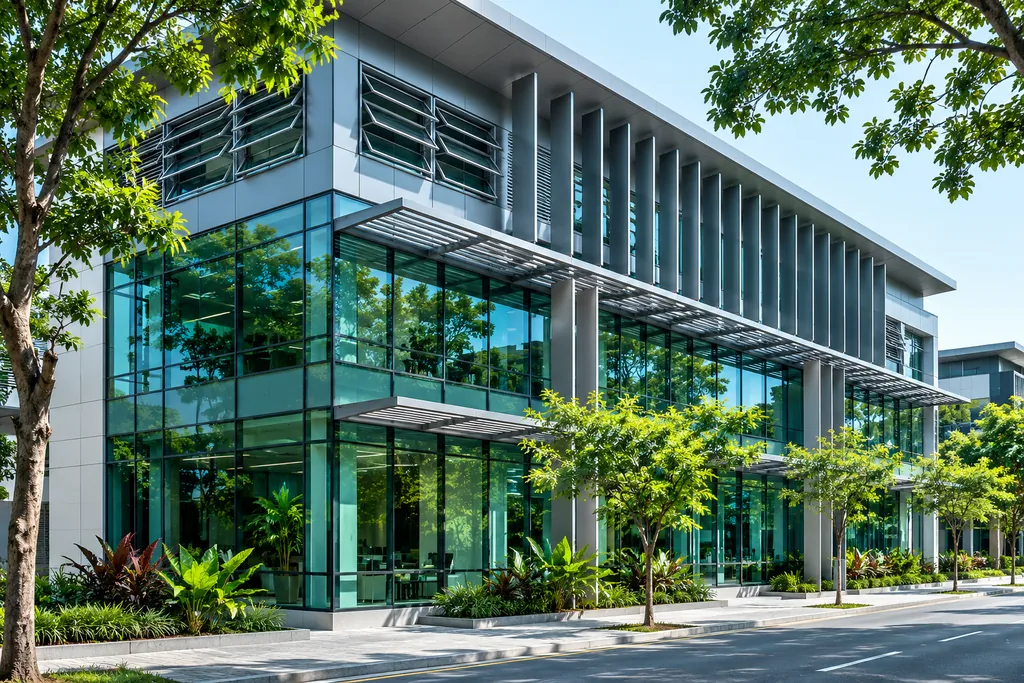
Shading and orientation are part of the same system: a shaded facade, reflective roof and planting reduce the heat the ventilation must remove. The limit is plain: natural ventilation cannot cool below the outdoor temperature, and on a still, hot, humid afternoon it moves hot air — so design it as one layer of a system, with fans and evaporative cooling to take over when the weather does not cooperate.
Combining the systems: fans, coolers and ventilation together
Used alone, each of these technologies has a gap; together, they cover each other's gaps. A typical combined layout: a wet-curtain wall or evaporative coolers supply cooled fresh air, exhaust fans on the opposite wall pull warm air out, and HVLS fans keep the cooled air moving across the whole floor instead of pooling near the inlet. Natural ventilation handles the mild hours; mechanical systems take over on hot afternoons.
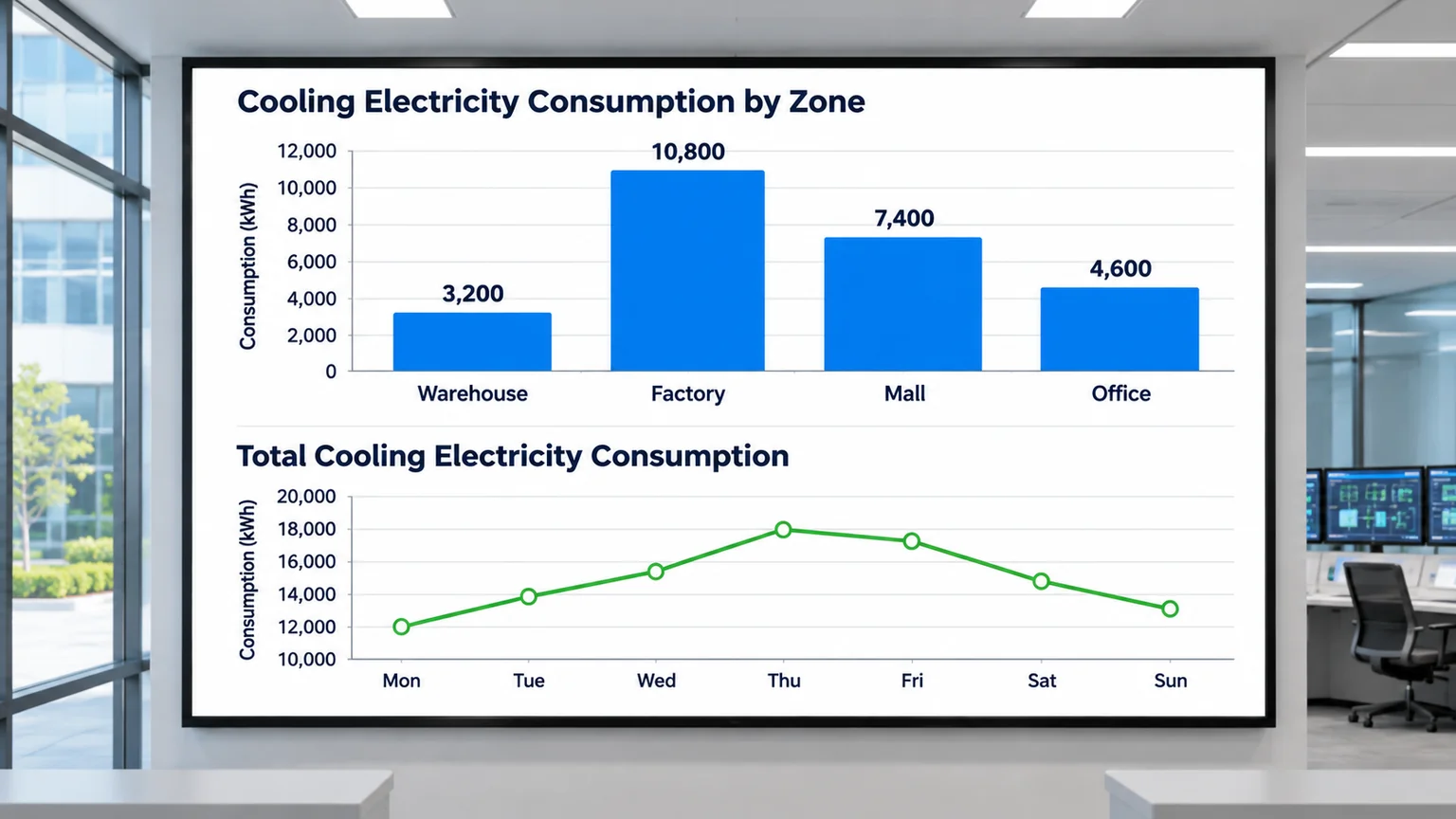
Controls and zoning are what make the combination eco-friendly rather than merely complicated. Different zones have different needs — a loading dock is hottest at midday, a packing line runs hardest on a night shift — so zoning fans and coolers to run each area only when occupied, tied to thermostats and occupancy sensors, avoids cooling empty space. The US Department of Energy's Energy Saver guide notes that adjusting thermostat settings by 7–10°F for eight hours a day can save as much as 10% a year on heating and cooling — the same principle applies zone by zone in a commercial building.
The order of investment matters too: seal the envelope and shade the facade before buying bigger equipment — every degree of heat kept out is a degree the cooling system does not have to remove. Then add air movement, then evaporative cooling, keeping compressor cooling for zones and hours the other layers cannot reach. For the wider market context, see our industrial cooling market and supplier landscape; for the same supply-and-exhaust logic in a single hard zone, our guide to warehouse loading dock ventilation.
Sizing and selection checklist
Before ordering, the building has to be measured and the job defined. The checklist below is what a facility manager or buyer should have ready before a supplier can give a useful answer. Our ventilation and cooling calculator can turn these figures into a first scheme — a planning tool, not a substitute for a site survey.
| What to prepare | Why it matters |
|---|---|
| Floor area, ceiling height and volume | Fan coverage is volume, not floor area |
| Heat sources: people, machines, lighting, solar gain | Load is set by heat in, not floor area alone |
| Openings: doors, docks, vents, and hours open | Openings set the supply and exhaust rates |
| Climate: dry-bulb and wet-bulb temperatures, all year | Wet-bulb sets the limit for evaporative cooling |
| Water supply, drainage and power availability | Evaporative systems need water and drainage |
| Zones and operating hours | Zoning decides unit numbers and positions |
| Structure: beam positions and load capacity | HVLS rods mount to beams, never to a flat ceiling |
Three questions separate a good proposal from a weak one: does it state the climate assumptions — the design wet-bulb temperature and the hours the system is expected to work? Does it show the air path, inlet to outlet, on a drawing of your building? And does it say what happens on the worst day of the year, not just an average day? A proposal quoting a comfortable temperature with no conditions attached has not answered the question.
Limitations: when fan and evaporative cooling are not enough
Fan and evaporative cooling suit large, ventilated, occupied spaces — warehouses, factories, malls, logistics hubs, workshops. They are the wrong answer in three situations.
First, humid climates and seasons: where wet-bulb temperature is close to dry-bulb, evaporative cooling adds moisture without removing much heat. Fans still help, but the cooling layer has to come from a compressor system, or a hybrid using evaporation only as pre-cooling.
Second, spaces needing exact temperature and humidity control: a server room, laboratory or cold store. Our data-center guide makes this boundary explicit: evaporative cooling serves the heat-rejection and support-space side of a data-center project, not precision cooling inside the server hall.
Third, buildings that cannot be ventilated: a sealed building with no exhaust path cannot use evaporative cooling at all. The first job is to create the air path — openings, exhaust, drainage — before any cooling equipment is specified.
None of these limits is a reason to dismiss the approach — they are the reason to design it properly, keeping compressor cooling where nothing else will do.
Frequently Asked Questions
Can HVLS fans replace air conditioning in a warehouse?
No. An HVLS fan moves air and breaks up hot ceiling layers, and the breeze makes people feel cooler, but it does not lower the air temperature. In a warehouse it is usually paired with evaporative cooling or air conditioning: the fan spreads the cooled air, while the cooler or the air conditioner does the actual cooling.
Do evaporative coolers work in humid climates?
Only to a limited extent: evaporative cooling cannot cool below the wet-bulb temperature of the incoming air, so in a humid climate the cooler adds moisture without removing much heat. It works best in dry and semi-arid climates, where the gap between dry-bulb and wet-bulb temperatures is wide.
How much energy can evaporative cooling save compared with conventional air conditioning?
The US Department of Energy states evaporative coolers cost about half as much to install as central air conditioners, use about one-quarter as much energy, and can lower incoming air temperature by 15–40°F. In practice the saving depends on climate, running hours and exhaust.
How do I know what size HVLS fan my building needs?
Fan sizing starts with the building, not the fan: floor area, ceiling height and volume, beam and obstruction positions, heat sources, and use. RTFANS HVLS fans range from 2.8 to 7.3 metres in diameter, with airflow of 4,500 to 15,000 m³/min; smaller models such as the 4.0 m Grace and 4.7 m Virtue are rated by volume — 400 and 550 m³ respectively. Draw the layout for the actual building before ordering.
Is a wet-curtain wall the same thing as an evaporative cooler?
Same principle, different equipment. A wet-curtain wall is a fixed wall of wetted cooling pads forming the air inlet, with exhaust fans on the opposite wall pulling air through the whole space. An evaporative cooler is a packaged unit that draws air across wet pads and delivers cooled fresh air, usually ducted to where it is needed. In both cases the airflow direction is the same: cool air in, warm air out through the opposite exhaust.
The bottom line
RTFANS has built industrial cooling equipment since 2003, from its base in Dongguan; its HVLS fans, evaporative coolers and cooling pads are now installed in more than 90 countries, with over 20,000 units in operation. Planning an eco-friendly cooling system for a large commercial building? Send us the floor area, ceiling height, heat sources, openings and climate, and we will size the right combination — request a quote.
Related insights
Recommended Engineering & Ventilation Guides
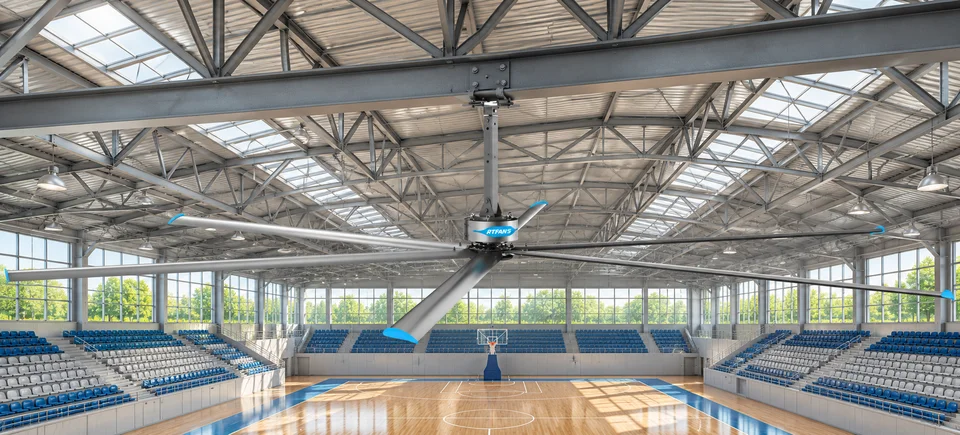
Airflow Requirements for Sports Complexes
Sports halls need 20 CFM of outdoor air per person — four times an office. The engineering numbers behind gym and arena ventilation: ASHRAE rates, the sizing formula, air changes, temperature, and where HVLS fans and evaporative coolers fit.
View article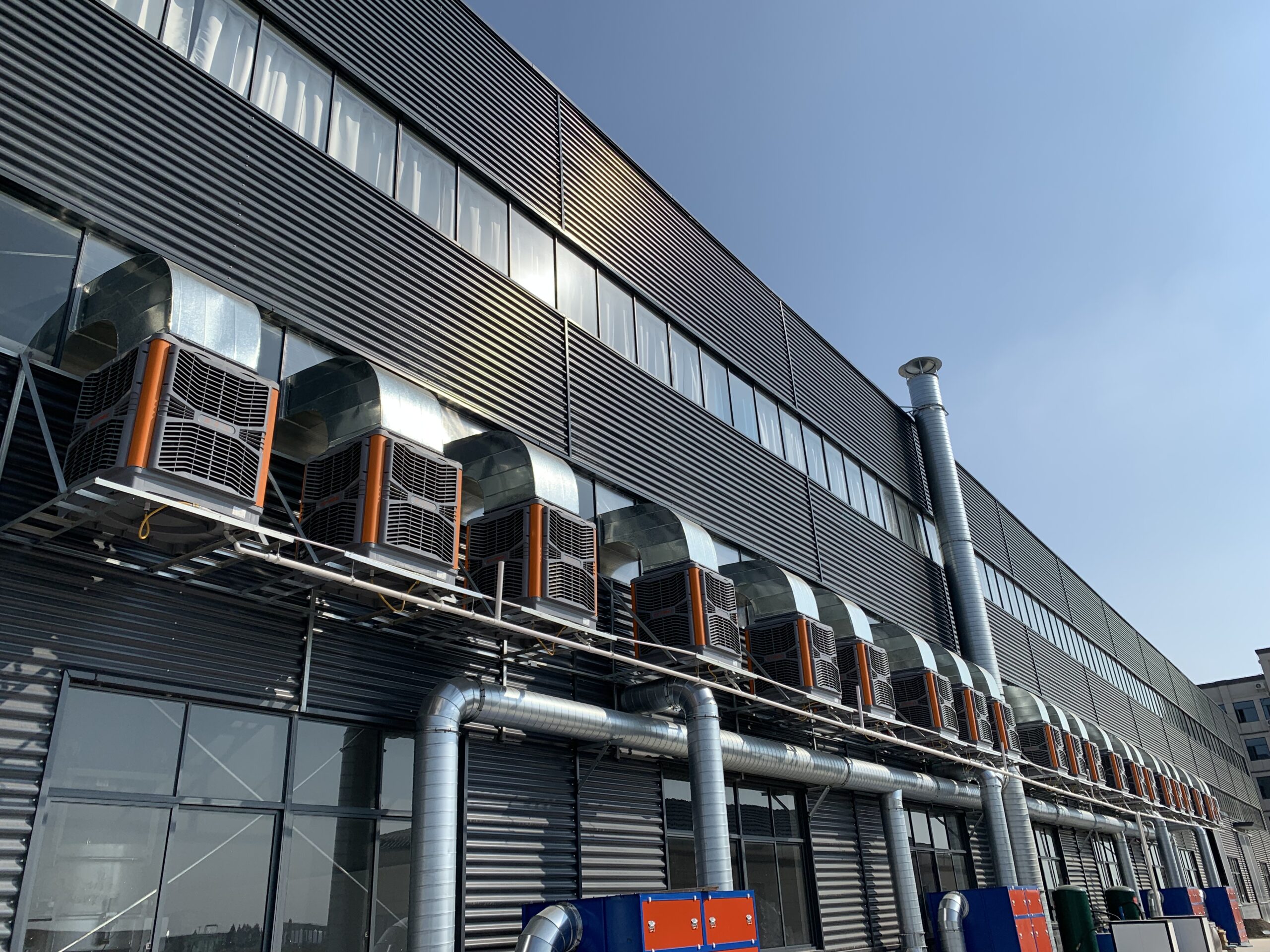
Passenger Experience & Cooling in Metro Stations
Passenger comfort in metro stations directly impacts ridership and public transport reputation. Discover how evaporative cooling creates inviting, comfortable environments, enhancing passenger comfort metro and driving positive commuter experiences.
View article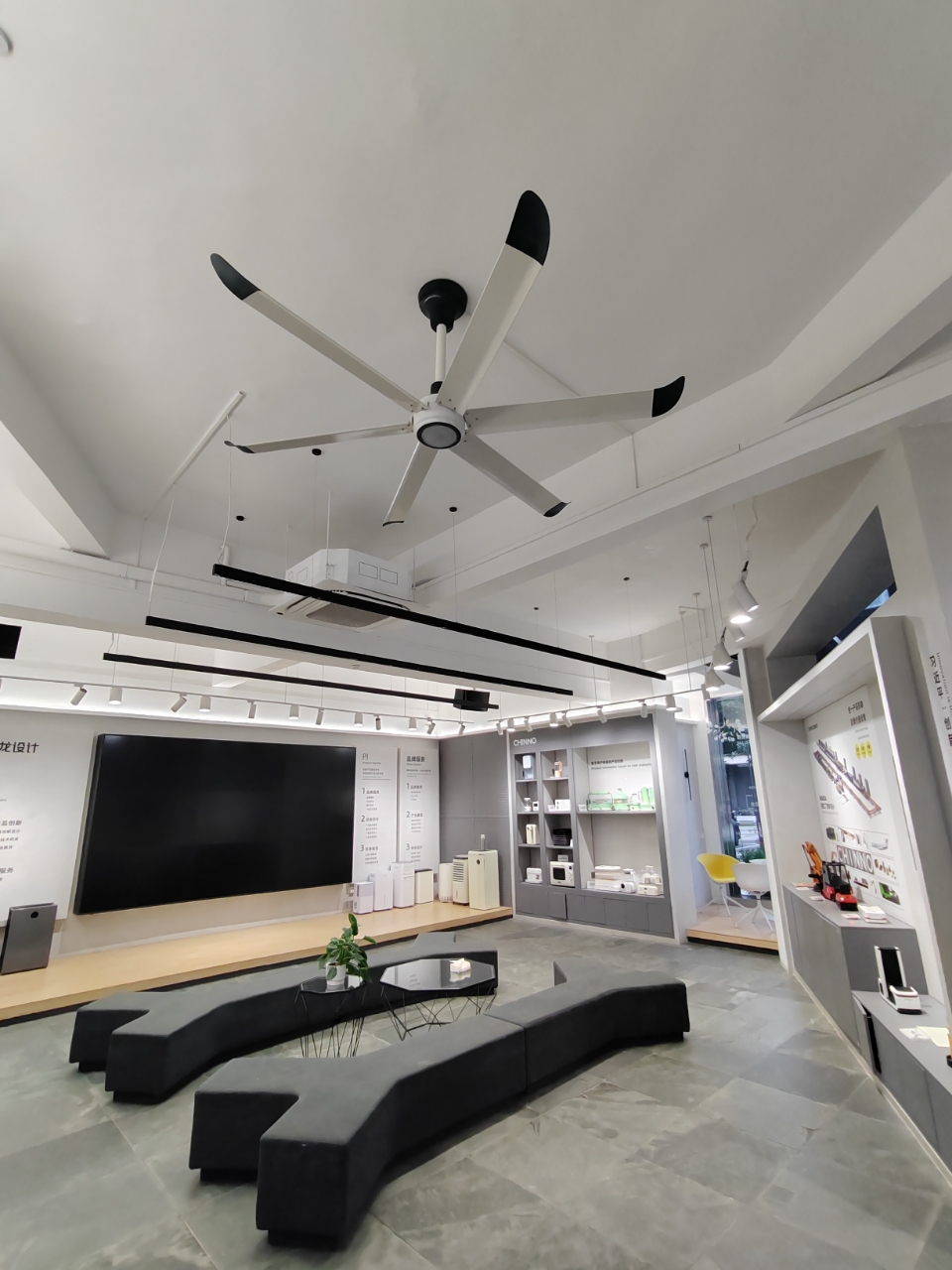
How Bad Air in School Halls Hurts Kids' Grades - and How Fans Can Save the Day
Imagine a sweltering school hall where kids zone out mid-lecture. That’s the reality for many, with CO2 levels spiking and focus dropping. As a facilities expert with 10+ years in education HVAC, I’ve seen industrial ceiling fans transform these spaces. This guide dives into the science, real-world fixes, and why your school needs HVLS fans now for better air quality and grades.
View article