
PMSM vs BLDC Motors for HVLS Fans: Which Is Better?
When buyers compare large ceiling fans, the motor is usually the first technical question after size and coverage. Two motor types dominate the conversation: PMSM and BLDC. Both use permanent magnets and run without brushes. The difference matters most exactly where an HVLS fan works hardest: turning a very large, heavy set of blades at very low speed, all day. This article explains what each motor is, how they differ, and which one fits an HVLS fan — including the related question buyers keep asking: hub motor vs PMSM motor which is better? Short answer: PMSM direct drive fits a full-size HVLS fan best; BLDC fits smaller fans.
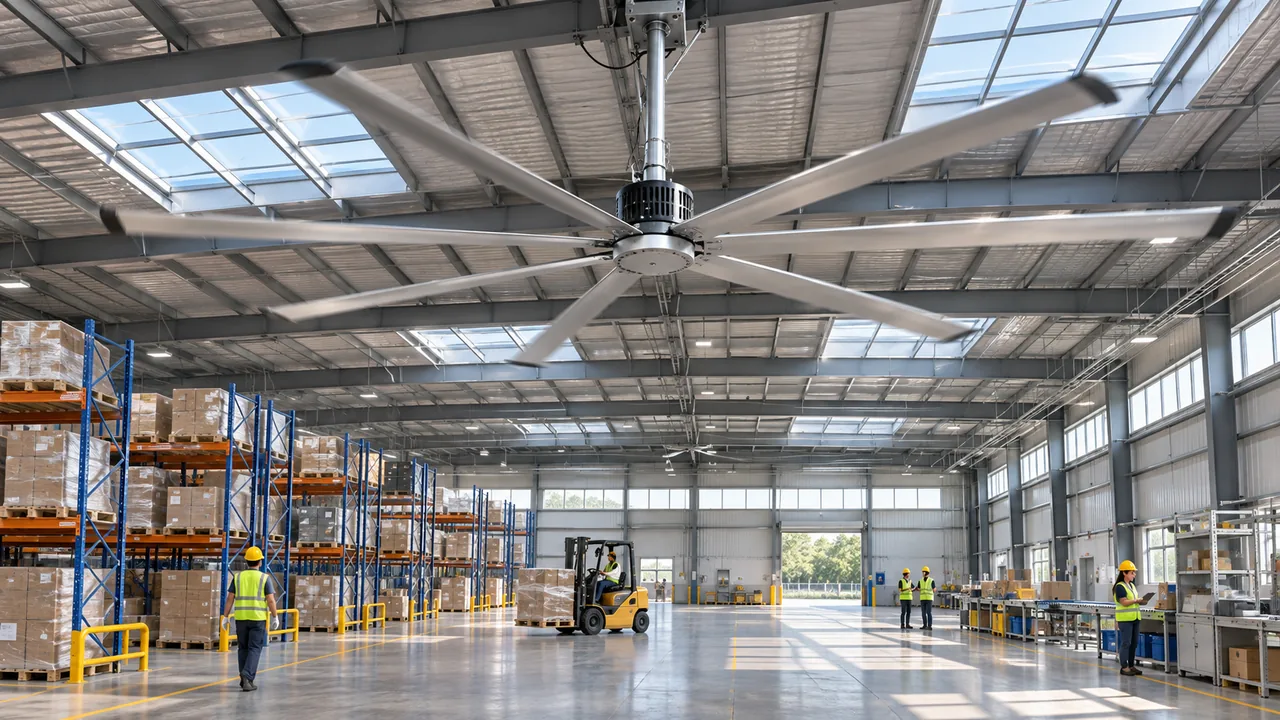
When buyers compare large ceiling fans, the motor is usually the first technical question after size and coverage. Two motor types dominate the conversation: PMSM and BLDC. Both use permanent magnets and run without brushes. The difference matters most exactly where an HVLS fan works hardest: turning a very large, heavy set of blades at very low speed, all day.
This article explains what each motor is, how they differ, and which one fits an HVLS fan — including the related question buyers keep asking: hub motor vs PMSM motor which is better? Short answer: PMSM direct drive fits a full-size HVLS fan best; BLDC fits smaller fans.
We're KOOLAIR, a manufacturer of HVLS fans and evaporative air coolers, building since 2003, exporting to more than 90 countries and regions, with more than 20,000 units installed. Our HVLS fans span 2.8 to 7.3 m in diameter, cover up to 1,800 m², and move 4,500 to 15,000 m³/min of air.
Key takeaways
- Both motors are brushless permanent-magnet motors: The real difference is how the magnetic field is shaped and controlled, not whether either one has brushes.
- PMSM fits large, slow fans: It produces high torque at low speed, exactly what a 2.8 to 7.3 m HVLS fan needs to start and hold a steady slow rotation.
- BLDC fits smaller, faster fans: Compact, simple to drive, and cost-effective at smaller sizes and higher speeds — which is why it is common in residential and small commercial fans.
- A hub motor is a layout, not a motor type: A hub motor can be a PMSM or a BLDC design. Judge it by torque, cooling, and serviceability, not by the name.
PMSM vs BLDC: the short answer
PMSM vs BLDC is a fair fight only when the two motors are doing the same job. In a small ceiling fan spinning light blades, either motor can do the work, and the BLDC version often costs less. In a full-size HVLS fan, the job changes completely: the blades are metres long, the rotor has real inertia, and the fan must start smoothly, hold a slow and steady speed, and run quietly for full shifts.
That is where PMSM wins: it delivers smooth, high torque at low speed, and coupled directly to the fan hub — gearless, with no belt and no gearbox — there is nothing between the motor and the blades to wear, slip, or waste energy. That is the configuration our PMSM HVLS fans use. Our earlier comparison of PMSM direct drive vs belt-driven fans found the direct-drive layout simpler to maintain; this article compares the two motor types themselves.
What is a PMSM motor?
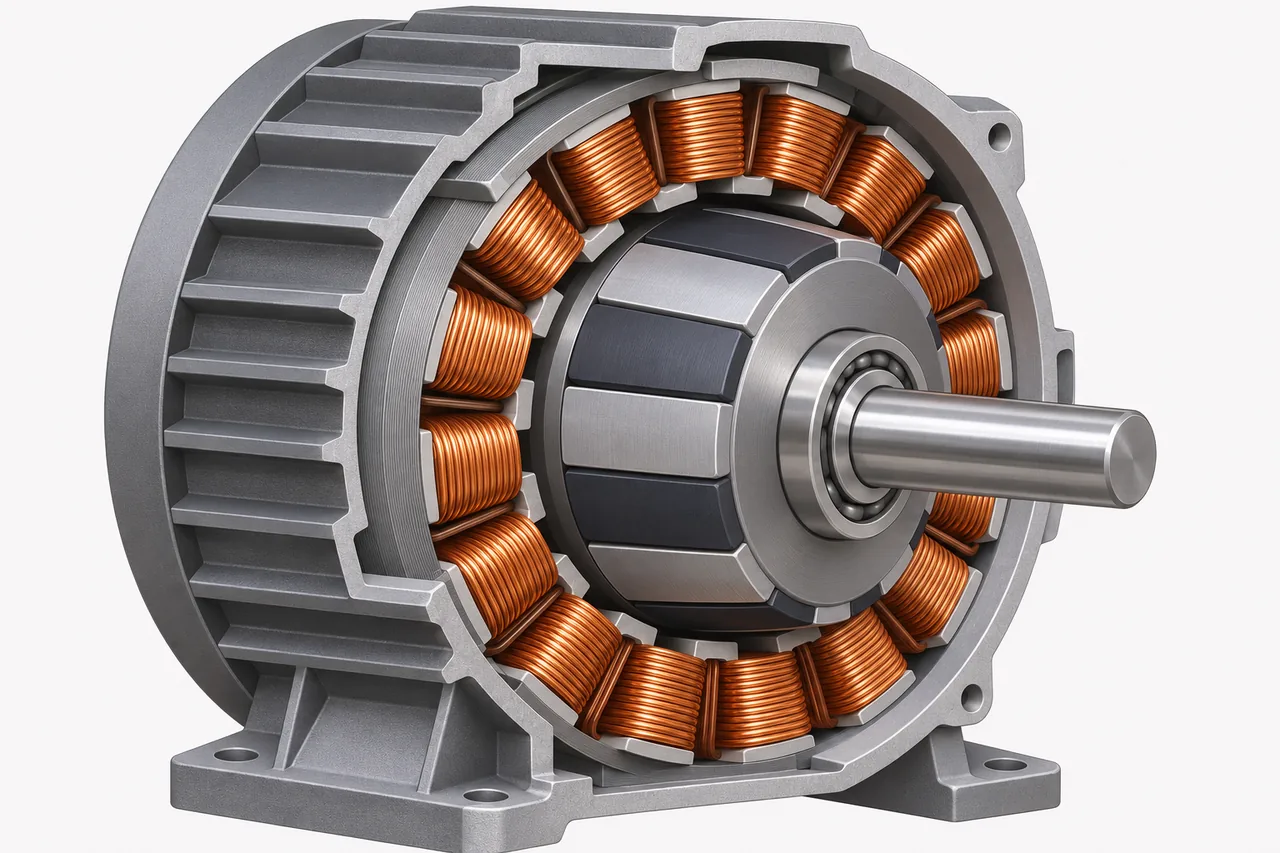
A PMSM — permanent magnet synchronous motor — is an AC motor whose rotor carries permanent magnets. An electronic controller drives the stator windings to create a rotating magnetic field, and the rotor locks onto it and turns in synchronism: rotor speed follows the supply frequency, with no slip. The controller shapes the current as a smooth sine wave, and the motor's back-EMF is sinusoidal, which gives a PMSM its characteristically smooth, quiet rotation.
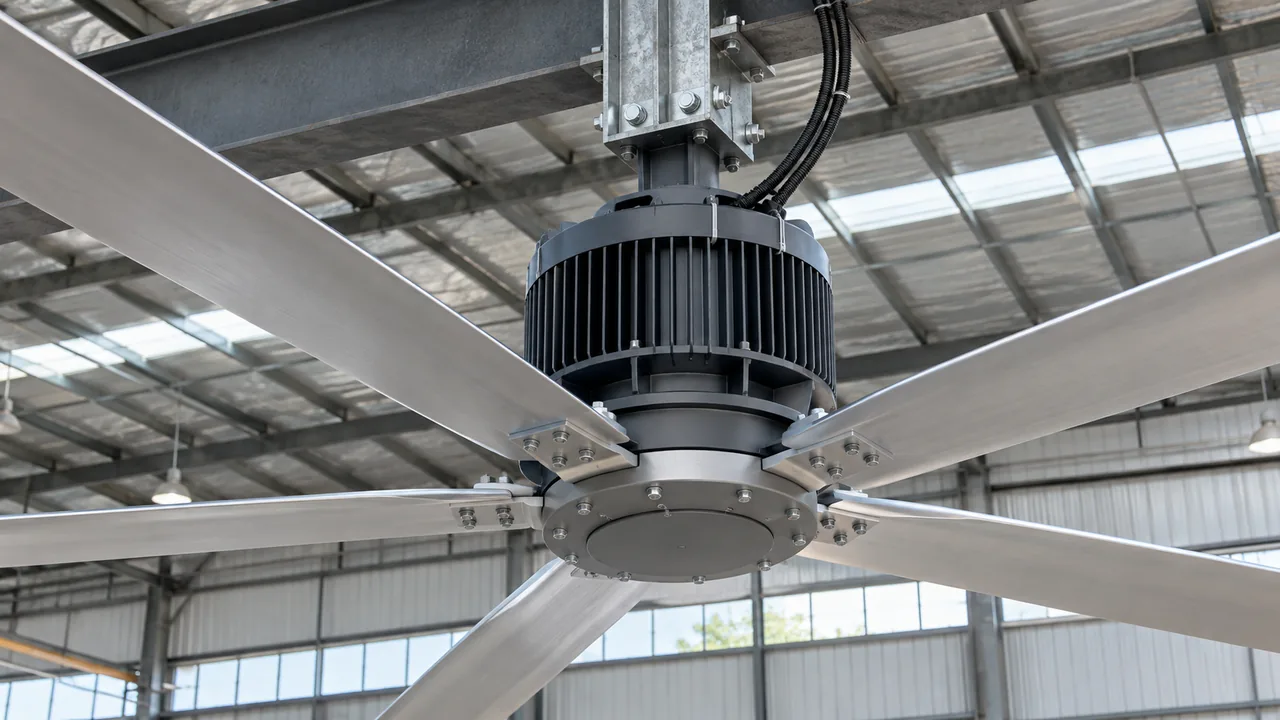
In an HVLS fan, the PMSM is usually a direct-drive motor mounted at the hub, with the blades bolted straight to the motor. There is no gearbox stepping the speed down and no belt to tension or replace. The motor turns at the same slow speed as the blades and must produce enough torque to overcome the inertia of long blades and keep them turning steadily. That low-speed, high-torque behaviour is why our PMSM fan advantages article lists gearless direct drive, high torque, lower noise, and reduced maintenance as the core benefits.
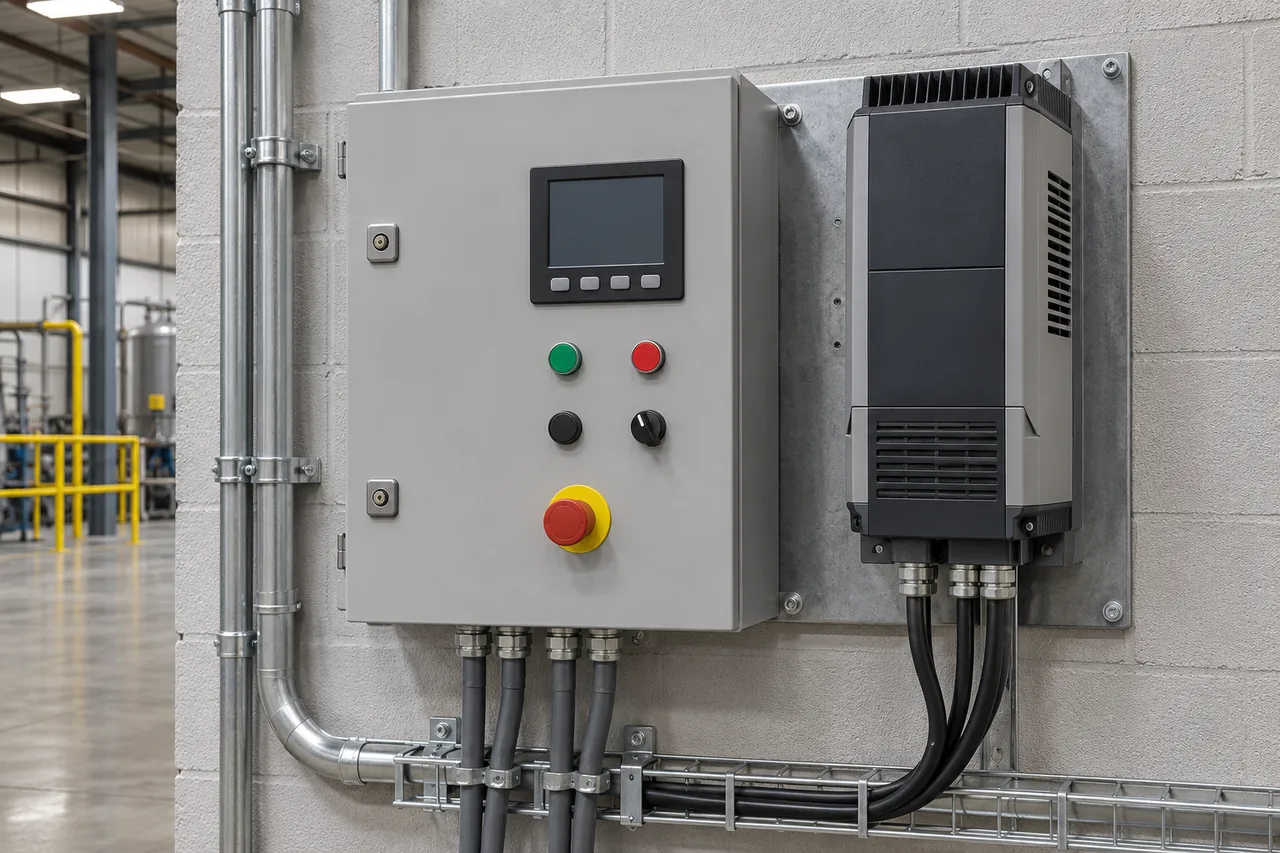
A PMSM needs a capable controller: the drive must track the rotor position precisely and adjust the current continuously, usually with field-oriented control. The controller adds cost, and the motor cannot simply be wired to a wall switch the way an old AC induction fan could — but in return you get smooth starting, precise speed holding, and efficient operation across the speed range.
What is a BLDC motor?
A BLDC — brushless DC motor — is also a permanent-magnet motor with no brushes. Its rotor carries permanent magnets, and an electronic controller switches the stator windings on and off in sequence, using rotor position from Hall sensors or sensorless estimation. The motor's back-EMF is typically trapezoidal rather than sinusoidal, and the drive current follows that shape.
The name is a historical accident: a BLDC motor is not really a DC motor. It runs on switched DC from its controller, but the windings see a form of alternating current as the controller commutates them. The result is a motor that is compact, efficient, and easy to drive with a relatively simple controller. That simplicity is why BLDC motors are common in residential and light commercial ceiling fans, as well as in power tools, drones, and HVAC blowers.
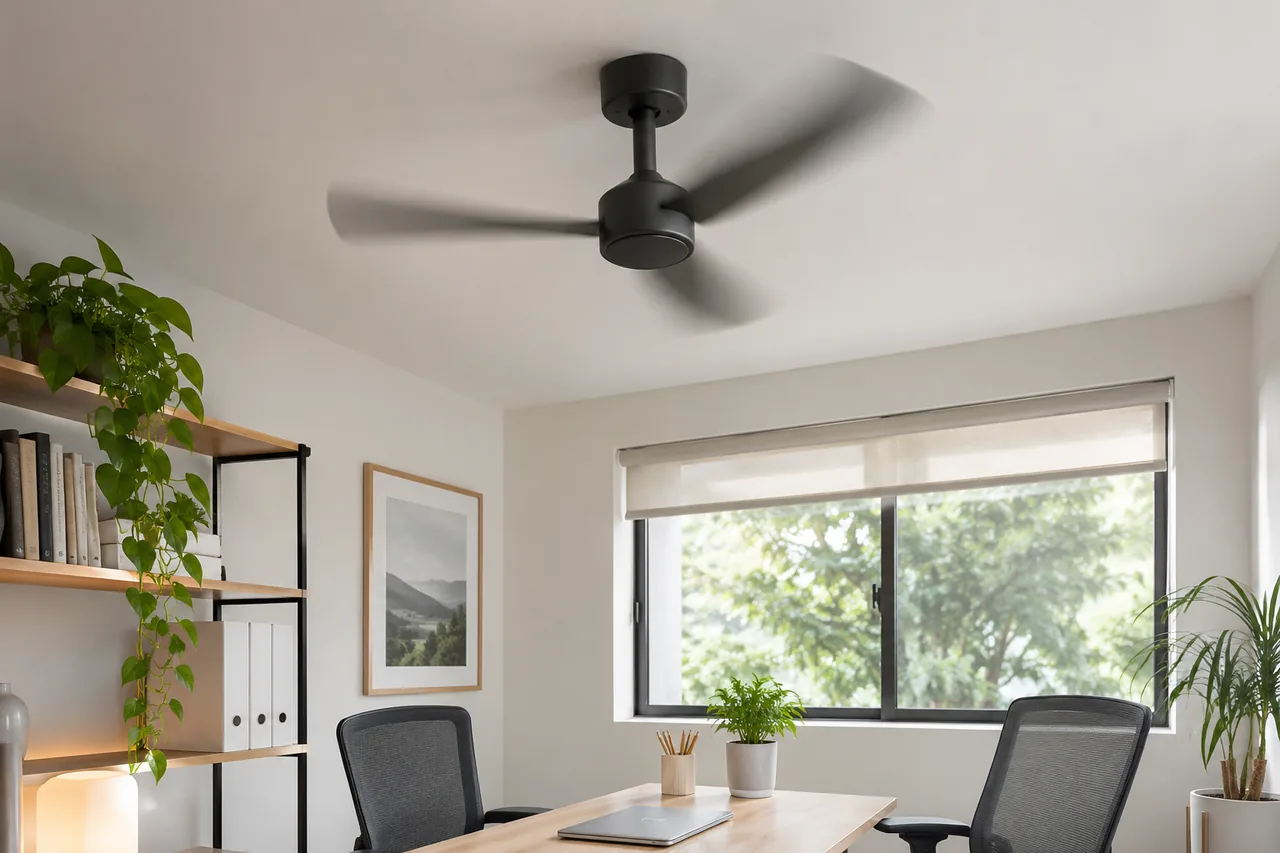
In a ceiling fan, a BLDC motor is usually a small outrunner or inner-rotor unit tucked into the hub. It starts quickly, runs quietly at moderate speeds, and draws little power at low speed — more than enough torque for light blades. Where it is less at home is at the very large end: turning blades several metres long at very low speed, where the motor must produce high torque continuously without the help of gearing. A BLDC motor can be built for that duty, but as size and torque rise, the cost and controller advantages that made it attractive at small sizes narrow.
PMSM vs BLDC motor: how they differ
The table below summarises the PMSM vs BLDC motor differences.
| Factor | PMSM motor | BLDC motor |
|---|---|---|
| Rotor | Permanent magnets, synchronous with stator field | Permanent magnets, electronically commutated |
| Drive waveform | Sinusoidal current and back-EMF | Typically trapezoidal back-EMF |
| Low-speed torque | High, smooth torque at very low RPM | Good at moderate speed; high torque at very low RPM needs a larger frame |
| Smoothness and noise | Very smooth, quiet at low speed | Smooth, but can show more torque ripple at low speed |
| Controller | Field-oriented control, more complex drive | Simpler commutation, lower-cost drive |
| Efficiency | High across the speed range | High, especially at moderate speeds |
| Maintenance | No brushes, no belt, no gearbox in direct drive | No brushes; bearings and controller are the wear points |
Torque, efficiency, noise, and maintenance
Torque is the deciding factor: an HVLS fan's blades are long and heavy, and the air load on them changes with speed and temperature. The motor must start that load from rest without jerking, then hold a slow, steady speed. PMSM motors are designed for exactly this: high torque at low speed, delivered smoothly. BLDC motors deliver strong torque too, but their sweet spot is at higher speeds and lighter loads.
On efficiency, the gap between a good PMSM and a good BLDC at the same duty is small: neither wastes energy in a rotor cage or brush friction, and neither needs a gearbox that loses power as heat and noise. Judge any fan by certified airflow per watt at the speeds you will actually run it. ENERGY STAR publishes certified ceiling-fan performance data, and that certified CFM-per-watt figure is a far better guide than maximum airflow on a box. Our guide to HVLS fan energy consumption shows how to estimate running cost, and the US Department of Energy Energy Saver guide notes that raising the thermostat by 1°F saves about 3% on cooling energy.
On noise, PMSM direct drive has two advantages: the sinusoidal drive produces little torque ripple, so the motor runs smoothly, and direct drive removes the gearbox and belt, common sources of whine and vibration. A BLDC fan can be very quiet too, especially at small sizes. A fan that hums or vibrates will be switched off, which wastes the whole investment.
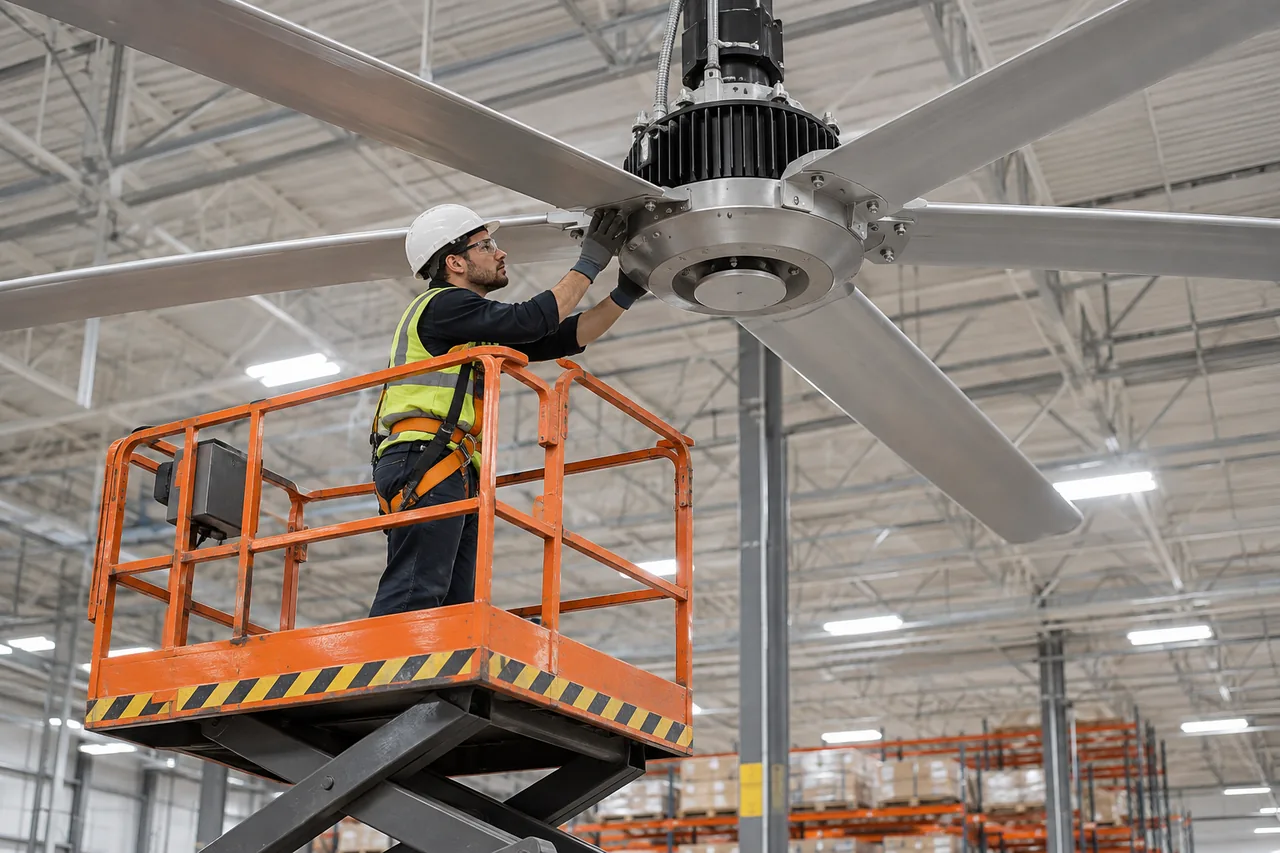
On maintenance, neither motor has brushes to replace. The remaining wear points are the bearings and the controller electronics. A PMSM direct-drive fan removes the belt and gearbox from that list entirely: no belt to tension, no gearbox oil to change, no gear teeth to wear. Bearing quality and the controller's protection against heat, dust, and voltage spikes matter more than the motor label — ask what the warranty covers before you buy.
PMSM vs BLDC motor which is better for HVLS fans?
PMSM vs BLDC motor which is better for a full-size HVLS fan? The PMSM, and the reason is the duty, not the brand. An HVLS fan is a large, slow, high-torque machine. Its blades span 2.8 to 7.3 m in our range, and a single unit covers up to 1,800 m². PMSM direct drive is built for that duty: high torque at low speed, smooth sinusoidal drive, and no gearbox or belt in the power path.
BLDC vs PMSM motor which is better if the fan is small? That flips the answer. For a compact fan over a small office, a retail counter, or a residential room, a BLDC motor is usually the better buy: compact, proven, easy to drive, and cheaper at that size.
PMSM motor vs BLDC is therefore the wrong question without the application attached. Ask: how big are the blades, how slow must they turn, how many hours a day will the fan run, and how quiet must it be? Large, slow, all day, and very quiet means PMSM direct drive; small, moderate speed, intermittent, and cost-sensitive means BLDC. And if a supplier offers a "BLDC HVLS fan" at full HVLS size, ask how the low-speed torque is achieved and what the sound rating is at operating speed — those answers tell you more than the motor label.
For the full picture of how a large fan moves air at low speed, see how big HVLS ceiling fans work. Our PMSM HVLS fan for smaller spaces uses a 5.5 m Charm Series RTF-DF-5E unit, showing PMSM direct drive scales down as well as up.

Hub motor vs PMSM motor which is better?
Hub motor vs PMSM motor which is better? This question mixes up two categories. A hub motor is a layout: the motor is built into the hub of the wheel or fan, driving the load directly without a shaft, belt, or gearbox. PMSM is a motor type: a permanent magnet synchronous machine. A hub motor can be a PMSM, a BLDC motor, or another design entirely.
In ceiling fans, "hub motor" usually means a direct-drive motor integrated into the fan hub, most often an outrunner design where the outer casing of the motor rotates with the blades. Many HVLS PMSM direct-drive motors are, in effect, hub motors: the motor sits at the centre of the fan and the blades bolt directly to it. The two are not rivals. A well-built PMSM hub motor is one of the best configurations for an HVLS fan, combining the PMSM's smooth low-speed torque with the hub layout's direct drive.
What should you check instead of the label? Three things: torque at operating speed — can the motor start and hold the blades smoothly? Cooling — a motor buried in a hub has less airflow over its windings, so ask how heat is handled at full load. And serviceability — if the controller or a bearing fails, can it be replaced without removing the whole fan? If a supplier cannot answer those three questions, treat the "hub motor" claim as marketing.
How to choose the right motor for your facility
Start with the space, not the motor: measure the floor area, ceiling height, and obstructions, and note the occupancy and heat sources. A warehouse with 30 ft ceilings and forklift traffic needs a different fan from a gym or a church with a sloped roof. The motor choice follows from those facts.
Then look at the whole cost, not the sticker price. A cheaper fan with a noisier drive can cost more over five years than a direct-drive fan that runs quietly with little maintenance. The International Energy Agency notes that space cooling is the fastest-growing end use in buildings, and that comfort can come from fans and ventilation as well as air conditioning. Compare purchase price, installed cost, power draw, noise, controls, and maintenance together before you decide.
Frequently Asked Questions
PMSM vs BLDC motor which is better for an HVLS fan?
For a full-size HVLS fan, PMSM is the better choice. An HVLS fan needs high torque at very low speed to turn long, heavy blades smoothly and quietly, and a PMSM direct-drive motor is built for exactly that duty, with no belt or gearbox in the power path.
Is a BLDC motor better than a PMSM motor for a small ceiling fan?
Usually, yes. For a small ceiling fan with light blades, a BLDC motor is compact, proven, easy to drive, and cheaper at that size. It starts easily, runs quietly at moderate speed, and draws little power. A large PMSM drive would add cost and torque you do not need.
Do PMSM and BLDC motors need a controller?
Yes, both do. Neither motor runs well wired straight to the mains. Each needs an electronic controller — a field-oriented drive for PMSM, a commutation controller for BLDC — and the controller's quality decides starting smoothness, low-speed steadiness, noise, and efficiency.
Hub motor vs PMSM motor which is better?
They are not rivals: a hub motor is a layout and PMSM is a motor type — a hub motor can be a PMSM or a BLDC design. Many HVLS PMSM direct-drive motors are effectively hub motors, with the blades bolted straight to the motor. Judge any hub motor by its torque at operating speed, its cooling, and whether its controller and bearings can be serviced.
Which motor type lasts longer and needs less maintenance?
Both are brushless, so neither needs brush replacement, and the main wear points are bearings and controller electronics. A PMSM direct-drive fan has an extra advantage because it has no belt or gearbox to maintain. Check the warranty and the cost of a replacement controller before you buy.
The bottom line
PMSM vs BLDC is not a contest with a single winner — it is a matching exercise. PMSM direct drive is the better motor for a full-size HVLS fan: smooth, high torque at very low speeds, with no belt or gearbox to maintain. BLDC is the better motor for smaller fans, where its compact size, simple drive, and lower cost are the right trade. And a hub motor is not a third contestant — it is a layout that can house either motor type, and the best HVLS configuration is often a PMSM motor built into the hub. Match the motor to the blades, the hours, and the noise your space will tolerate, and check the controller and warranty before you sign.
Request a quote for a fan sized to your facility, with the motor matched to your duty.
Related insights
Recommended Engineering & Ventilation Guides
Ceiling Fans vs. HVLS Fans: Which Is Right for Your Facility?
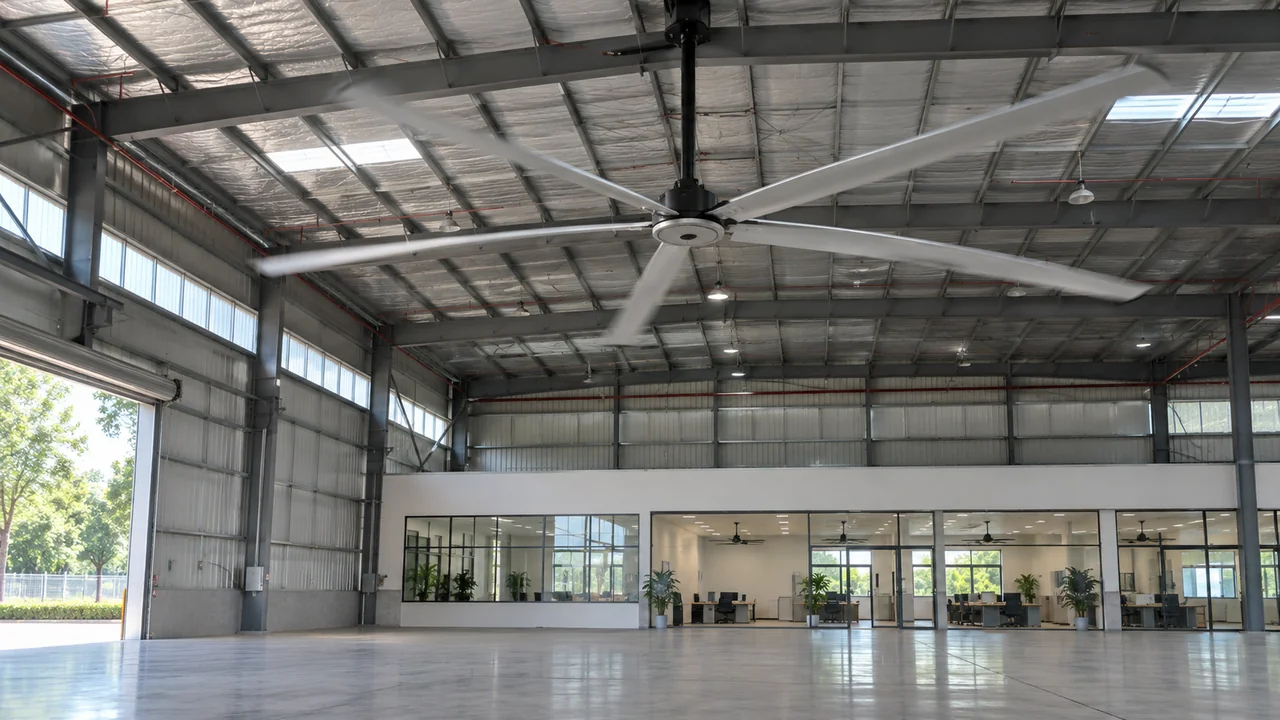
Standard ceiling fans work well in rooms up to about 400 sq ft with 8 to 10 ft ceilings, such as offices, break rooms, and retail counters. Past that point, or in spaces with ceilings above roughly 14 ft and wide open floors, HVLS fans can be a better fit, because one large, slow fan can cover what a dozen small ones can't. Floor area alone doesn't settle it. Ceiling height and structure, obstructions, occupancy, and how much heat the space carries all matter. When moving air isn't enough, evaporative cooling is the add-on. We're KOOLAIR, a manufacturer of HVLS fans and evaporative air coolers. We've been building since 2003 and export to more than 90 countries and regions. We make recommendations based on your facility's dimensions, ceiling structure, climate, and occupancy.
View article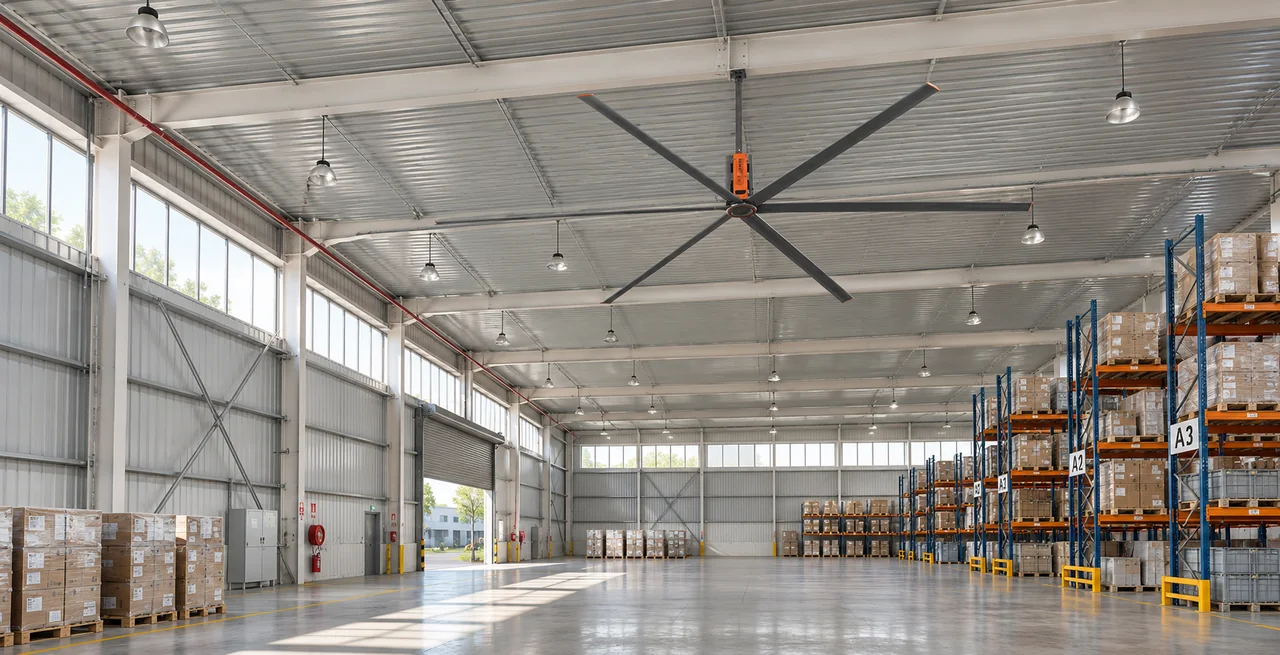
How Do HVLS Fans Impact Energy Consumption and Overall Utility Costs?
Do HVLS fans raise or lower your energy bill? Both — and the balance depends on how you buy and run them. A high-volume, low-speed (HVLS) fan uses relatively little electricity itself — a big fan turning slowly, not a compressor. Its main effect is what it does to the rest of the building: in summer it makes people feel cooler without lowering the air temperature, so the air conditioning works less; in winter it pushes warm air down from the ceiling, so the heating system works less. Sized and controlled right, it usually pays for its own electricity over and over. This guide explains where the energy goes, how a fan changes heating and cooling load, and how to estimate the running cost — without promising a percentage saving, because the result depends on your building, your climate and how the fan is used.
View article
Big Ass Fans vs Rite-Hite HVLS Fans: Which Should You Buy for Your Distribution Center?
A distribution center is a hard place to keep comfortable. High ceilings, long aisles, tall racks, dock doors opening and closing all day, and people working across a floor the size of several football fields. A high-volume, low-speed (HVLS) fan is one of the few pieces of equipment that can move air across that whole space from a single mounting point. Two of the best-known American brands in this category are Big Ass Fans and Rite-Hite. Both sell large-diameter fans in the 8- to 24-foot range, both offer direct-drive and gearbox models, and both will quote a distribution-center project. The right choice depends on the models, the building, the installed price, and the support available in your market. This guide compares the two brands' current HVLS lines for distribution centers and gives a buy-one-or-the-other conclusion, not a claim that either brand is universally better.
View article