
5090 vs 7090 Cooling Pad: What's the Difference?
Compare 5090 and 7090 evaporative cooling pads by flute geometry, listed depth, dimensions, installation fit, airflow, and maintenance requirements.
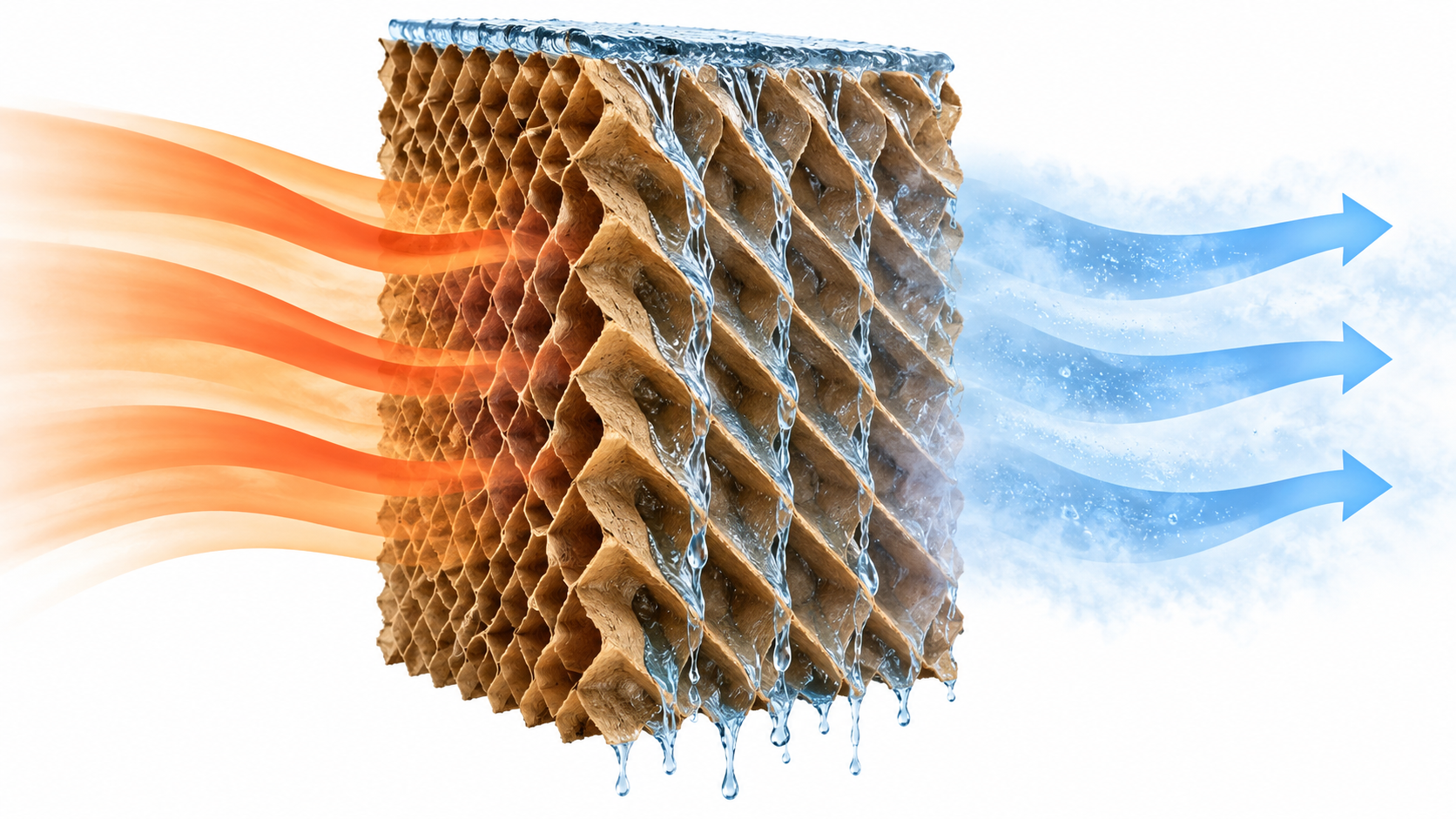
The main difference between a 5090 and 7090 cooling pad is the flute geometry, listed pad depth, and dimensional range. The RTFANS KA-5090 uses a 5 mm flute structure, while the KA-7090 uses 7 mm flutes. Both use a 45°/45° groove angle, but the correct choice depends on the equipment opening, airflow conditions, installation space, water distribution system, and replacement requirements.
Both products are evaporative cooling media. Water is distributed across the pad, and incoming air passes through the wetted channels. As water evaporates, it absorbs heat from the air. Actual cooling performance depends on entering-air temperature, relative humidity, airflow, water distribution, pad depth, and the design of the complete cooling system.
What Do 5090 and 7090 Mean?
In this product range, the model names identify different evaporative cooling pad configurations.
- 5090: Uses a 5 mm flute height and 45°/45° flute angle.
- 7090: Uses a 7 mm flute height and 45°/45° groove geometry.
The difference in flute height changes the internal channel structure of the media. However, the model number alone does not determine cooling capacity, pressure drop, or suitability for a specific installation. Review the 5090 cooling pad and 7090 cooling pad pages before ordering.
5090 vs 7090 Cooling Pad: Side-by-Side Comparison
| Feature | 5090 Cooling Pad | 7090 Cooling Pad | Why It Matters |
|---|---|---|---|
| Flute or groove height | 5 mm | 7 mm | Channel geometry affects airflow and water movement. |
| Flute or groove angle | 45° / 45° | 45° / 45° | Both formats use the same listed angle combination but different flute heights. |
| Listed pad depth | 50, 100, and 150 mm | 100, 150, 200, and 300 mm | Depth must match the frame, airflow path, and installation space. |
| Listed height range | 150–2,000 mm, customizable | 1,500, 1,800, and 2,000 mm | The pad must fit the equipment opening. |
| Listed width range | 100–1,000 mm, customizable | 300, 600, and 900 mm | Replacement media should be ordered using measured dimensions. |
| Typical applications | Evaporative coolers, industrial cooling, ventilation, agricultural systems, and OEM equipment | Evaporative coolers, pad-and-fan systems, agricultural buildings, livestock facilities, and industrial ventilation | Suitability depends on the complete system design. |
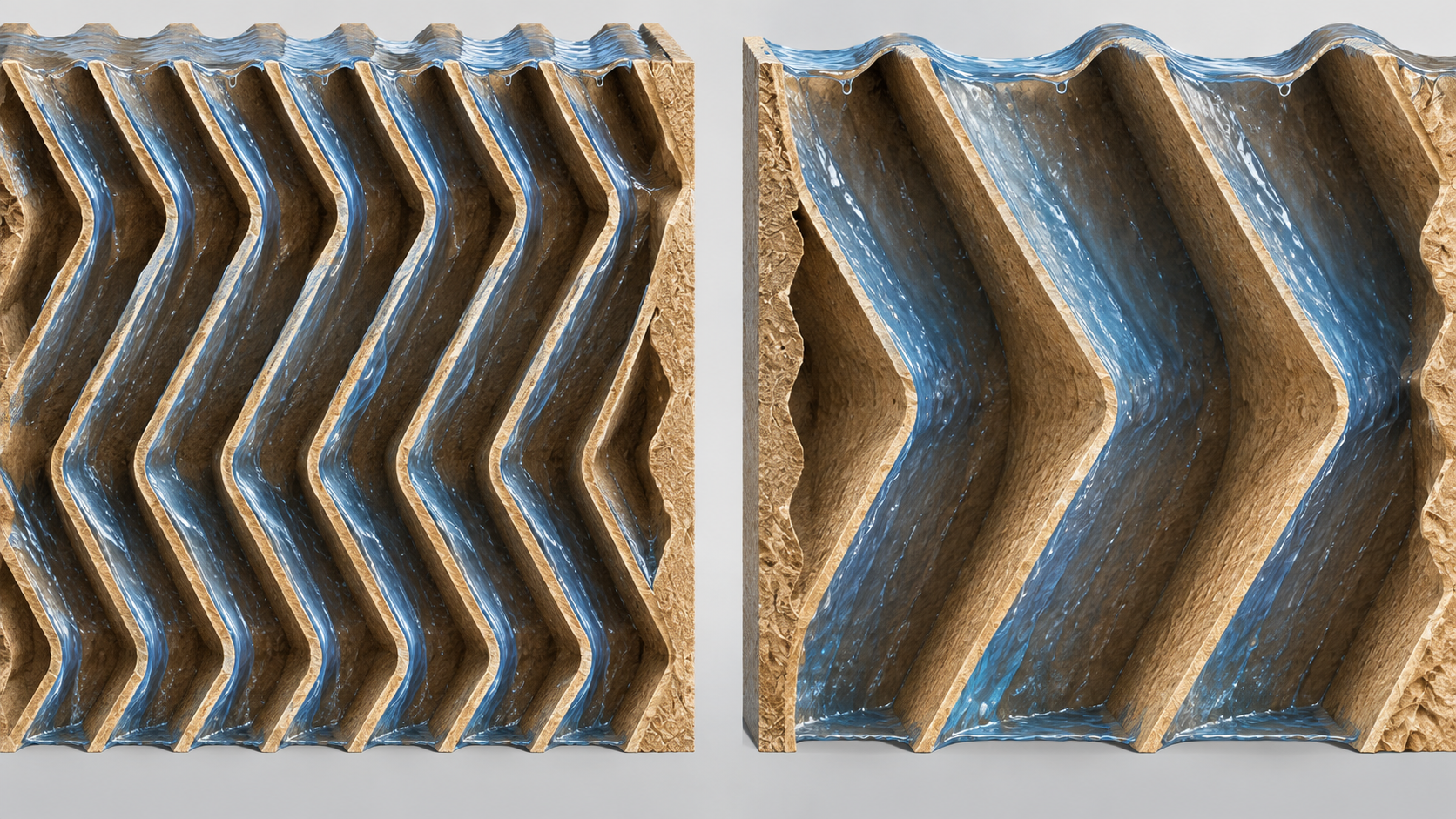
The Main Differences Between 5090 and 7090 Pads
1. Flute Geometry
The KA-5090 uses a 5 mm flute height, while the KA-7090 uses a 7 mm flute height. A change in flute geometry can affect the relationship between air passage, water distribution, contact area, and resistance through the pad. The actual result depends on the pad depth and the rest of the cooling system.
2. Available Pad Depths
The 5090 is listed with 50, 100, and 150 mm depth options. The 7090 is listed with 100, 150, 200, and 300 mm depth options.
Pad depth changes the distance air travels through the wetted media. A deeper pad also requires adequate installation space, a compatible support frame, correct water distribution, suitable airflow conditions, and acceptable pressure drop. Review the complete cooling pads system before selecting a replacement.
3. Dimensional Compatibility
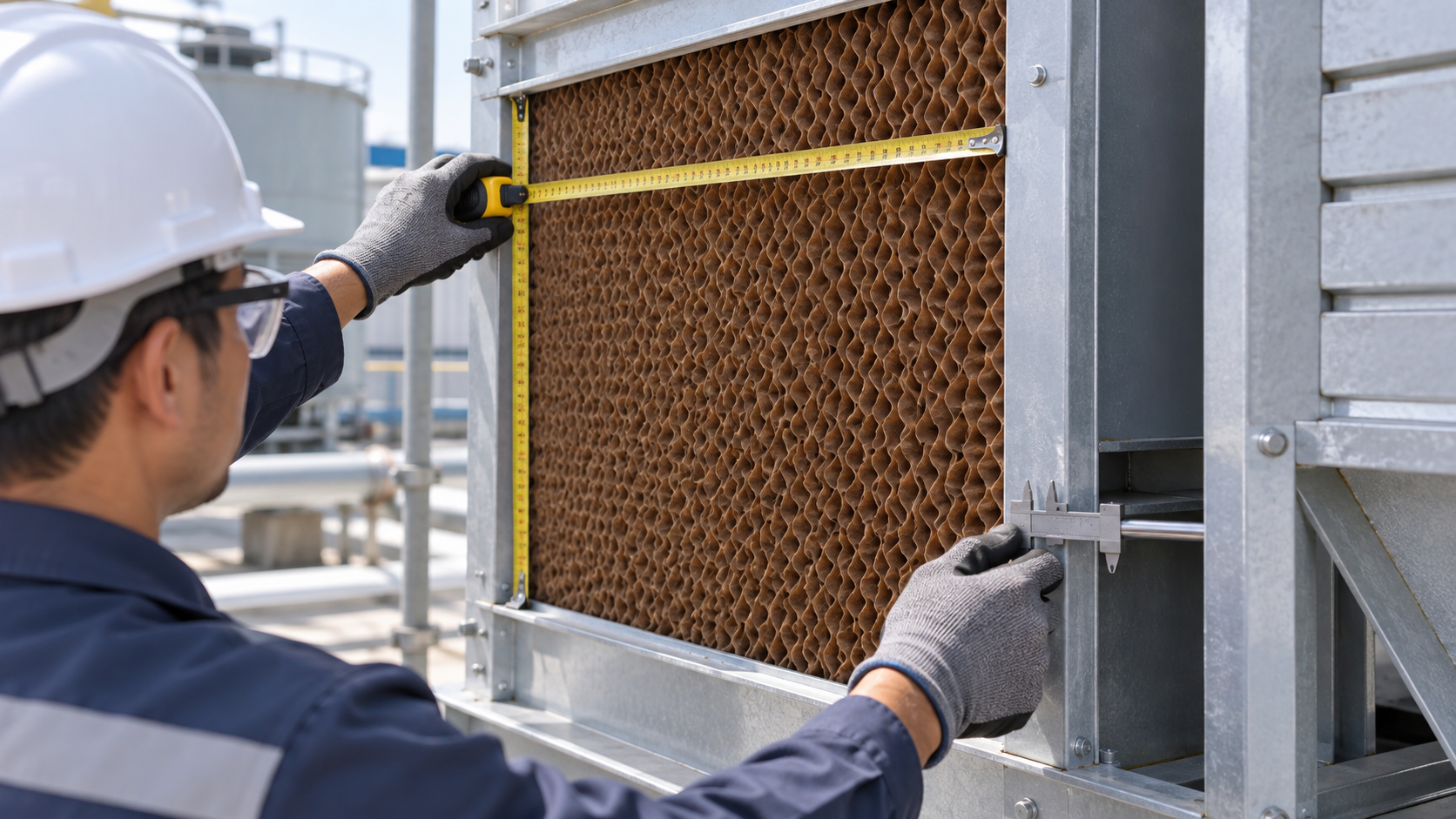
For a replacement project, measure the existing pad height, width, and depth, along with the frame or housing dimensions, airflow direction, installation orientation, and water distribution arrangement. A pad may belong to the correct model family but still be unsuitable if its dimensions or depth do not match the equipment.
How to Choose the Right Cooling Pad
- Check the existing equipment. Start with the equipment manual, original purchase documentation, or existing cooling pad.
- Measure the pad opening. Record the actual height, width, and depth rather than relying only on nominal dimensions.
- Check the airflow requirement. Match the pad to the air volume and air velocity expected by the fan or air cooler.
- Confirm pressure-drop limits. Pad depth, flute geometry, air velocity, and fouling affect resistance to airflow.
- Review water distribution. The pump, pipework, header, and distribution method must wet the pad consistently.
- Consider the operating environment. Dust, mineral content, biological growth, seasonal operation, and contaminants affect maintenance.
For a larger installation, compare the media with the available evaporative air coolers and the broader fan-and-cooler solution.
Installation and Operating Considerations
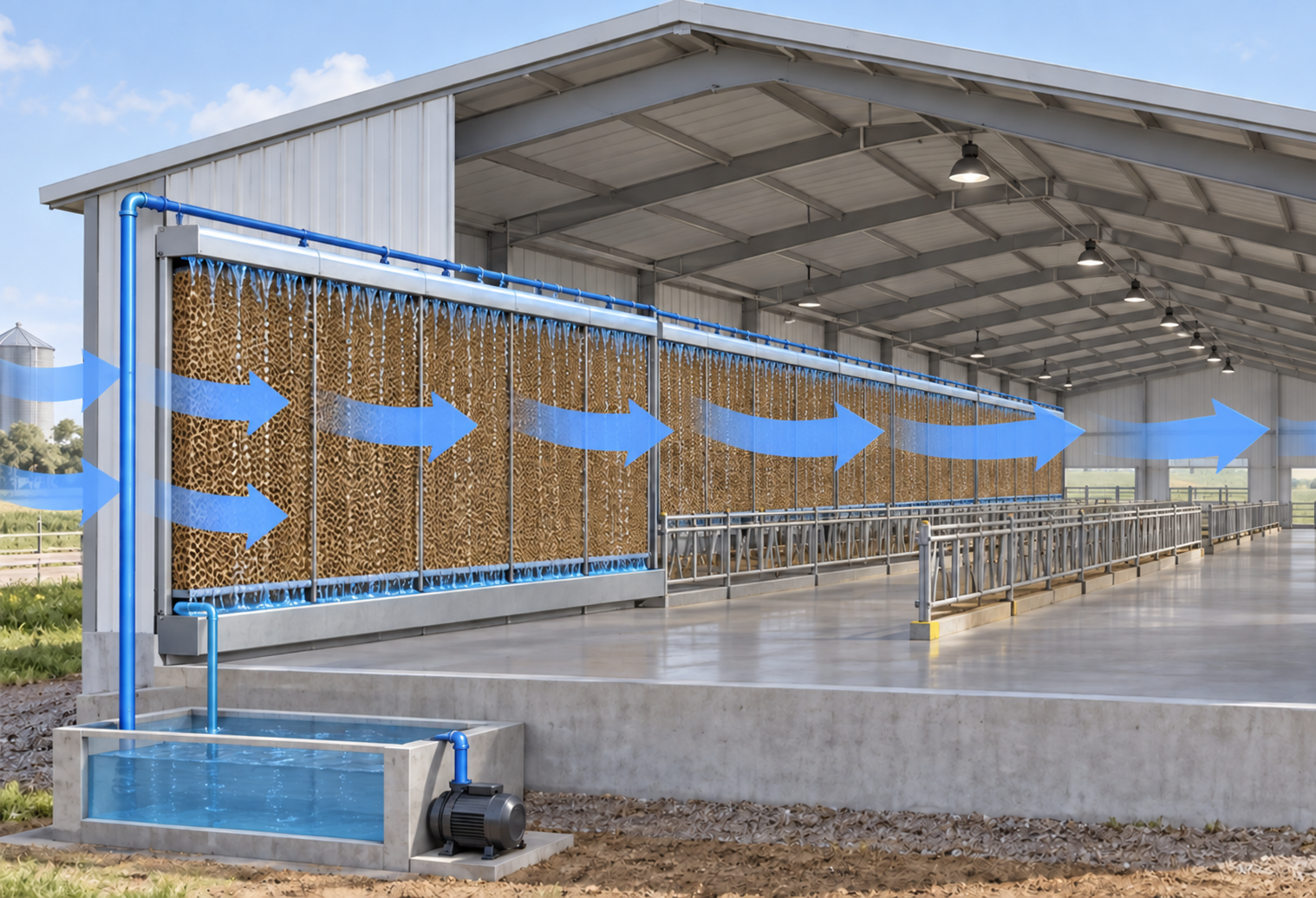
Both 5090 and 7090 pads should be installed in a frame or housing that supports the media and maintains the intended airflow path. The pad should not be compressed, distorted, installed with large gaps, mounted in the wrong orientation, or used with an unsuitable water distribution system.
Water should be distributed evenly across the upper section of the pad. Blocked outlets or uneven flow can create dry sections and uneven fouling. Actual leaving-air conditions depend on entering-air temperature, relative humidity, air velocity, pad depth, water flow, fan selection, exhaust arrangement, and installation design.
Select the cooling pad as part of the complete system. For large facilities, review the large-space cooling solution and the project’s industrial ventilation requirements.
Cooling Pad Maintenance
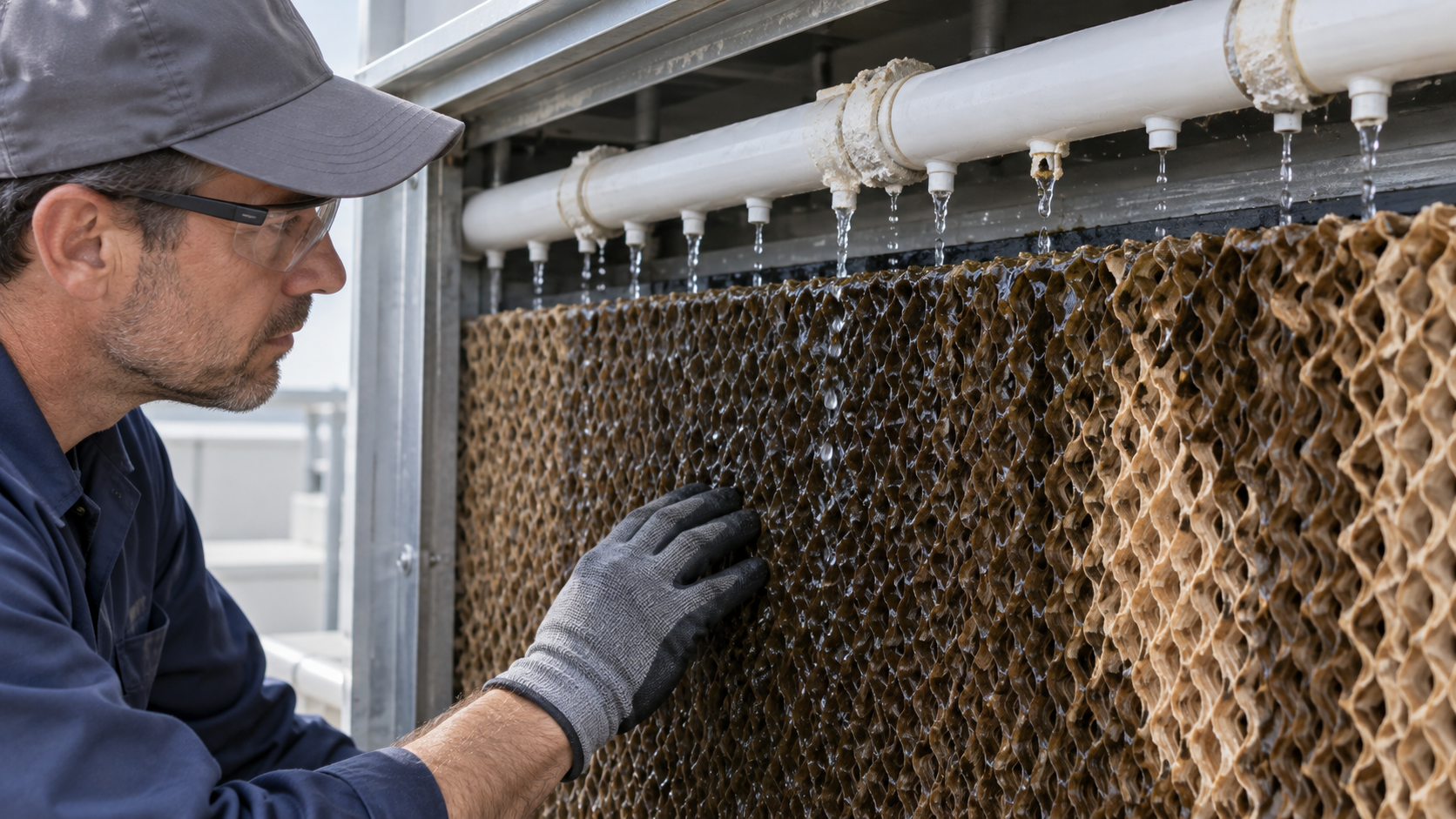
Cooling pad maintenance should focus on water distribution, surface fouling, scale, deformation, and airflow restriction.
- Inspect the pad at the beginning and end of the cooling season.
- Inspect more frequently in dusty environments or where water contains high mineral content.
- Check for blocked water outlets and dry areas during operation.
- Look for mineral scale, biological growth, deformation, or damaged sections.
- Clean or replace the media when fouling affects airflow or water distribution.
Maintenance intervals vary according to operating conditions and should follow the equipment maintenance plan. An agricultural building ventilation project may have different maintenance and water-quality requirements from an industrial installation.
Frequently Asked Questions
Is a 7090 cooling pad better than a 5090 pad?
Not automatically. The 7090 has a 7 mm flute height and more listed depth options, while the 5090 has a 5 mm flute structure and listed depths of 50, 100, and 150 mm. The better choice depends on equipment design, airflow, pressure-drop requirements, installation space, water distribution, and required dimensions.
Can I replace a 5090 pad with a 7090 pad?
Do not assume that the two formats are interchangeable. Confirm pad depth, height, width, frame dimensions, airflow conditions, water distribution, and installation orientation before changing models.
Does a deeper cooling pad always provide better cooling?
No. Pad depth is only one factor. A deeper pad may change airflow resistance and requires enough installation space and suitable water distribution. Cooling performance also depends on humidity, air velocity, water flow, pad condition, and complete system design.
Which cooling pad is suitable for agricultural buildings?
Both formats may be suitable for compatible agricultural ventilation or evaporative cooling systems. The correct option depends on building airflow design, pad dimensions, water quality, maintenance requirements, operating conditions, and required airflow.
What information should I provide when requesting a quotation?
Provide the preferred model, pad height, width, depth, quantity, equipment or application, destination country, and special technical requirements. Photos or specifications of the existing pad can also help. Submit these details through the request-a-quote form.
Conclusion
The 5090 and 7090 are different evaporative cooling pad configurations, not simply two versions where one is always better. Choose the 5090 when its 5 mm flute structure, listed depth options, and customizable dimensions match the equipment requirements. Choose the 7090 when its 7 mm flute structure, deeper listed options, and available dimensions are compatible with the system design.
Before ordering, confirm the pad dimensions, depth, airflow conditions, frame, water distribution system, installation space, and maintenance requirements. An outdoor air-cooling application may use different equipment arrangements from an enclosed agricultural or industrial installation.
Related insights
Recommended Engineering & Ventilation Guides
Partner with Kool Air (brand: RTFANS)-a leading manufacturer and solution provider in large space ventilation and cooling field
Seize the Multi-Billion Dollar Opportunity in Large-Space Ventilation & CoolingJoin Our Global Network of HVAC Distributors & Contractors – Let’s [...]
View article
Real Breeze Doesn't Just Dry Sweat - It Boosts Productivity!
Do you know the most coveted workstation in this factory? Right under the RT.FANS HVLS fan! This isn’t a joke. [...]
View articleThe Super September event officially kicks off today!
At the end of the domestic summer, the southern hemisphere summer is about to begin, and it is also the [...]
View article