
How to Choose and Measure HVLS Ceiling Fans for Industrial Spaces
A practical guide to choosing HVLS ceiling fans by coverage, motor type, noise, IP rating, structural support and facility measurements.
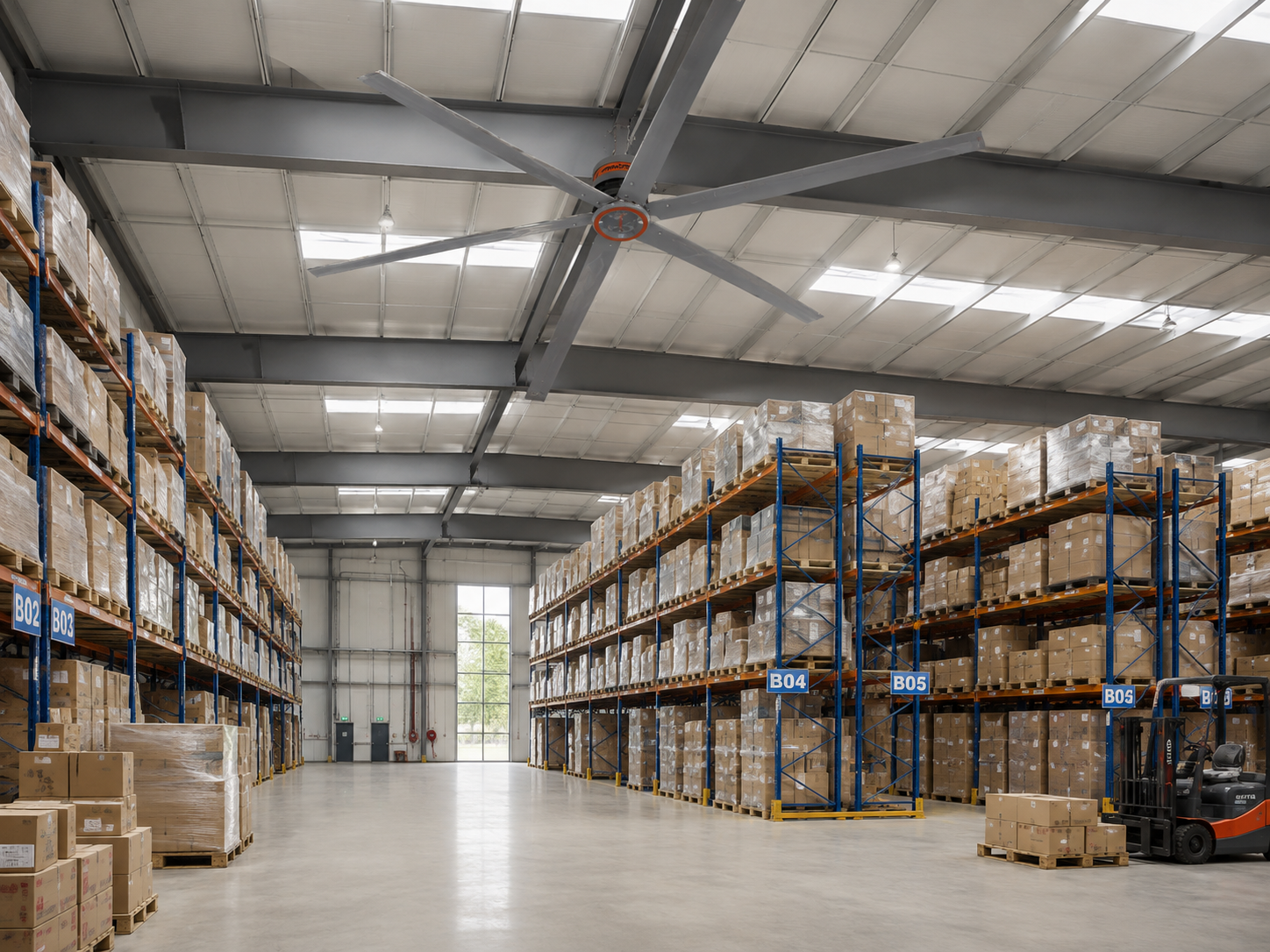
Choosing an HVLS ceiling fan for an industrial space starts with the building, not the catalogue headline. Area, ceiling height, rack layout, heat sources, structural support and the existing ventilation system all affect the right diameter, motor configuration and installation position.
This guide explains how to compare HVLS fan coverage, motor technology, noise and protection ratings, then prepare the measurements a supplier needs before recommending a system. The figures below are planning references; the final selection still requires a site review.
How does an HVLS ceiling fan move air?
HVLS means High Volume, Low Speed. A large rotor moves a broad column of air downward and outward at a moderate speed, helping reduce stagnant zones and mix warmer air near the roof with the occupied zone below. The result is air movement across a large floor area rather than a narrow high-speed jet from a small fan.
An HVLS fan does not refrigerate the air. Air movement can improve perceived comfort by supporting sweat evaporation, while destratification can help distribute conditioned air more evenly. For contaminated air, welding fumes or process exhaust, use a dedicated industrial exhaust fan and treat circulation and exhaust as separate functions.
How should you estimate diameter and coverage?
As an initial planning guide, a 3 m fan may cover roughly 350–500 m², a 4–4.2 m fan roughly 500–700 m², a 5.5 m fan roughly 700–1,000 m² and a 7.3 m fan roughly 1,000–1,500 m² under suitable conditions. These are starting ranges, not performance guarantees.
Ceiling height, beams, racks, sprinklers, lights and the shape of the building can reduce effective coverage. In a long warehouse, two medium fans may distribute air more evenly than one large fan placed at the centre. Use the HVLS coverage calculation guide alongside a real layout drawing before fixing the quantity and positions.
Why do motor technology and PMSM matter?
Traditional geared or belt-drive fans use transmission components between the motor and blades. A PMSM direct-drive system connects the motor to the blade hub and is designed to deliver high torque at low speed without belts or a gearbox. That can simplify maintenance and reduce mechanical transmission losses, but the exact benefit depends on the selected model and operating conditions.
Compare the motor type, controller, rated voltage, service access, noise measurement method and protection rating in the actual datasheet. The PMSM fan for large spaces page is a useful product reference, while the article on HVLS motor technology explains the main design trade-offs.
What do noise and IP ratings tell you?
Noise should be compared at the same distance, speed and test condition. A warehouse with forklifts and production machinery may tolerate a different operating level from a sports venue, showroom or public facility where background noise is lower. Ask the supplier to state where and how the claimed dBA value was measured.
IP rating indicates protection against dust and water at the motor enclosure. Match the rating to the actual environment, including dust, humidity and washdown exposure. Do not treat an omitted rating as equivalent to a tested rating, and do not use a ceiling fan as a substitute for a controlled exhaust system.
How do you match the fan to the facility?
High-bay warehouses need clear airflow paths between racks and enough blade clearance from stored goods and building services. The warehouse cooling solution guide can frame the layout review, but the final arrangement should use the real rack plan, roof structure and occupied zones.
Factories require additional attention to dust, humidity, process heat and maintenance access. Sports halls, showrooms and public buildings usually place more emphasis on noise, appearance and controlled air movement. For a project with multiple systems, the industrial factory airflow case study shows why fan selection and building conditions need to be reviewed together.
What must be checked before installation?
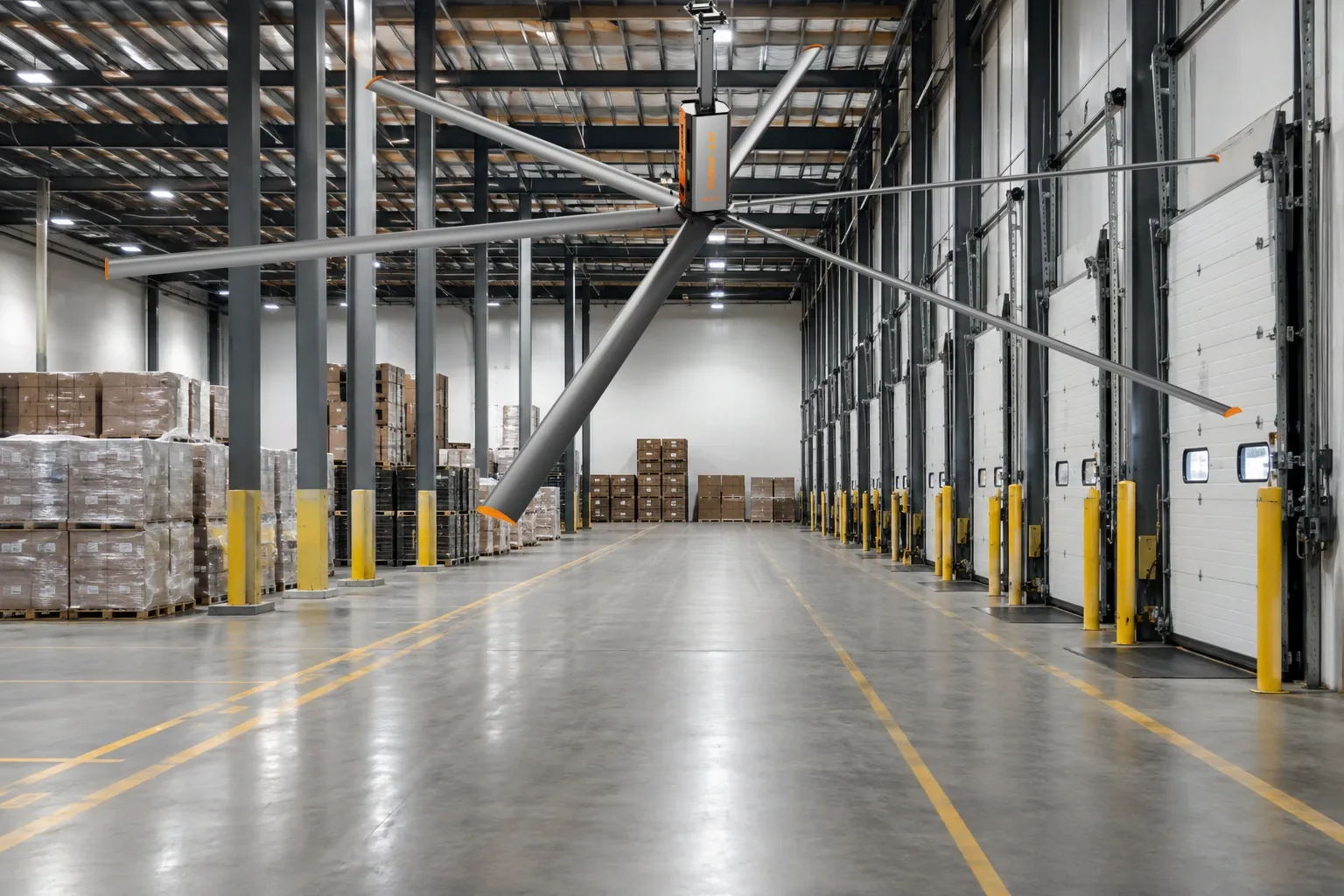
Do not hang an HVLS fan from gypsum, acoustic panels or light-gauge architectural framing. The suspension point must connect to a primary steel or concrete structure, with the support, anchor system and secondary safety cable reviewed for the actual installation. Maintain the manufacturer’s clearance from racks, sprinklers, lights, ducts and other obstructions.
Electrical requirements also vary by model. Smaller units may use single-phase power while larger units can require three-phase power. Confirm the nameplate voltage, dedicated circuit, breaker, cable sizing, grounding and local electrical requirements with a qualified installer before commissioning.
What measurements should you send to the supplier?
- Building length, width and clear ceiling height.
- Rack, beam, sprinkler, lighting and duct positions.
- Occupied zones, heat sources and process restrictions.
- Existing ventilation or air-conditioning equipment.
- Available electrical supply and the intended operating schedule.
- Required noise, dust and humidity conditions.
Include a drawing or photographs where possible. A site review is more reliable than selecting a fan from floor area alone. When the measurements are ready, use the RTFANS request-a-quote page and ask for a written recommendation that states the assumptions behind the proposed configuration.
Three decisions to make before buying
First, select the diameter and quantity from the building layout and clearances, not from floor area alone. Second, compare the motor, controller, noise and IP data under consistent test conditions. Third, verify structural support and electrical supply before ordering equipment.
An HVLS fan is a long-term airflow decision. A measured layout and a documented engineering review reduce the risk of uneven coverage, difficult maintenance or a mounting arrangement that does not suit the building.
FAQ
Do HVLS fans lower the actual air temperature?
They primarily move and mix air. The moving air can improve perceived comfort, while destratification can help distribute conditioned air. They do not replace refrigeration or controlled exhaust.
How many HVLS fans does a warehouse need?
It depends on the floor plan, ceiling height, obstructions, fan diameter and the required airflow pattern. Use coverage ranges only as an initial estimate and verify the arrangement against the real building layout.
Is a PMSM fan better than a geared fan?
PMSM direct-drive designs can remove belts and gearboxes, which may simplify maintenance and reduce transmission losses. Compare the complete model datasheet, controller, service conditions and lifecycle requirements rather than choosing by motor label alone.
Can an HVLS fan replace an exhaust fan?
No. An HVLS fan circulates indoor air; an exhaust system removes heat, fumes or contaminated air. Facilities with process contaminants may need both systems, designed for their separate functions.
What should I prepare before requesting a quote?
Provide building dimensions, ceiling height, obstructions, occupied zones, existing equipment, power supply and environmental conditions. A drawing or site photographs help the supplier review the proposed diameter, positions and support requirements.
Related insights
Recommended Engineering & Ventilation Guides
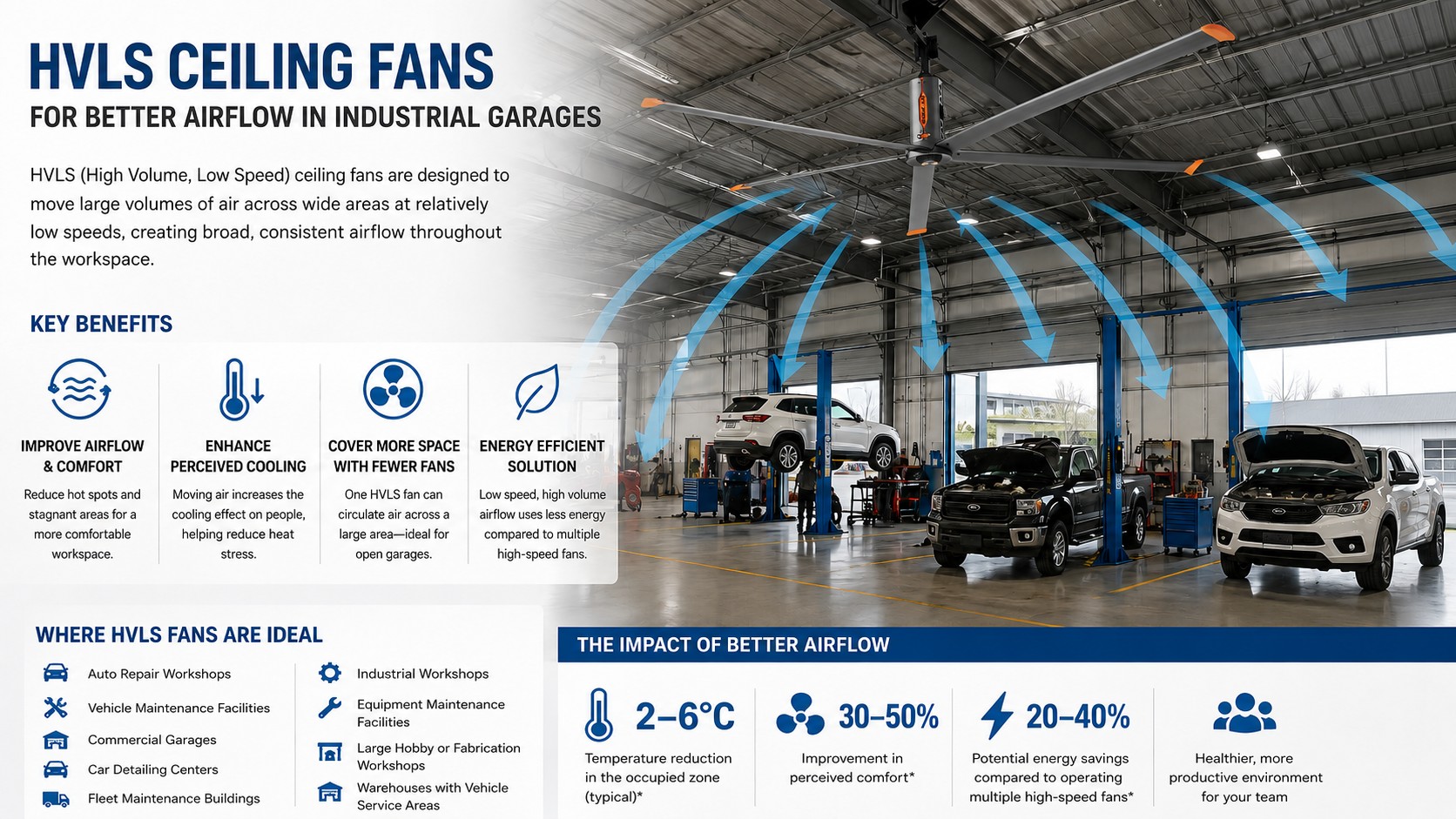
Why Industrial Garages Need HVLS Ceiling Fans for Better Airflow
Walk into a busy garage or workshop on a hot afternoon and the problem is obvious: heat builds up quickly, [...]
View article
Sustainable Manufacturing and Ceiling Fans: Factory Sustainability Tips
Sustainable Manufacturing and Ceiling Fans: Factory Sustainability Tips Embracing sustainable manufacturing practices is no longer just an option but a [...]
View article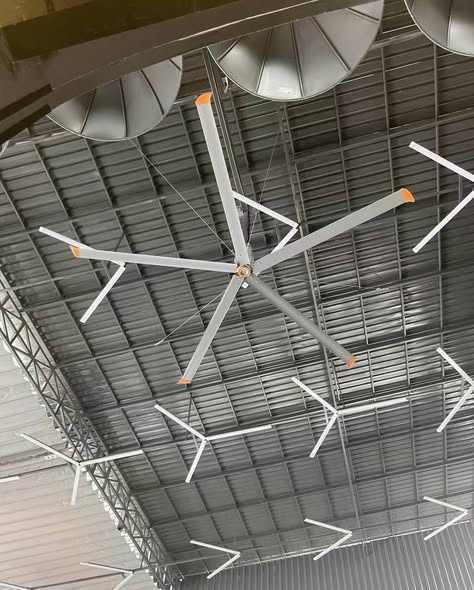
Industrial Ceiling Fan Buying Guide: Ceiling Fan Buying Guide for Fans
Industrial Ceiling Fan Buying Guide: Ceiling Fan Buying Guide for Fans Welcome to our comprehensive industrial ceiling fan buying guide, [...]
View article